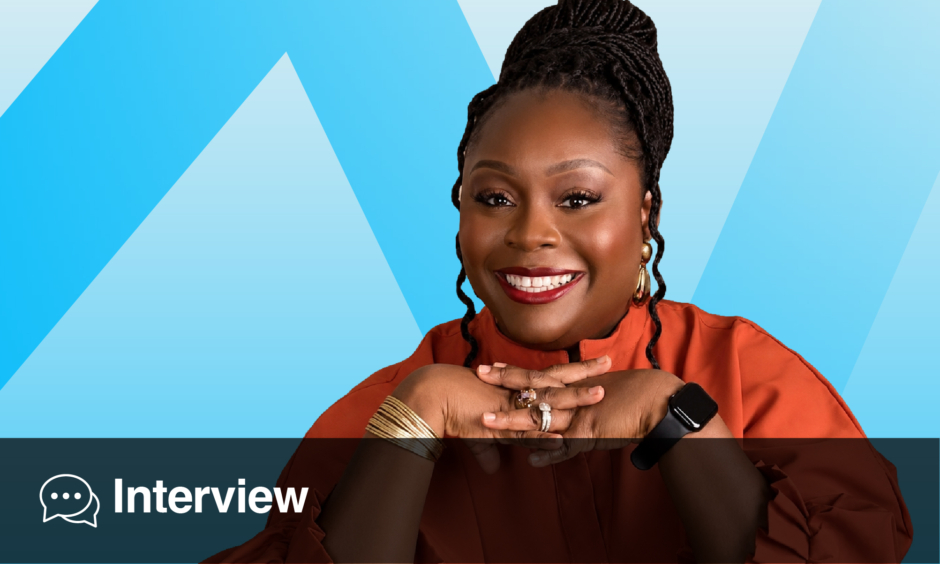
Itunu Johnson-Sogbetun | GP with specialist interest in women’s health; Advocate for equitable and culturally responsive care; Educator and speaker on menopause and health inequalities, UK
Author: Alena Sofieva, EMJ, London, UK
Citation: EMJ Repro Health. 2026;12[1]:85-88. https://doi.org/10.33590/emjreprohealth/77O1GSU9

Could you begin by outlining where you believe menopause care pathways are still failing Black women and women from underserved communities?
I think all women have historically been underserved when it comes to women’s health. Women were not even routinely included in medical research until the 1990s. Although things have improved, only certain groups of women have truly been represented in research and clinical conversations. Women from racially minoritised communities, immigrant backgrounds, lower socioeconomic groups, and other less represented populations have often been left out of the discussion entirely.
As a result, many women are not receiving the best possible menopause care. I have had Black women tell me that they did not realise hormone replacement therapy was ‘for Black women’, simply because of the way it is portrayed in the media. There is still a perception in some Black, South Asian, and other communities that these treatments are unnatural or not intended for them.
The conversation, therefore, needs to become broader and more inclusive. Research, education, and healthcare delivery all need to reflect the diversity of the populations we serve. We also need to understand the cultural stigma, cultural context, and socioeconomic realities that many women are navigating when discussing menopause and women’s health. Historically, healthcare systems were not designed with ethnic minority communities in mind, and we need to address that if we want to prevent underdiagnosis and undertreatment.
That means investing in more diverse research, culturally responsive care, and clinician training, while also encouraging clinicians to approach patients with openness and curiosity. Ultimately, we need an equitable system where all women can access high-quality menopause care regardless of their background.
You spoke previously about ethnic differences in disease mechanisms and menopause timing. Why is this area so important?
One of the major issues is that we simply do not know enough. Current evidence suggests that the average age of menopause differs across ethnic groups. For South Asian women, it appears to occur around the age of 46–47 years, while for Black women, it may be around 48–49. For White women, the average age is closer to 51. Women from East Asian backgrounds may experience menopause even later.
These are important trends, but we still lack robust research validating and exploring them further. We know that earlier menopause is associated with increased cardiometabolic risks, including diabetes and cardiovascular disease. We also know that Black and South Asian women already experience disproportionately higher rates of diabetes and hypertension. What we do not yet fully understand is how earlier menopause may contribute to these patterns of morbidity.
These questions matter because women tend to live longer but often experience higher levels of morbidity later in life. We are also seeing higher morbidity rates in women from lower socioeconomic and ethnic minority backgrounds. Could earlier menopause be contributing to this burden? At the moment, we simply do not know.
This is why we urgently need more evidence and more inclusive research so that care can become truly equitable for all women.
In both NHS and private practice, what symptoms or concerns are most commonly overlooked during perimenopause and menopause consultations?
When people think about menopause, they often think only about hot flushes and night sweats. But around 20% of women do not experience those symptoms at all. Instead, many women present with anxiety, brain fog, fatigue, joint pain, palpitations, low libido, urinary symptoms, or recurrent urinary tract infections.
A large proportion of the women I see have already been passed between multiple specialties. They may have seen rheumatology, urology, psychiatry, or cardiology, with each symptom viewed in isolation. Often, no one has stepped back to consider whether the overall picture could be related to perimenopause or menopause.
Of course, it is essential to rule out other causes, because many conditions can coexist with menopause. However, many women feel frustrated because they have sought help repeatedly without anyone identifying the underlying hormonal transition contributing to their symptoms.
Reflecting on my own earlier training, I remember seeing women presenting with ‘all over body pain’, particularly women from Middle Eastern, South Asian, and African backgrounds. At the time, many were labelled as difficult patients or ‘unable to cope’. Looking back now, I suspect many of those women were actually experiencing perimenopausal or menopausal symptoms that we simply failed to recognise.
That experience reinforced for me how important it is that clinicians think more broadly and remain open-minded when women present in ways that may not fit traditional expectations.
Many women still describe feeling dismissed when presenting with hormonal or reproductive health concerns. From a clinician’s perspective, what needs to change?
As primary care clinicians, we need to move away from seeing ourselves as gatekeepers and instead become partners in care. One of the key concepts I often discuss is culturally responsive care. This should never be treated as a tick-box exercise; it is a learnable skill.
For me, the starting point is clinical curiosity. Clinicians should care not only about the symptoms patients present with, but also about who they are, their cultural and psychosocial context, and their own understanding of what they are experiencing.
The second principle is clinical humility. Clinicians may be experts in medicine, but patients are experts in their own bodies and lived experiences. Good care therefore requires humility, respect, and genuine listening.
Communication also matters enormously. We need to avoid jargon, remain non-judgmental, validate concerns, and ensure patients feel heard rather than dismissed or gaslit. That does not mean abandoning evidence-based medicine, but it does mean practising it with empathy.
Medicine is not only biological; it is also deeply biopsychosocial and cultural. Clinicians need to recognise the biases they may bring into consultations and create space for truly patient-centred shared care.
You also highlighted the challenge of limited consultation time in primary care. Is this model of care realistically achievable within the NHS?
This is exactly why I continue advocating for more time and more resources in primary care. I do believe culturally responsive care is possible, because it is the type of care I try to practise myself, but it does take time and emotional energy.
One of the strengths of general practice is longitudinal care. Conversations do not always have to happen in a single appointment. Sometimes I begin the discussion in one consultation and continue it during follow-up appointments. When possible, I request longer appointments for women’s health consultations, although this varies between practices.
Ultimately, we need healthcare systems that recognise the value of this kind of care. Cutting corners may save time in the short term, but it negatively affects patient outcomes in the long term. In private practice, I am fortunate to have 45 minutes or even an hour with patients, which allows much deeper exploration. But equitable care means ensuring this level of thoughtful, personalised support is not only available to those who can afford private healthcare.
You founded Health for Black People to address health inequities and educational gaps. Have you seen meaningful progress in recent years?
I think the answer is both yes and no. There has definitely been progress. Women’s health and menopause are now being discussed far more openly, and there is a greater willingness to engage with conversations around inequality and inclusion.
For me personally, it has been a privilege to contribute to these discussions and advocate for communities that have often been left out of healthcare conversations. My motivation is also deeply personal. My mother was diagnosed with breast cancer at 37 years old, and my grandmother died from breast cancer in her 50s. I was also diagnosed with hypertension at 27 and have polyendocrine metabolic ovarian syndrome (PMOS), both conditions with important links to ethnicity and cardiometabolic risk.
I realised how much access to education, healthcare, and advocacy had shaped my own family’s outcomes. My mother recognised her breast cancer symptoms after reading a magazine article, and that knowledge likely saved her life. It made me reflect on how many women may never receive that information.
There are now many organisations working to improve health education and advocacy within Black and minority communities, and there is certainly more awareness than before. However, outcomes are not improving as quickly as we would hope. In some cases, disparities appear to be narrowing only because outcomes for everyone are worsening overall, rather than because marginalised groups are receiving significantly better care.
So, although there is more discussion and visibility, we still urgently need policy change, better resourcing, improved research inclusion, and meaningful action rather than rhetoric alone.
Across your work in clinical care, education, and advocacy, which area of women’s health currently feels most underprioritised?
One issue I think we still fail to adequately address is the disproportionate mental load women carry throughout their lives. Women remain the primary caregivers in society, often balancing full-time work alongside caregiving responsibilities for children, older relatives, or vulnerable family members.
Even when practical responsibilities are shared, much of the emotional and organisational burden still falls disproportionately on women. This affects physical and mental health in profound ways.
In my consultations, whether women present with endometriosis, PMOS, premenstrual syndrome, premenstrual dysphoric disorder, perimenopause, or other health concerns, this hidden mental load often forms a major part of the picture. Alongside that, many women are carrying unspoken trauma related to infertility, miscarriage, abusive relationships, divorce, sexual trauma, or years of over- or under-sexualisation.
These cumulative stresses contribute to allostatic load and long-term morbidity, particularly in women from ethnic minority and lower socioeconomic backgrounds. While we absolutely need more research into issues such as cardiovascular disease, osteoporosis, dementia, and menopause-related morbidity, we also need to recognise and address the immense psychological burden many women are carrying throughout adulthood.
Looking ahead, where do you hope to see the greatest progress in reducing inequalities in women’s healthcare?
I want to see genuinely inclusive research that answers important questions about morbidity and long-term outcomes for all women, particularly women from lower socioeconomic backgrounds, Black women, South Asian women, and women with disabilities. These communities should not be treated as an afterthought; they need to be central to research design and healthcare planning.
I also want clinical guidelines to reflect diversity more accurately. For example, if menopause timing differs across ethnic groups, then our guidance should acknowledge that, rather than relying on blanket averages that ignore huge sections of society.
I want clinicians to receive training that genuinely equips them to deliver culturally responsive care. Most importantly, I want accountability and action rather than discussion alone. We need real changes in clinical practice and healthcare systems.
Above all, I want women who have previously felt dismissed, unheard, or medically gaslit to know that their experiences are valid, that their symptoms are real, and that they deserve personalised care that meets them where they are.