SUMMARY OF KEY RESEARCH FINDINGS
Background
COPD exacerbations are heterogeneous clinical events whose severity and prognostic impact are influenced by both the acute episode and the patient’s baseline clinical status. The Baseline, Acuity, and Trigger (BAT) model provides a multidimensional framework for characterising COPD exacerbations by integrating these complementary determinants. This study aimed to compare the discriminatory performance of the Baseline domain of the BAT model with that of the Body Mass Index, Airflow Obstruction, Dyspnoea, and Exercise Capacity (BODE) index for assessing exacerbation risk in patients with COPD.1
Methods
An observational study was conducted in 247 patients with COPD. Spirometric parameters, including forced expiratory volume in 1 second (FEV1), forced vital capacity (FVC), and FEV1/FVC ratio, together with Exacerbation, Body Mass Index, Airflow Obstruction, Dyspnoea, and Exercise Capacity (e-BODE) scores, COPD Assessment Test (CAT) scores, and exacerbation history, were assessed. The BODE index and the Baseline domain of the BAT framework were applied for multidimensional assessment. Associations with exacerbation frequency and health status were evaluated, and discriminatory performance for exacerbation risk was assessed using receiver operating characteristic analysis.
Results
The study population comprised 247 patients with COPD, including 200 men (81%) and 47 women (19%), with a mean age of 61.5±8.8 years. Compared with the BODE index, the Baseline domain demonstrated stronger associations with exacerbation frequency and CAT-assessed health status. The Baseline domain showed excellent discriminatory performance for exacerbation risk, with an area under the curve (AUC) of 0.90, whereas the BODE index demonstrated substantially lower discriminatory ability (AUC: 0.61).
Conclusion
The Baseline domain of the BAT model demonstrated superior discriminatory performance compared with the BODE index for exacerbation risk assessment in this COPD cohort. Incorporating routinely available baseline clinical characteristics into a multidimensional framework may enable more refined prognostic stratification and support individualised clinical assessment. Prospective validation in larger, multicentre cohorts is warranted to determine the generalisability and predictive value of the BAT framework.
Findings
This study evaluated the discriminatory performance of the Baseline domain within the novel BAT framework2 against the traditional BODE index in 247 patients with COPD (81% male; mean age: 61.5±8.8 years). Spirometry (FEV1, FVC), e-BODE, CAT scores, and exacerbation history were analysed. Clinical markers according to exacerbation frequency are presented in Table 1, showing differences in selected parameters between the study groups, including tobacco exposure, dyspnoea severity, and annual exacerbation rate. The Baseline domain demonstrated stronger associations with exacerbation frequency and CAT-assessed health status and showed excellent discriminatory performance for exacerbation risk (AUC: 0.90), whereas the BODE index demonstrated limited discriminatory ability (AUC: 0.61). The discriminatory performance of the Baseline domain is illustrated by the receiver operating characteristic curve shown in Figure 1. These findings suggest that the Baseline domain may provide a more nuanced approach to patient stratification and individualised prognostic assessment.
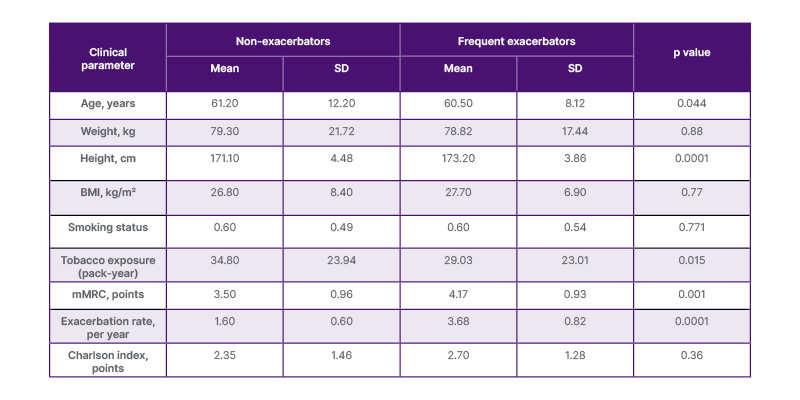
Table 1: Clinical markers depending on exacerbation rate.
mMRC: Modified Medical Research Council Dyspnoea Scale.
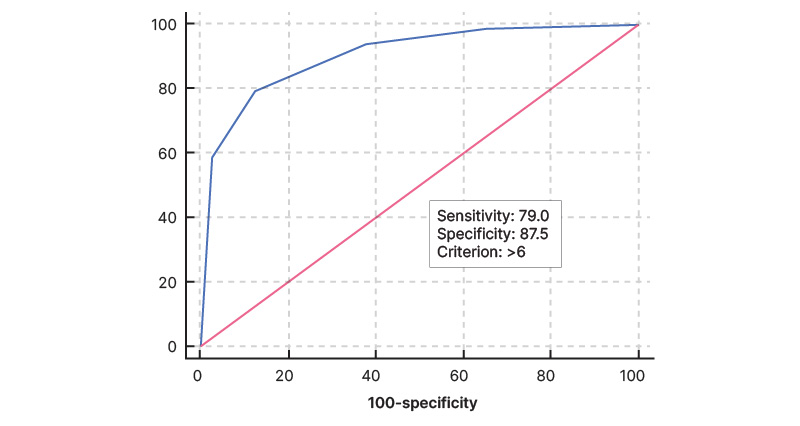
Figure 1: ROC curve for the discriminatory performance of the BAT in predicting future COPD exacerbations.
BAT: Baseline, Acuity, and Trigger; ROC: receiver operating characteristic.
WHAT CHALLENGE DOES THIS ADDRESS?
COPD exacerbations are major drivers of disease progression, health status decline, and adverse outcomes.3 Conventional risk assessment relies on multidimensional indices like BODE, which incorporate exercise testing (such as the 6-minute walk test) that can present practical limitations in routine primary care.4 In addition to these logistical barriers, established prognostic tools often fail to capture the complex, multifactorial nature of acute episodes, leading to suboptimal prediction of future events.5 The multidimensional structure of the BAT framework, integrating Baseline, Acuity, and Trigger domains, is illustrated in Figure 2. The Baseline domain of the BAT model addresses this critical clinical gap by integrating routinely available clinical characteristics into a multidimensional assessment of the patient’s underlying vulnerability, potentially enabling more accessible and clinically contextualised risk stratification.2
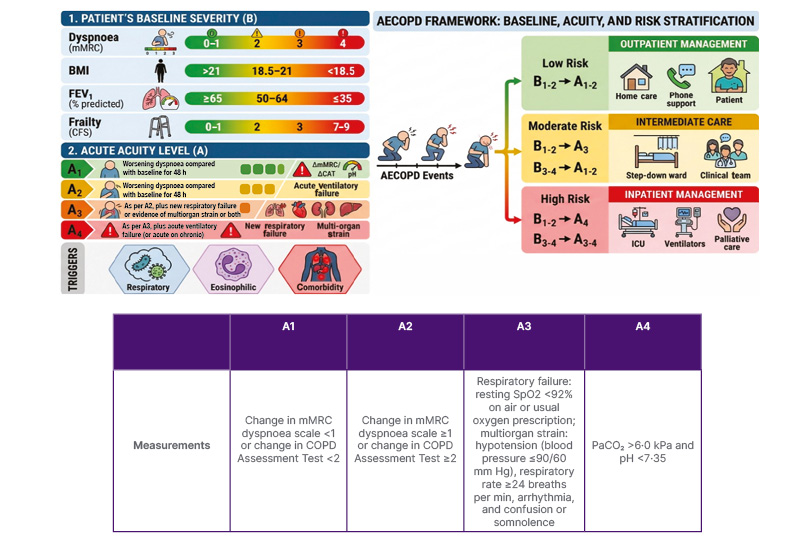
Figure 2: Multidimensional classification of severity of AECOPD according to the BAT model.
Adapted from Aung et al.2
Created with Claude (Anthropic, San Francisco, California, USA).
AECOPD: acute exacerbation of COPD; BAT: Baseline, Acuity, and Trigger; CAT: COPD Assessment Test; CFS: Clinical Frailty Scale; FEV1: forced expiratory volume in 1 second; mMRC: Modified Medical Research Council Dyspnoea Scale; pH: potential of hydrogen.
RELEVANCE TO EUROPEAN PRACTICE
COPD exacerbations represent a substantial clinical and socioeconomic burden across Europe, contributing significantly to emergency department visits and hospital admissions.6 Because the Baseline domain of the BAT framework utilises routinely available clinical data, it may provide a practical and scalable approach that could potentially be implemented across varied European healthcare settings, from primary care to specialised respiratory clinics. Enhancing risk stratification with accessible tools may assist European clinicians in identifying higher-risk patients and refining clinical monitoring strategies.
WHAT ARE THE NEXT STEPS FOR THE RESEARCH?
While these initial findings in 247 patients are promising, several key research directions remain to be explored. First, prospective studies across larger, multicentre European cohorts are needed to confirm the discriminatory capacity and prospective predictive value of the BAT framework in broader populations, including patients with relevant respiratory and cardiovascular comorbidities. Furthermore, future investigations should evaluate how the addition of the Acuity and Trigger domains might influence overall risk assessment when combined with the Baseline domain. Finally, exploring the feasibility of embedding BAT scoring algorithms directly into electronic health record systems could be an important step towards supporting clinical decision-making during routine consultations.