EXHALED breath particles enabled noninvasive measurement of virus-specific lung antibodies in a small study of healthcare workers. The observational proof-of-concept findings could support research into lower airway immunity and mucosal vaccines, although clinical utility remains unestablished.
Measuring Antibodies with Exhaled Breath Particles
Researchers studied 28 healthcare workers in Sweden during spring 2025, including 18 with confirmed respiratory viral infections and 10 without known infection in the preceding six months. Participants were predominantly female, with a mean age of 50 years.
The team compared antigen-specific immunoglobulin A (IgA) and immunoglobulin G (IgG) in paired blood, nasal secretions, and exhaled breath particles. Antibody targets included SARS-CoV-2 spike, influenza A H1 hemagglutinin, and respiratory syncytial virus (RSV) prefusion F protein.
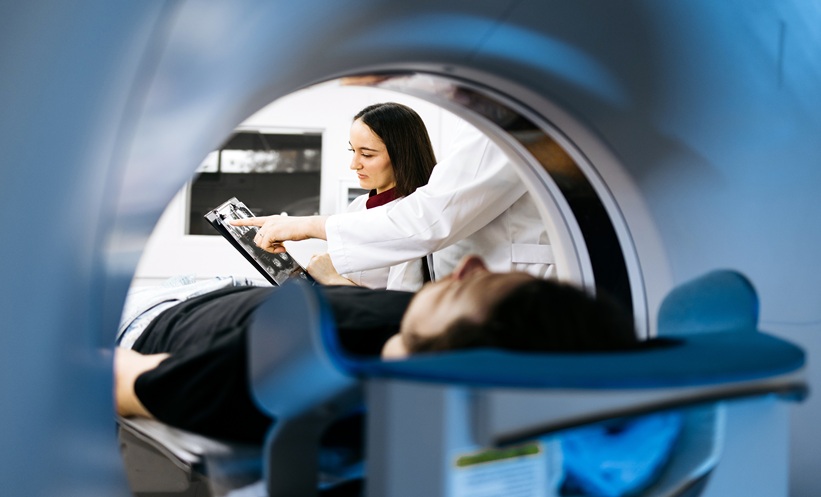
Participants breathed filtered air through a mouthpiece and performed standardized maneuvers involving airway closure and reopening. These maneuvers generate particles containing respiratory tract lining fluid from the distal airways. Sensitive electrochemiluminescence assays measured antibodies in the collected material.
Precise Measurements Reveal Distinct Antibody Patterns
Measurements showed low variability between technical duplicates. Median coefficients of variation for antigen-specific IgA were 3.7% for SARS-CoV-2 spike, 7.2% for influenza H1, and 5.3% for RSV prefusion F.
Antigen-specific IgG in exhaled breath particles strongly correlated with serum IgG across all three targets, with Spearman’s correlation coefficients exceeding 0.85 (p<0.0001). IgA correlations were more modest. These patterns may reflect circulating contributions to lung IgG and local IgA production, but they do not establish antibody origin.
The median total IgA-to-IgG ratio was higher in nasal secretions than in breath samples, approximately 5.0 versus 0.6 (p<0.0001). This supports distinct antibody distributions across the upper and lower airways.
Implications for Mucosal Vaccine Research
Exhaled breath particles could provide a practical research tool for evaluating lung antibody responses without bronchoscopy. However, breath samples were collected only at postinfection follow-up, preventing assessment of infection-induced changes in lower airway antibodies.
The study did not measure antibody neutralization, establish protection against infection, or directly verify the lower airway origin of samples. Small sample size, female predominance, and overlapping vaccination and infection histories further limit interpretation. Larger, longitudinal studies are needed before this approach can inform clinical decisions or vaccine evaluation.
Reference
Aguilera K et al. Non-invasive quantification of lower airway antigen-specific antibodies using exhaled breath particles – an observational proof-of-concept study. eBioMedicine. 2026;133:106538.