Key Summary:
- Low-cost simulation supported neonatal ventilation training across experience levels.
- Students and health professionals improved their theoretical knowledge.
- Simulator feedback may work best when tailored to learners’ experience.
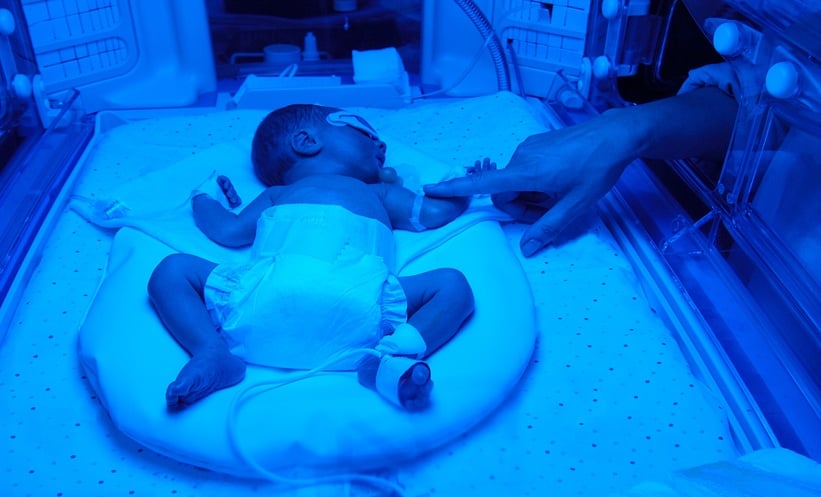
NEONATAL ventilation training strengthened knowledge and supported practical performance among students and health professionals in Tanzania.
The randomized clinical trial evaluated whether an adaptable, low-cost simulator could help learners with different levels of experience develop or reinforce manual ventilation skills. This procedure is particularly important where advanced respiratory support is limited and manual ventilation may be the primary option for newborns requiring breathing assistance.
The trial included 42 undergraduate medical students with no previous neonatal ventilation experience and 37 local health professionals. Participants completed a 4-day program at a regional referral hospital in Tanzania, combining lectures with simulation-based training.
Participants were randomly assigned to one of three simulator configurations. The medium-fidelity passive setup provided no mechanical or electronic feedback. The high-fidelity passive setup reproduced chest or abdominal movement. The active high-fidelity setup added sensor-based visual and auditory feedback.
The simulator recorded ventilation frequency and peak inspiratory pressure during six practical trials. Participants also completed knowledge tests, tutor-assessed practical evaluations, and questionnaires examining simulator usability and acceptance.
Mean theoretical knowledge scores among students increased from 8.29 to 8.88 out of 10 after training. Scores among health professionals rose from 8.65 to 9.14.
Both groups also achieved strong practical scores at the final assessment. Students recorded a mean tutor evaluation score of 10.4 out of 12, compared with 10.2 among health professionals. Final scores did not differ significantly between simulator configurations.
Performance during training varied according to experience. Students using the medium-fidelity configuration improved their ventilation frequency and pressure, suggesting that learners without previous experience may benefit from fewer competing forms of feedback. Experienced health professionals generally performed best during training with the active high-fidelity configuration, although these advantages were not fully maintained during the standardized final assessment.
Simulator acceptance was high across all groups, with no significant differences between configurations. Perceived usefulness was associated with participants’ intention to use the technology, while simulator fidelity appeared particularly relevant to experienced health professionals.
The findings support tailoring neonatal ventilation training to baseline experience rather than assuming that greater simulator complexity will benefit every learner. For clinical educators, configurable simulators may offer a scalable approach to skills development where equipment and training resources are limited.
However, the study involved a small sample at one center. It assessed simulated performance rather than skill retention, clinical transfer, or neonatal outcomes, which require further investigation.
Reference
Mocellin D et al. Neonatal ventilation training using a low-cost, high-fidelity simulator in a low-resource setting: a randomized clinical trial. JAMA Netw Open. 2026;9(9):e2633261.
Featured Image: Petr Bonek on Adobe Stock.
Each article is made available under the terms of the Creative Commons Attribution-Non Commercial 4.0 License.