This non-promotional AstraZeneca-organised and -funded symposium intended for healthcare professionals took place on 7th September 2026 as part of the European Respiratory Society (ERS) Congress held in Barcelona, Spain
Funding Statement: This is a non-promotional article funded and organised by AstraZeneca. For healthcare professionals only.
Chairperson: Dave Singh1,2
Speakers: Erika Penz,3 George Washko4
1. Division of Immunology, Immunity to Infection and Respiratory Medicine, University of Manchester, UK
2. Medicines Evaluation Unit, an IQVIA business, Manchester, UK
3. Division of Respirology and Sleep Medicine, University of Saskatchewan, Respiratory Research Center, Saskatoon, Canada
4. Harvard Medical School, Mass General Brigham, Boston, Massachusetts, USA
Conflicts of interest: Singh has received personal fees from Adovate, Aerogen, Almirall, Apogee, Arrowhead, AstraZeneca, Bial, Boehringer Ingelheim, Chiesi, Cipla, CONNECT Biopharm, Covis, CSL Behring, DevPro Biopharma LCC, Elpen, Empirico, EpiEndo, Genentech, Generate Biomedicines, GSK, Glenmark, Kamada, Kinaset Therapeutics, Kymera, Menarini, MicroA, OM Pharma, Orion, Pieris Pharmaceuticals, Pulmatrix, Revolo, Roivant Sciences, Sanofi, Synairgen, Tetherex, Teva, Theravance Biopharma, Upstream, and Verona Pharma.
Penz has grant funding from the Canadian Institute Health Research (CIHR), Lung Saskatchewan, Saskatchewan Health Research Foundation (SHRF), AstraZeneca, GSK, and Sanofi; served as a consultant for AstraZeneca, GSK, Roche, Sanofi, and Saskatchewan Cancer Agency; has received speaker honoraria from AstraZeneca, Boehringer Ingelheim, Canadian Thoracic Society (CTS), Covis Pharma, GSK, Lung Saskatchewan, Sanofi-Genzyme, and Valeo Pharma; serves as the President of the CTS and an Institute of Cancer Research (ICR) board member of the CIHR; has served as co-chair of the COPD Assembly for the CTS; her institution has previously received equipment from AstraZeneca; and she has also received travel expenses from the CHEST journal.
Washko has received consulting fees from 35Pharma, Argenx, AstraZeneca, Boehringer Ingelheim, Eli Lilly, Genentech, GSK, Insmed, Merck, Polarean, Pulmonx, Rage Biotech, Regeneron, and Sanofi; Washko is a co-founder of Quantitative Imaging Solutions; and Washko’s spouse works for Biogen.
Acknowledgments:Medical writing assistance was provided by Jessica Jinks, EMJ, London, UK.
Keywords: Biologics, COPD, epithelial repair, exacerbations, oral corticosteroids (OCS), IL-33, mucus dysfunction, mucus plugging, oxidised IL-33 (IL-33OX), reduced IL-33 (IL-33RED).
Citation: EMJ Respir. 2026;14[Suppl 1]:2-11. https://doi.org/10.33590/emjrespir/05591N96
Meeting Summary:
This non-promotional AstraZeneca-sponsored symposium at the European Respiratory Society (ERS) 2026 congress invited the audience aboard a mission to ‘Planet COPD’, charting a course through the patient experience, the mechanisms driving COPD, and the emerging therapies now coming into view. Speakers guided attendees from the lived reality of the disease, through its underlying biology, to the latest clinical evidence.
Erika Penz, Division of Respirology and Sleep Medicine, University of Saskatchewan and Respiratory Research Center, Saskatoon, Canada, opened with the story of her patient Michael, illustrating how exacerbations, breathlessness, and mucus dysfunction may erode daily life in ways endpoints fail to capture. Triple inhaled therapy has transformed the management of COPD, yet for many patients, significant burden remains. Exacerbations continue in the majority of patients, repeated oral corticosteroid (OCS) exposure carries well-documented systemic harms, and breathlessness erodes the physical, social, and psychological fabric of daily life. Mucus dysfunction, encompassing productive cough and airway mucus plugging, emerges as one of the most clinically meaningful yet underappreciated dimensions of this burden, independently driving exacerbation risk and reduced quality of life.
George Washko, Harvard Medical School, Mass General Brigham, Boston, Massachusetts, USA, then presented IL-33 as a potential unifying mechanism behind COPD’s heterogeneous inflammation and mucus dysfunction. IL-33 is an upstream alarmin cytokine released from damaged structural cells. In COPD, the reduced form (IL-33RED) orchestrates broad downstream Type 1, 2, and 3 inflammation. Upon extracellular exposure, IL-33RED undergoes rapid oxidation and conformational switch to oxidised IL-33 (IL-33OX). Dysregulated IL-33OX signalling promotes goblet cell hyperplasia, mucus hypersecretion, and impairs epithelial repair. In patients with COPD, higher IL-33 levels associate with greater exacerbation frequency and productive cough, positioning IL-33 as a potential therapeutic target that spans the disease’s key pathological processes.
Dave Singh, Division of Immunology, Immunity to Infection and Respiratory Medicine, University of Manchester; and Medicines Evaluation Unit, an IQVIA business, Manchester, UK, closed by discussing IL-33 as a potential therapeutic target in COPD, one that sits upstream of multiple pathological processes, summarising aspects of clinical trials evaluating IL-33-targeted biologics for COPD.
As the field moves beyond eosinophil-restricted biologics, IL-33 targeting represents a potential therapeutic strategy for the broader COPD population.
Navigator’s Welcome
At ERS 2026, Singh opened the session by inviting the audience to view Planet COPD with a “new lens.” Singh set course for the session, noting that “for a long time, COPD has felt like it is marooned in deep space. Vast, complex, and difficult to navigate.” He described an evolving space, where the more researchers learn, the more immense the universe seems.
Planet COPD: Exploration of the High-Risk Patient with COPD
Erika Penz
“When we speak about COPD, we often speak the same language: we’re speaking about FEV1, exacerbation rates, and hospitalisations of our patients,” says Penz. “But our patients experience this disease quite differently.” For her patients, “COPD is the breathlessness that turns getting dressed into an effort. It is the cough that disturbs them, that interrupts their conversations and makes them refrain from social activities.”
Meet Michael
Penz introduced her patient Michael, whom she first met in early 2014, Michael her first year of practice. At the time, he was working, active, and independent, yet presented with mixed respiratory failure as his first episode, requiring non-invasive ventilation before returning home with a new diagnosis of COPD. Looking back, Penz reflected on how much had already been occurring beneath the surface, undetected by either of them. Michael became, in her words, a lens through which to view the disease.
An Unmet Need, Despite Treatment
Exacerbations remain a central driver of burden, even among patients on triple inhaled therapy. In the SIRIUS study, a USA retrospective cohort of patients with COPD with frequent exacerbation history who had completed 1 year of continuous triple inhaled therapy (N=4,920), 69% experienced ≥1 moderate/severe exacerbation, and 25% experienced ≥1 severe exacerbation requiring hospitalisation.1,2 Moderate exacerbations were defined as COPD-related emergency room, physician’s office, or outpatient visits accompanied by a prescription for an antibiotic or corticosteroid within ±7 days; and severe exacerbations as hospitalisations of ≥24 hours with a primary COPD diagnosis.1,2 “In this high-risk population, there is still substantial unmet need,” Penz noted, “and behind every one of those events is a patient whose confidence, independence, and sense of stability takes a hit.”
The Cost of Repeated Treatment
Penz noted that OCSs remain the cornerstone of acute exacerbation management, largely unchanged since the 1980s, but that repeated exposure carries a cost. In the same SIRIUS I cohort, 90% of patients received ≥1 OCS prescription over 12 months, with a mean annual exposure of 73 days.1,2 “This is not a short course,” Penz says. “This is, in fact, a cumulative burden layered on top of an already progressive disease in this patient population.”
In a UK-based observational, individually matched retrospective cohort study of 53,299 pairs of patients with COPD exposed to OCS versus non-OCS controls,3 OCS exposure was associated with significantly increased multivariable-adjusted risk across multiple adverse outcomes. Pneumonia showed the strongest risk (adjusted hazard ratio [aHR]: 2.90; 95% CI: 2.77–3.03; n=90,688), followed by osteoporosis (aHR: 1.80; 95% CI: 1.70–1.92; n=99,326), Type 2 diabetes (aHR: 1.44; 95% CI: 1.37–1.51; n=89,112), cardiovascular/ cerebrovascular disease (aHR: 1.26; 95% CI: 1.21–1.30; n=70,520), and all-cause mortality (aHR: 1.04; 95% CI: 1.02–1.07; n=106,598).3 These data indicate that OCS exposure in COPD confers systemic risk extending beyond the respiratory tract.3
“An exacerbation is not just an event on a chart,” Penz explained. “It is a setback in recovery, a potential acceleration of decline and, when treated repeatedly with OCS, that’s an added layer of harm that we’re adding to our patients.”
Breathlessness: The Constant Companion
The CAPELLA study investigated 399 patients with frequent productive cough who had ≥2 moderate, or ≥1 severe, exacerbations in the prior year.4 Of these participants, 78% continued to experience significant breathlessness (Modified Medical Research Council [mMRC] score ≥2) while on triple inhaled therapy.4 Breathlessness is associated with reduced physical activity, difficulty performing daily tasks, social isolation, and psychological decline.5,6 Penz explained that, for Michael, this became the defining feature of disease: “Not during exacerbations, every day of his life. Breathlessness doesn’t just limit movement, it progressively shrinks a patient’s world.”
Mucus Dysfunction: An Underappreciated Pathology
Penz noted that breathlessness is only a part of the picture. “Mucus dysfunction is one of the most important yet underappreciated features of COPD pathobiology. It encompasses excess mucus production, impaired clearance, and altered mucus composition, manifesting as productive cough and airway mucus plugging,” she explained. The COPDGene study, a cross-sectional analysis of 4,363 participants from the USA with confirmed COPD, demonstrated that approximately 75% of patients had evidence of mucus dysfunction. Among those with mucus dysfunction, around 45% had productive cough only, 35% had both productive cough and mucus plugs, and 20% had silent mucus plugs only (Figure 1).7
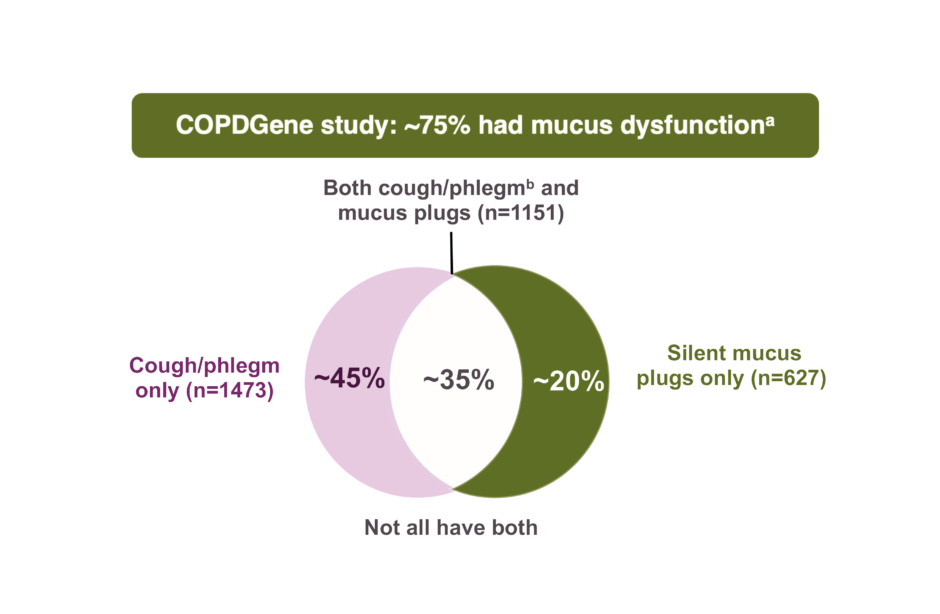
Figure 1: Data from the COPDGene study highlights mucus dysfunction as a central and common pathology in COPD.
aBased on data from 4,363 patients who previously smoked or with active tobacco use with COPD across the full spectrum of COPD severity. Patients were recruited from the COPDGene study, an observational prospective cohort study conducted across 21 centres across the US, which included 45- to 80-year-old non-Hispanic White or non-Hispanic Black patients with a ≥10 pack-year smoking history with or without COPD.1,2 Patients with available COPD and CT scan data were recruited; n=3,251 (74.5%) patients had cough, phlegm and/or mucus plugs and n=1,112 (25.5%) patients had neither cough or phlegm, nor mucus plugs; signs of mucus dysfunction include cough, phlegm and/or mucus plugs.
bIncluded patients with both dry and productive cough.
Adapted from Mettler SK et al.7
Penz emphasised: “The downstream consequences of mucus dysfunction are not trivial, and there are significant consequences to patients as it is associated with a higher risk of exacerbations, worsening lung function, increased mortality risk, and reduced quality of life.”
Penz explained that productive cough is frequently normalised as simply “part of having COPD,” but the data suggest otherwise. Frequent productive cough was associated with approximately 79% higher odds of ≥1 OCS-treated exacerbation (odds ratio: 1.79; 95% CI: 1.44–2.23; n=1,959).8 “The signal extends to antibiotic-treated exacerbations, hospital admissions, and emergency department visits. It is consistent and clinically meaningful.” Importantly, the burden extends beyond exacerbations. Frequent productive cough is associated with worse airflow limitation, increased dyspnoea, physical activity limitation, fatigue, depression and anxiety, and social isolation.8-11 “Productive cough […] is a sign of greater airway pathology; it’s a signal that there’s higher risk in this population, and our patients are already carrying a lot of burden because of that,” Penz noted.
Mucus Plugs: A Hidden Marker of Risk
According to Penz, airway mucus plugs are a hidden yet clinically meaningful marker of risk in COPD. In the COPDGene study, even patients with 1–2 lung segments with mucus plugs were at a significantly higher risk of future exacerbations. The risk increased with three or more lung segments with mucus plugs. Compared to those with no mucus plugs (score 0; n=1,808), adjusted rate ratios for exacerbation were 1.07 for those with a score of 1–2 (95% CI: 1.05–1.09; n=753) and 1.15 for those with a score of ≥3 (95% CI: 1.1–1.2; n=689).12 “Mucus plugging is, therefore, not simply a radiological finding,” Penz says. “It is a warning signal, identifying patients at greater risk of poor outcomes even when their symptom burden doesn’t fully reflect what’s happening in their airways.”
Michael: 12 Years Later
More than 12 years after first meeting Michael, Penz has watched his disease progress as her understanding of COPD has evolved. What she witnessed in Michael reflects everything she discussed: “The exacerbations that continued despite treatment, the breathlessness that gradually narrowed his life, and the cough that made him reluctant to go out. These haven’t been abstract data points; they’ve actually reflected his life.” But Penz explained that the science is catching up: “The data says that exacerbations are events that outlive themselves; they have consequences […] We can recognise this now, and because we can, we need to act.”
COPD Nexus: IL-33 Dual Signalling Pathways
George Washko
COPD is driven by inflammation, which is heterogeneous and complex.13 While most patients with COPD have Type 1/3 inflammation, a subset, in addition, have Type 2 inflammation.13-15 Washko introduced his talk by raising a fundamental question: “Is there a single upstream mechanism that governs all of this inflammatory cascade?”
IL-33 as an Upstream Orchestrator of Inflammation and Mucus Dysfunction
IL-33 is an upstream alarmin cytokine released from damaged structural cells, predominantly airway epithelium and endothelium.16,17 Illustrated in (Figure 2), in its reduced form (IL-33RED), it signals via the suppression of tumorigenicity 2 (ST2) receptor, forming a complex with the IL-1 receptor accessory protein (IL-1RAP) to drive downstream inflammation across Type 1, 2, and 3 pathways.15-18 Soluble ST2 (sST2) functions as a natural decoy receptor, providing an endogenous brake on this signalling.16 Under normal conditions, this is protective; however, in COPD, persistent or dysregulated IL-33 release contributes to sustained airway inflammation, airway narrowing, and tissue remodelling.15-18 Critically, IL-33 biology extends beyond inflammation. Upon its extracellular release, IL-33RED undergoes rapid oxidation and a conformational switch to IL-33OX.16,19,20 Rather than binding ST2, IL-33OX engages the receptor for advanced glycation end-products (RAGE), which forms a signalling complex with epidermal growth factor receptor (EGFR).19 This pathway acts directly on the epithelium, driving mucus hypersecretion, impairing epithelial repair, and reducing epithelial defence functions (Figure 2).19
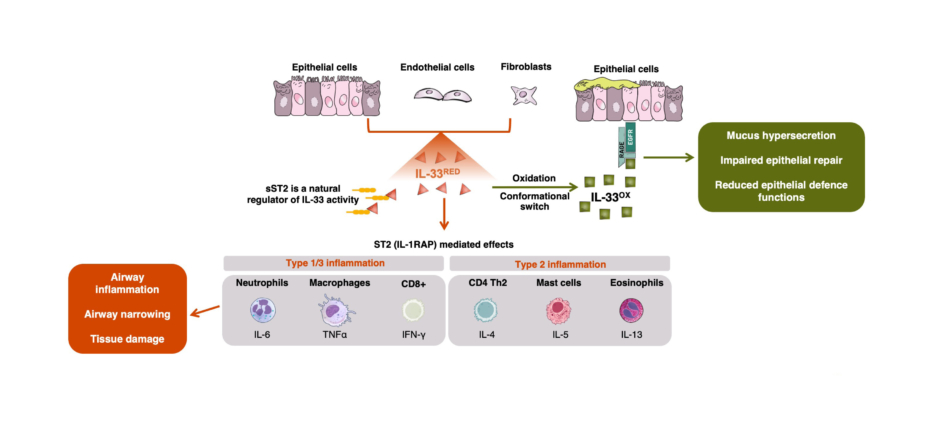
Figure 2: IL-33 is an upstream orchestrator of inflammation, mucus dysfunction and epithelial function13–25
This is a simplified schematic and not a complete overview of all the immune processes involved.
CD: cluster of differentiation; EGFR: epidermal growth factor receptor; IFN-γ: interferon γ; IL-1RAP: IL-1 receptor accessory protein; IL-33OX: oxidised IL-33; IL-33RED: reduced IL-33; RAGE: receptor for advanced glycation end-products; ST2: suppression of tumorigenicity 2 (serum-stimulated 2); sST2: soluble ST2.
Evidence from Human Lung Tissue
Findings from human lung tissue support this mechanistic model. IL-33 is produced and stored in the nuclei of structural cells throughout the airway, including epithelial, alveolar, and endothelial cells, where it can be rapidly released upon cellular damage or triggers.26 IL-33 protein and mRNA are both upregulated in COPD airways relative to healthy controls, with expression increasing alongside disease severity, most markedly in Global Initiative for Chronic Obstructive Lung Disease (GOLD) Stage IV.26 Washko described that the elevated mRNA-to-protein ratio indicates increased IL-33 turnover and active processing rather than passive accumulation, suggesting the mediator is not only expressed in COPD lung tissue, but biologically active, particularly in advanced disease.
The biological signal that Washko describes correlates with clinical burden, as described in multiple studies. Shown in (Figure 3), in an analysis of 62 patients with COPD, those with the highest quartile of IL-33 levels showed significantly greater exacerbation frequency compared to those in the remaining lower IL-33 quartiles (1.00±1.16 versus 0.40±0.62; p=0.01; (Figure 3a).27 Another study of 307 patients with COPD found that significantly more patients with a higher IL-33 level had greater prevalence of chronic productive cough versus those with a low IL-33 level (46.8% versus 32.7%; p=0.016; (Figure 3b).28
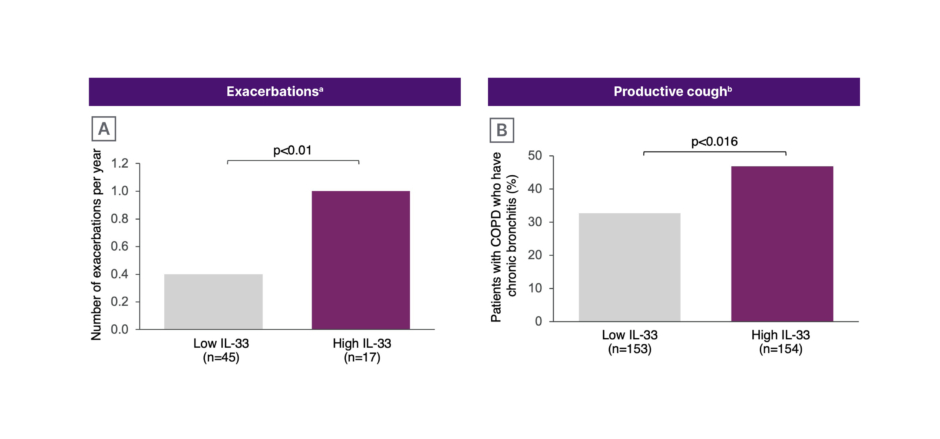
Figure 3: Higher IL-33 levels are associated with exacerbation risk and productive cough.27,28
aIn this analysis of 62 patients with COPD based in Korea, levels of IL-33 in the upper quartile of the cohort were defined as high, with all levels below this value defined as low. Patients were prospectively followed for 1 year and monitored for exacerbation.27
bIn this analysis of 307 patients from the COPD Korean Obstructive Lung Disease cohort, IL-33 levels above the median IL-33 level of the cohort were defined as high, with all values below the median defined as low. At baseline, the median IL-33 level was 11.9 pg/mL (IQR: 7.9–30.6). Plasma IL-33 levels were measured by enzyme-linked immunosorbent assay. This study described productive cough as chronic bronchitis, which was defined as phlegm for 3 or more months per year.28
IQR: interquartile range.
IL-33RED and Inflammation
What makes IL-33RED particularly important in COPD is “the breadth of its inflammatory reach,” Washko noted. Signalling of IL-33RED through ST2 directly drives Type 2 inflammation, promoting recruitment and activation of eosinophils, mast cells, and Type 2 innate lymphoid cells, with downstream release of IL-4, IL-5, and IL-13.13,15 However, the effects of IL-33RED extend beyond Type 2 pathways.
In a preclinical model combining cigarette smoke and viral exposure, smoke exposure altered the lung’s IL-33 responsiveness, silencing ST2 expression on Type 2 innate lymphoid cells while upregulating it on macrophages and natural killer cells.29 This shifted the default inflammatory response away from Type 2 and towards Type 1 inflammation, marked by elevated IFN-α, IFN-γ, IL-6, TNF-α, and IL-12.29 In this mouse model, viral infection superimposed on smoke exposure amplified this effect further, producing a marked increase in Type 1 cytokines.29 Mice deficient in IL-33 or ST2 were protected from the smoke- and influenza-induced exacerbated responses, indicating a non-redundant role for IL-33 in exacerbation-driven inflammatory amplification.29
IL-33OX and Mucus Hypersecretion
Beyond inflammation, IL-33OX plays a central role in structural changes seen in COPD.19 To investigate this, researchers treated bronchial air–liquid interface cultures from healthy donors and patients with COPD with IL-33RED or IL-33OX (30 ng/mL) for 7 days and measured Mucin-5AC (MUC5AC) secretion as a marker of goblet cell activity. IL-33OX promoted a significant increase in MUC5AC secretion compared with IL-33RED (p≤0.01), where no increase was seen.19 Notably, cultures treated with IL-33OX showed goblet cell hyperplasia and mucus hypersecretion that closely resembled the pattern seen with COPD-derived cultures. “It looks like COPD,” Washko described, suggesting that this mucus-driving effect is specific to the oxidised form and mirrors the structural pathology seen in human COPD.19
Impaired Epithelial Repair
IL-33OX also impairs epithelial repair capacity. In an in vitro wound-healing model, airway cultures comprised of normal human bronchial epithelial cells were mechanically scratched and repair assessed at 24 hours following treatment with IL-33OX, IL-33RED, or control.19 Untreated cells demonstrated the expected regenerative capacity of healthy airway epithelium over this period.19 IL-33OX significantly impaired wound closure, reducing repair to approximately 50–60% of the untreated level at 24 hours, whereas IL-33RED did not produce a comparable effect.19
IL-33OX Activity Persists AfterSmoking Cessation
IL-33OX-associated epithelial gene signature was found to be elevated in COPD compared with healthy control tissue, using gene set variation analysis applied to a bronchial brushing cohort of smokers and ex-smokers with and without COPD.19 The highest enrichment was observed in current smokers with COPD; however, this signal remained significantly elevated in lung tissue from former smokers with COPD relative to healthy former smokers (p≤0.01), indicating that the pathway does not resolve with smoking cessation alone.19 “You don’t have complete restoration of this pathway. Something becomes self-perpetuating, becomes recursive that is driving disease,” Washko notes. This suggests that IL-33OX represents an active, disease-sustaining pathway rather than a marker of past injury, with implications for how mucus dysfunction and impaired epithelial repair might be addressed therapeutically in established disease.19 Washko concludes that “all of this points to our original supposition that the dual biology of this molecule [IL-33] may be central to the pathobiology of COPD.”
New Frontiers: Targeting theIL-33 Pathway
Dave Singh
In biologic-eligible patients with COPD, there are currently two approved biologic therapies, both of which are indicated for patients with raised blood eosinophils, described as a “biomarker for Type 2 inflammation.”30,31 “These have been great advances with success for patients with COPD, if you have Type 2 inflammation,” noted Singh, “and it leaves a subset, and it’s the majority of the population, who are not eligible for [these biologics]. We need more therapeutic options.”
As previously described, IL-33 sits upstream and becomes rapidly released in response to danger signals and exists in two biologically distinct forms: IL-33RED and IL-33OX. IL-33RED promotes Type 1, 2, and 3 inflammation, while IL-33OX, which signals through RAGE/EGFR, drives mucus dysfunction and impairs epithelial repair.13,15,19,26 Phase IIb and Phase III clinical trials have since evaluated biologics targeting the IL-33 pathway in patients with COPD and a history of frequent exacerbations, irrespective of blood eosinophil count.32-42 Singh summarised the clinical development programmes and presented data that have been announced or published. Results have been variable across programmes, and several studies have yet to be fully published. Singh reflected that these trials teach us more about the biology of the pathway: “Targeting this pathway: there’s potential here.” Lastly, there are no approved biologics demonstrating an impact on mucus plugging in COPD, a gap Singh describes as a “significant unmet need.” “We need to focus on this more in the shrinking world of the patient with COPD,” he commented.
Final Orbit
The symposium opened by describing COPD as a disease marooned in deep space: vast, complex, and difficult to navigate. Speakers then began to chart that territory. Penz’s account of Michael grounded the audience in the reality of COPD: exacerbations while on triple inhaled therapy, a growing OCS burden, chronic cough, and mucus dysfunction that is common yet often overlooked by conventional clinical metrics. Washko placed IL-33 upstream of this burden. In its reduced form, IL-33RED drives Type 1, 2, and 3 inflammation; in its oxidised form, IL-33OX is linked to mucus dysfunction and impaired epithelial repair. Singh then outlined how this mechanism is being translated into therapeutic candidates. None of these agents is yet licensed for COPD.
The universe of COPD remains vast, but the direction of travel is becoming visible. The field’s questions are moving beyond eosinophils and exacerbations, towards mucus, epithelial repair, and the full breadth of what patients experience. Whether this translates into meaningful clinical benefit remains to be established through adequately powered, prospective trials with clinical endpoints. If confirmed, these insights may help narrow the gap between the measures used in trials and the burden reported by patients like Michael.
Veeva ID: Z4-89686; Date of preparation: November 2026