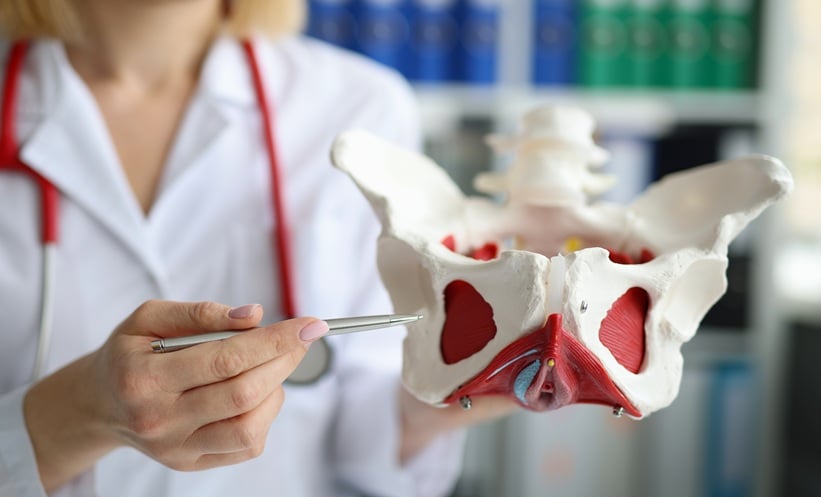
A NEW prospective case–control study suggests that salivary free testosterone may serve as a potential non-invasive biomarker for pelvic organ prolapse (POP) in postmenopausal women. The findings highlight a possible hormonal association with both the development and severity of POP, a common pelvic floor disorder affecting ageing women.
The study enrolled 109 postmenopausal women with POP and 66 age-matched controls without prolapse at Saga University Hospital. Researchers assessed pelvic floor status using the Pelvic Organ Prolapse Quantification (POP-Q) system and measured salivary free testosterone and 17β-estradiol, alongside serum dehydroepiandrosterone sulfate (DHEA-S).
Clinical characteristics, including body mass index (BMI), parity, and lower urinary tract symptoms, were also recorded. Statistical analysis was performed using standard comparative and correlation methods.
Hormone Changes Reflect Pelvic Organ Prolapse Severity
Women with POP had significantly higher BMI and parity compared with controls and reported more severe lower urinary tract symptoms. Hormonal analysis showed a significant reduction in salivary free testosterone levels in the POP group, alongside unexpectedly higher serum DHEA-S levels. Estradiol levels did not differ significantly between groups.
Notably, more advanced prolapse (POP-Q stages III–IV) was associated with further reductions in salivary free testosterone, suggesting a potential relationship between androgen deficiency and disease severity. The pattern of elevated DHEA-S in certain POP stages compared with controls was also observed, although its clinical significance remains unclear.
Study Supports Hormonal Role in POP
The authors propose that reduced circulating androgens, particularly salivary free testosterone, may be linked to POP development and progression. Given its non-invasive nature, salivary testing could offer a practical approach for risk stratification in clinical settings.
However, the study authors caution that causality cannot be established due to its observational design. They highlight the need for larger, longitudinal, multi-centre studies to better understand hormonal mechanisms in pelvic floor disorders and to validate salivary free testosterone as a clinically useful biomarker.
If confirmed, this approach could contribute to earlier identification of women at risk of POP and potentially guide future preventive strategies in postmenopausal care.
Reference
Kawaski M et al. Salivary Free Testosterone as a Potential Biomarker for Pelvic Organ Prolapse in Postmenopausal Women: A Prospective Case–Control Study. Int J Urol. 2026; DOI: 10.1111/iju.70473.
Featured image: H_Ko on Adobe Stock
- Author: