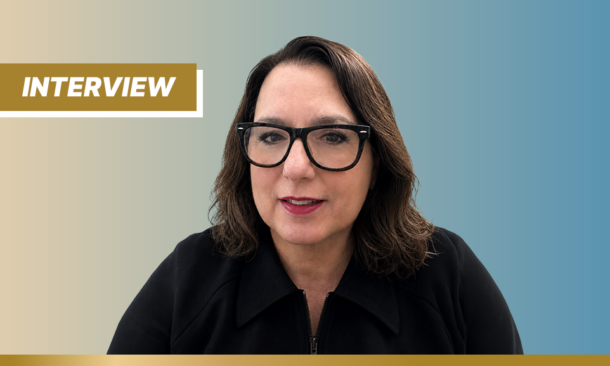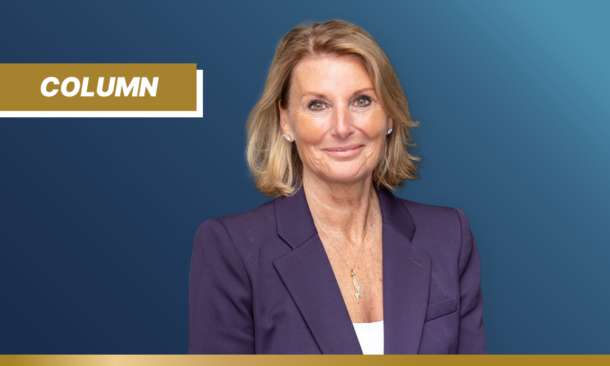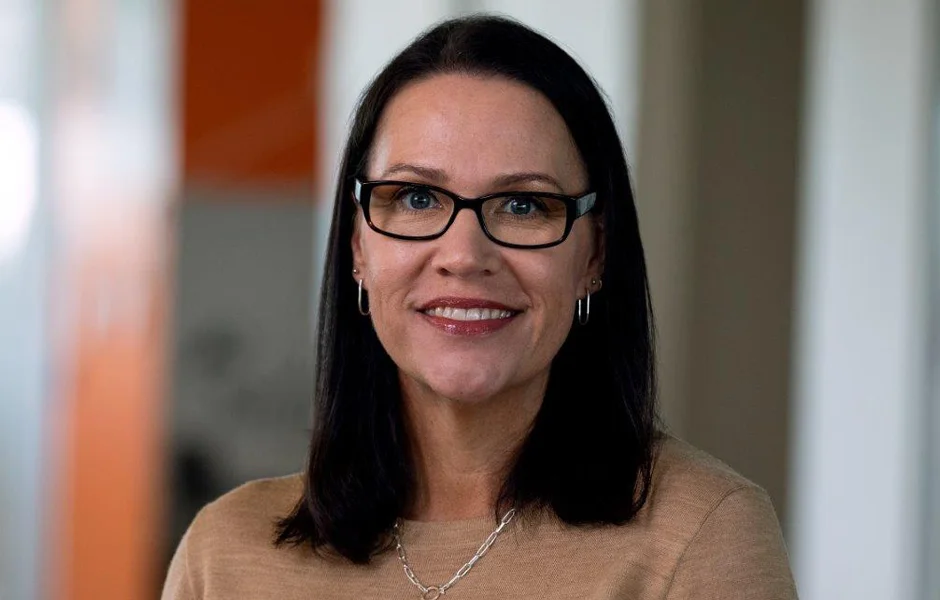
Judy Stewart is the Senior Vice President and Head of US Vaccines at GSK. She discusses her ambition to work in pharmaceuticals and make a difference to public health, the vast GSK vaccine pipeline, leadership and the importance of work-life balance
Words by Isabel O’Brien
Judy Stewart joins our call from Philadelphia. The city is not only the hub for GSK’s US vaccine development business, but her hometown. When she first joined the company in 2002 as the Product Manager for Pediatric Vaccines, this section of the business was still in its infancy. “It was not even a fully-fledged business unit, it was this little group of products that a bunch of people in the corner worked on,” she says.
As Stewart ascended the ranks, her roles took her across the globe to Denmark and London, before she returned to the vaccines side of the business as Vice President for Marketing of US Vaccines in 2017. “It was like coming home again,” she explains. But back then, the business was much different to what it is today — both in terms of pipeline size and people power. She became Senior Vice President and Head of US Vaccines in 2019 and has been integral in expanding the pipeline, building new collaborations, and cultivating the internal culture during an unprecedented time of change in healthcare and beyond.
But why vaccines? “The people that work in vaccines really have a desire to improve public health,” she says. Purpose is important to Judy, and this is a key driver of her passion for the industry. With vaccination development and administration currently experiencing myriad challenges and successes, it’s an exciting time to see that purpose and passion thrive.
What is your first memory of wanting to join to the healthcare sector?
I grew up in a suburb of Philadelphia. The area is known as the pharmaceutical belt between Philadelphia, New York and New Jersey, and I knew a lot of people who worked in pharmaceuticals and healthcare. My sister worked in pharmaceuticals and she really enjoyed it and spoke very highly of it. So, when I graduated from college, I took the Physicians’ Desk Reference – a listing of every drug with a picture of the capsule and how it’s dosed – and found the manufacturers’ index. I went from Astra to – at the time – Zeneca and sent my CV to every single one. It wasn’t the first job I had out of school, but it was my second. I got into the industry that I desired to be in early. I liked the mission. It felt like something purposeful.
Our focus is on protecting as many people as possible
When thinking about your journey to leadership, do you believe individuals are born leaders or is this something that can be worked towards?
When I started out in my career, I never had an aspiration of ‘I want to get this level’ or ‘I want to lead this size business’ or ‘I want to be a leader of this many people’. I don’t subscribe to the fact that it’s a prescribed path. A lot of my leadership style and capabilities were 100% developed over time. I always just worked hard and opportunities came, I wasn’t very thoughtful about it. Then I had a manager who said: ‘You need to be honest with people about when you’re ready to move on and not wait for someone to present that to you.’ And that was really good advice because, up until that point, I had never really proactively done that. This is some years ago now, but it made me manage my own career quite differently.
GSK’s ‘Avalere Health’ study found that routine vaccinations in adults and teens in the US have dropped during COVID-19. How can the industry address this issue before it has implications for public health?
The recent data shows that we’re now 37 million doses behind where we should have been across the whole continuum. Catch up is happening, but mainly in paediatrics where we’ve caught up as kids went back to school. That’s not happening with adolescents and it is really not happening with adults. Diseases that are completely preventable should not be circulating in our communities, but they will come back if we don’t do our jobs. The report is alarming. We’ve been sponsoring it because we want that news to be at the forefront. We’ve been so focused on COVID, and for very good reasons, but the downside is that we’ve lost the focus that we had on routine vaccination of preventable diseases. We want that story to be heard. The industry is seeing it and doing its part, but it’s larger than just the industry. It has to be the entire ecosystem. We’ve done a lot on outreach and education, but there’s still more to do.
GSK and Sanofi have partnered on an adjuvant COVID-19 vaccine that showed positive results in a booster trial at the end of last year. What is the latest on the progress of this vaccine?
We were really happy with the results, and we’re still awaiting the Phase III data. The mRNA platform is a great platform. It has helped in this pandemic, and there will be viruses that are best suited for it. However, there are some challenges with the mRNA vaccines, especially in low-income countries or those that don’t have the infrastructure of the western world, so there is a need for a protein-based, adjuvanted vaccine, too.
We’ve lost the focus that we had on routine vaccination of preventable diseases
What does the future look like for vaccine development beyond COVID? And what does GSK have in the pipeline in terms of vaccinations?
There are gaps in the US marketplace that don’t exist in other markets, for example, measles, mumps and rubella. The only MMR manufacturer on the market here right now is Merck. We are actively pursuing bringing our MMR vaccine to the market because the safest place for governments to be is having options to choose from, especially with vaccines where there can sometimes be supply and capacity issues in manufacturing. We have over 20 vaccines in our pipeline and we’re adding to that every day. Right now, there is a big effort around respiratory syncytial virus, or RSV. Lots of companies are going after it, so it’s highly competitive. RSV is costly to healthcare systems as there’s a lot of hospitalisations. It impacts those with weaker immune systems because of aging, but also quite significantly impacts children. RSV is going to be the next hot thing that everyone is talking about.
Over the course of your career so far, what have you learned about work-life balance that you would urge others to recognise and consider?
I don’t think there’s ever going to be a perfect balance. If your objective is to always be equally aligned, I don’t think that exists. There are days and weeks where you have to focus more on your personal life. Then there are days and weeks where it is the opposite. I subscribe to quality of work being better than quantity of work. It’s not about the number of hours you log. I am also really clear about what my boundaries are. When I leave work, I don’t do emails at all. No one believes me when I say that, but I don’t do it. It is important to set boundaries for yourself as you can very easily wind up resenting your job because you feel like the balance is too wonky. I don’t ever want to be in that space. I love my job, but I love my job because it’s not everything to me. When you layer leadership on top of that, people are going to watch that. You can’t say work-life balance is important then not have it for yourself because then what you’re saying and what you’re doing aren’t matching up. It doesn’t matter what the boundaries are, just set them, communicate them to people and live by them.