Authors: *Nicola Conran,1 David Rees2
- Haematology and Transfusion Centre, University of Campinas (UNICAMP), Sao Paulo, Brazil
- King’s College Hospital, London, UK
*Correspondence to [email protected]
Disclosure: Conran has received grants from the Sao Paulo Research Foundation and Novartis AG; and participated in data safety monitoring or advisory boards for Novo Nordisk. Rees has participated on data safety monitoring or advisory boards for MiNA Therapeutics, Novo Nordisk, Octa Pharma, CSL Behring, Disc Therapeutics, Nuvamid, and Novartis.
Keywords: Clinical trials, drugs, haemoglobin SC (HbSC) disease, management, pathophysiology, sickle cell disease (SCD).
Citation: EMJ Hematol. 2026;14[1]:25-28. https://doi.org/10.33590/emjhematol/2H9SYSO2

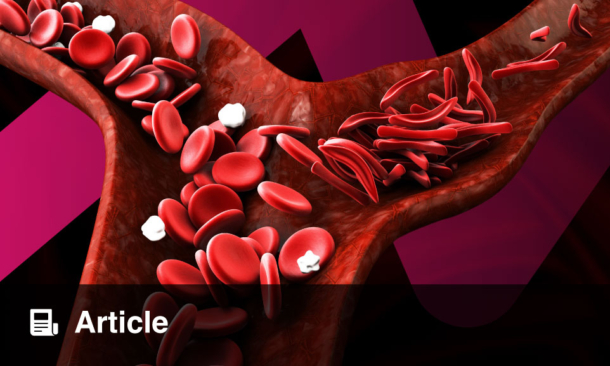
THIS YEAR’S EHA Congress highlighted the expanded interest in sickle cell anaemia (SCA) and sickle cell syndromes, reflecting the diseases’ growing footprint in Europe. Mapping the pathophysiology of distinct conditions like haemoglobin SC (HbSC) disease remains crucial for designing much-needed new therapies. Pipeline updates drew significant attention, alongside sessions highlighting SCA as a prime target for gene-editing breakthroughs.
TRANSLATIONAL RESEARCH GAINS MOMENTUM
It was an exciting time for championing progress in sickle cell disease (SCD) at the European Hematology Association (EHA) Congress 2026. The Congress highlighted a growing interest in translational research in the field, alongside updates on the latest therapies and advances in managing this lifelong, historically neglected, and devastating disease.
TARGETING INFLAMMASOME-DRIVEN DISEASE PATHWAYS
Understanding the pathophysiology of SCD remains fundamental to developing new therapeutic approaches. The inflammatory pathways driving many of its complications were brought into focus during a session on the ‘Inflammasome and its role in congenital anaemias’. In addition to exploring how therapeutic mRNAs might disrupt inflammasome assembly and restore erythropoiesis, the session highlighted how haemolysis can trigger this molecular signalling platform.1 Once activated, it promotes abnormal vascular responses, haemodynamic disturbances, and impaired tissue perfusion.2 Together, these findings strengthen the rationale for therapies in SCD targeting the inflammasome machinery or its downstream cytokines, such as IL-1β.
NEW INSIGHTS INTODISEASE COMPLICATIONS
Other translational sessions highlighted exciting advances. One oral presentation identified a novel role for ‘inflammaging’ in the development of sickle cell cardiomyopathy, demonstrating that the microtubule inhibitor, colchicine, displayed cardioprotective effects in a mouse model. Another presentation described an integrated plasma-placental atlas of SCD pregnancy, revealing a dynamic signature of systemic vascular and inflammatory dysregulation spanning endothelial, coagulation, immune, and complement pathways. These findings could be important for identifying actionable biomarkers to improve risk stratification and mitigate adverse pregnancy outcomes.
THE NEXT GENERATION OFHbF THERAPIES
Progress in the drug pipeline was heavily featured in the session on ‘Future Treatments in Sickle Cell Disease’, which highlighted small molecules aimed at inducing fetal haemoglobin (HbF) production. These molecules broadly fall into three categories: epigenetic modulators, agents that suppress or displace γ-globin repressors, and compounds that modulate cellular signalling. Current strategies include optimising existing HbF inducers (e.g., NDec), repurposing established drugs like panobinostat, and utilising computational and structure-based drug discovery to identify novel molecules featuring new mechanisms of action, such as targeted protein degradation.
ADVANCING IN VIVO GENE EDITING AND SHOWCASING CLINICAL TRIAL DATA
The Congress also saw evolving science placing in vivo gene editing at the forefront of curative strategies, with efforts directed towards improving the delivery of these constructs to haematopoietic stem cells.3 One approach discussed was the use of lipid nanoparticles to deliver ‘Gene Writers’ directly to these target cells.Clinical trial findings have reinforced the potential of the latest disease-modifying therapies in development. Oral presentations included efficacy and safety data for mitapivat (from the RISE UP Phase III trial; NCT05031780), providing the first validation of pyruvate kinase activation as a therapeutic strategy in SCD, where significant improvements in haemoglobin levels and reduced transfusion requirements were reported. Key findings from the Phase II ASCENT1 study (NCT05405114) of the oral HbF inducer NDec (tetrahydrouridine-decitabine) in adults were also presented. The trial demonstrated that NDec acts as a direct inducer of HbF, even in patients with poor responses to hydroxyurea, with a twice-weekly regimen achieving significant, sustained increases in total haemoglobin, HbF percentage, and F cells, alongside a favourable benefit–risk profile. This regimen is now progressing to Phase III evaluation. Finally, Phase Ib data for pociredir (NCT05169580) showed that a once-daily treatment for 12 weeks (at 12 or 20 mg) was generally well tolerated and resulted in clinically meaningful, dose-dependent HbF induction, supporting its further clinical development.
RECOGNISING HbSC AS A DISTINCT CONDITION
An emerging concept emphasised at the Congress, in the ‘HbSC disease’ session, is that HbSC disease should be considered a distinct disease entity rather than a mere variant of classical HbSS (sickle cell anaemia). Affecting an estimated 1–2 million people worldwide, HbSC is even more neglected than HbSS, particularly regarding clinical trial inclusion and understanding its pathophysiology, despite being associated with significant morbidity, including retinopathy and splenomegaly.
The biology of HbSC disease is unique; HbSC red blood cells sickle less readily than HbSS cells, but are highly prone to dehydration, resulting in reduced haemolysis, increased blood viscosity, and a distinct clinical phenotype.4 Representing a promising advance, new murine models that successfully recapitulate the key features of HbSC disease will provide a vital platform for future mechanistic and translational studies.5 Overall, this growing recognition of HbSC as a biologically distinct condition highlights the need to move beyond a one-size-fits-all approach to SCD. While interest is increasing in strategies targeting the K-Cl cotransporter, oxidative stress, inflammation, and iron homeostasis, these needs are finally beginning to be addressed. This shift coincides with the evolving EHA recommendations that are currently under review, which include the selective use of hydroxyurea in children and adults with HbSC, and the use of phlebotomy, under certain circumstances, in patients aged 12 years or older.
CONCLUSION
Taken together, the achievements shared at EHA 2026 reflect a clear shift in the sickle cell landscape, from in vivo gene editing approaches to a more tailored view of HbSC disease, with the field shifting from generalised management towards targeted and potentially curative strategies. For the millions of people living with these conditions worldwide, these advances represent important steps forward in shaping novel therapeutic possibilities.