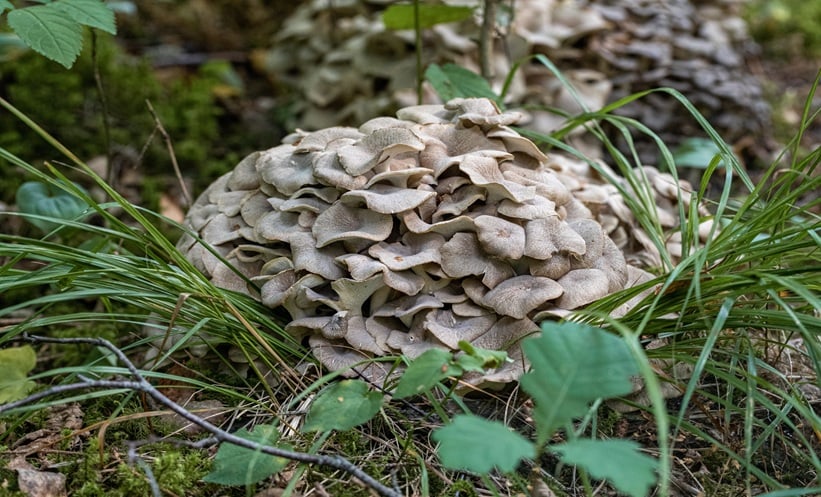
MAITAKE mushroom supplementation reduced selected cold symptom days but did not prevent respiratory infections in healthy adults.
The randomized, double blind, placebo-controlled trial enrolled 166 healthy adults in Japan. Participants consumed bread containing one of two maitake mushroom strains, Y10M or C5304, or placebo bread each day. Young adults completed 11 weeks of supplementation, while middle aged and older adults completed 18 weeks.
Overall, neither maitake strain significantly reduced the proportion of participants who developed an upper respiratory tract infection. This is an important distinction for clinicians discussing the findings with patients: the study does not show that maitake prevents colds or other respiratory infections.
However, participants receiving the Y10M strain experienced fewer cumulative days with certain symptoms. Fever and runny nose days were reduced in both age groups, while sore throat days were reduced among younger adults. Cough duration was not improved.
Benefits Varied Between Maitake Strains
The results differed substantially between the two maitake strains. C5304 reduced runny nose days only among younger adults and did not consistently improve other symptoms. Among middle aged and older participants, it was associated with more cumulative cough days than placebo.
Both strains contained broadly comparable amounts of beta glucan, a component associated with immune activity. The differing results suggest that the effects of one maitake product should not be assumed to apply to other strains or formulations.
Immune Findings Offer a Possible Explanation
Researchers also identified changes in innate immunity, the body’s early response to infection. Middle aged and older adults began the study with lower levels and activation of certain dendritic cells, which help detect pathogens and coordinate immune responses.
Y10M supplementation increased the frequency or activation of selected dendritic cells in this group. Laboratory testing also indicated stronger activity in pathways involved in antiviral defense, including type I interferon signaling. These biological findings support a possible immune effect but do not prove that the immune changes caused the reductions in symptom days.
Findings Are Not Yet Practice Changing
Respiratory infections were identified from self reported symptoms rather than physician diagnoses or laboratory testing. Infection rates were also lower than expected, and the trial was not designed primarily to establish effects on individual symptoms.
The study therefore provides preliminary evidence of symptom and immune effects rather than support for recommending maitake supplementation. Larger trials using confirmed respiratory infections, consistent follow up periods, and more diverse populations are needed.
Reference
Masuda Y et al. Maitake mushroom supplementation modulates upper respiratory symptoms and immune responses in healthy adults: a randomized, double-blind, placebo-controlled trial. Food Funct. 2026;doi:10.1039/d6fo01593j.
Featured Image: smiltena on Adobe Stock.