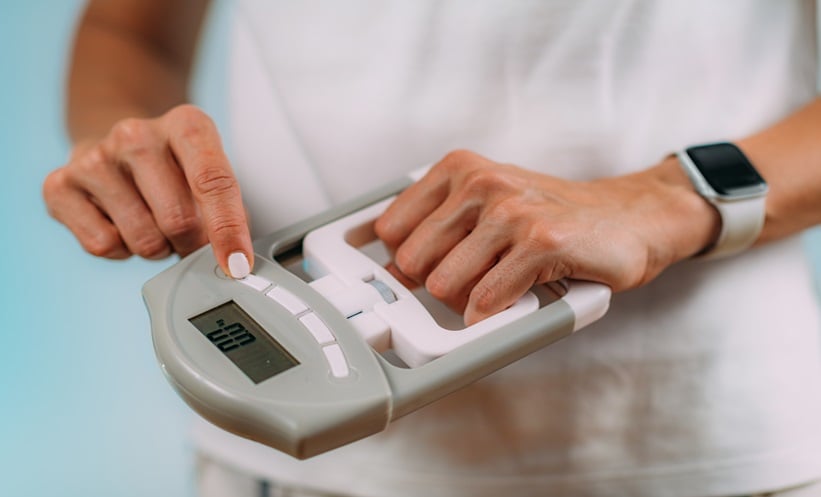
Hand grip strength should not be used as a surrogate for core muscle strength in people with axial spondyloarthritis, according to a new study. Despite modest associations between grip and core endurance measures, researchers found that grip strength does not adequately capture the degree of core muscle impairment seen in this patient population.
Core Muscle Endurance Is Significantly Reduced in axSpA
The study analysed routinely collected fitness assessment data from 112 people with axial spondyloarthritis and compared them with 160 age-matched healthy controls. Participants underwent testing of ventral, dorsal, and lateral core muscle endurance, alongside hand grip strength measurements.
Across all core domains, people with axial spondyloarthritis demonstrated significantly poorer performance than healthy controls. Ventral core endurance was reduced by an average of 28 seconds, lateral endurance by 17 seconds, and dorsal endurance by 39 seconds. Grip strength was also lower in the axSpA group, with a mean difference of 3.7 units compared with controls.
These findings confirm that both global and trunk-specific muscle weakness are present in axSpA, even among individuals participating in regular group exercise therapy.
Limited Association Between Grip and Core Strength
To determine whether grip strength could serve as a practical proxy for core strength, the researchers examined correlations between grip strength and individual core endurance measures. While statistically significant associations were observed, they were modest.
A multivariable linear regression model incorporating ventral, dorsal, and lateral core endurance, along with age and sex, explained 44% of the variability in grip strength among people with axial spondyloarthritis. However, the contribution of core endurance measures to grip strength was marginal, indicating that grip strength reflects different aspects of physical function than trunk muscle endurance.
Implications for Clinical Assessment and Exercise Monitoring
The findings suggest that hand grip strength, while easy to measure, cannot replace dedicated core strength testing in axial spondyloarthritis. Core muscle endurance deficits appear to be a distinct and clinically relevant feature of axSpA that may be overlooked if assessments rely solely on grip strength.
For clinicians and physiotherapists involved in exercise therapy and functional monitoring, the results highlight the importance of continuing targeted core assessments, despite their greater time demands. Simplified measures may improve efficiency, but they should not compromise the accurate identification of trunk muscle weakness in this population.
Reference
Rausch Osthoff AK et al. Association between grip and core muscle strength in people with axial spondyloarthritis and healthy controls. BMC Rheumatol. 2025;DOI: 10.1186/s41927-025-00575-y.
- Author: