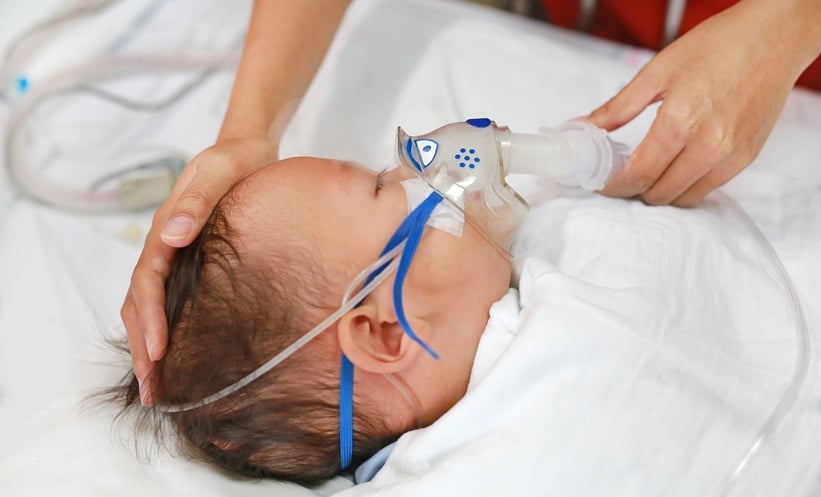
NEONATAL respiratory distress syndrome (NRDS) is a leading cause of illness and death in newborns, often requiring intensive care and mechanical ventilation (MV). Prolonged MV can contribute to serious complications, making early identification of high-risk infants crucial. Recent research has shown that the neonatal Sequential Organ Failure Assessment (nSOFA) score may provide a simple and effective way to predict which newborns with NRDS are likely to need extended ventilation.
nSOFA Score Linked to Prolonged Mechanical Ventilation
A retrospective cohort study analysed data from 642 infants with NRDS admitted to neonatal intensive care units (NICUs) between 2001 and 2012. Infants were divided into two groups based on MV duration: prolonged (>96 hours) and non-prolonged (≤96 hours). Researchers found that for every 1-point increase in the nSOFA score within 24 hours of admission, the risk of prolonged MV increased by 29%.
The study showed that the nSOFA score had moderate predictive ability, with an area under the curve (AUC) of 0.72. This was superior to the respiratory sub-score alone and comparable to the full SOFA score. Using a cutoff of 3 points, the nSOFA score correctly identified 64% of infants who would need prolonged ventilation and excluded 70% who would not.
Implications for Early Risk Assessment in Neonatal Respiratory Distress Syndrome
These findings suggest that the nSOFA score is a valuable tool for early risk stratification in NRDS. Its simplicity and rapid calculation make it suitable for NICU settings, where timely decisions can impact outcomes. Identifying infants at higher risk for prolonged MV may help clinicians plan interventions, monitor patients more closely, and potentially improve survival and long-term health.
While promising, the study authors emphasise the need for multicentre research to validate these results and explore whether continuous or dynamic nSOFA monitoring could further enhance predictive accuracy.
Reference
Wang L et al. nSOFA scores predict prolonged mechanical ventilation in neonatal respiratory distress syndrome: a retrospective cohort study. BMC Pediatr. 2025; DOI:10.1186/s12887-025-06395-w.
- Author: