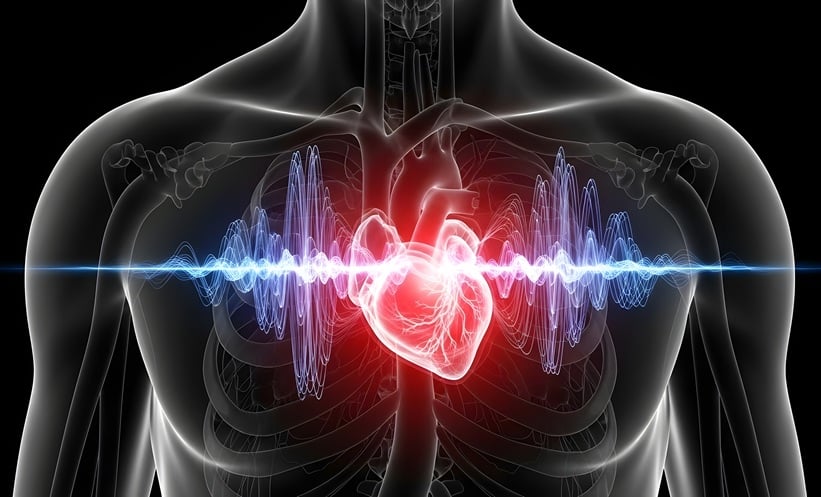
NON-INVASIVE cardiac mapping was shown to accurately reconstruct three-dimensional cardiac electrical activity, offering a new way to localise complex arrhythmias without invasive procedures, according to new research.
Cardiac arrhythmias remain a major global health burden, increasing the risk of stroke, heart failure, and sudden cardiac death. Precise localisation of abnormal electrical activity is critical for effective catheter ablation and accurate pre-procedural planning. However, existing electrocardiographic imaging techniques typically reconstruct activity only on the heart’s surface, limiting their ability to identify arrhythmias arising deep within the myocardium.
Non-Invasive Cardiac Mapping Beyond the Heart Surface
In the new study, researchers developed a volumetric, imageless electrocardiographic imaging approach that extended non-invasive cardiac mapping from the epicardium into the full three-dimensional heart muscle. Using body-surface electrical signals combined with computational modelling and Green’s functions, the method solved an inverse source problem to reconstruct volumetric cardiac activation.
The technique was evaluated using simulated premature ventricular beats and tested in four patients with clinically challenging rhythm disorders, including ventricular tachycardia, left bundle branch block, Wolff–Parkinson–White syndrome, and a premature ventricular contraction originating from the right ventricular outflow tract. Performance was also assessed using an open-source dataset for myocardial infarction estimation.
Volumetric non-invasive cardiac mapping reduced geodesic localisation error by 59.3% compared with surface-only approaches, demonstrating substantially improved accuracy in identifying arrhythmia origins. In all patient cases, reconstructed activation patterns were consistent with clinical diagnoses, supporting the method’s translational relevance.
Arrhythmias occur when the heart’s normal electrical signalling is disrupted, leading to irregular or abnormal heartbeats. Accurate mapping of these signals is essential for targeting abnormal tissue during ablation or optimising cardiac resynchronisation therapy, yet conventional mapping often requires invasive catheter-based procedures.
Clinical Implications for Arrhythmia Treatment
The findings suggest that volumetric non-invasive cardiac mapping could support more accurate pre-procedural planning, improve guidance of ablation targets, and refine candidate selection for cardiac resynchronisation therapy. By avoiding invasive mapping, the approach may also increase accessibility and reduce procedural risk.
The authors noted that the study involved a small number of patient cases and emphasised the need for validation in larger clinical cohorts. Future research will assess whether integrating three-dimensional non-invasive cardiac mapping into routine workflows improves procedural outcomes and long-term patient care.
Reference
Vicente-Puig J et al. Volumetric non-invasive cardiac mapping for accessible global arrhythmia characterization. 2026. Commun Med. 2026: DOI;10.1038/s43856-025-01332-5.
- Author: