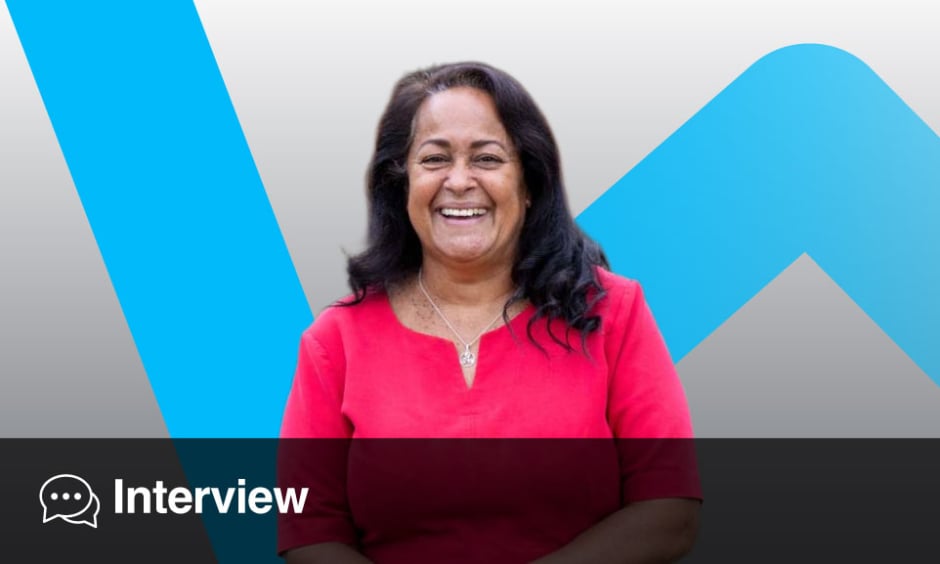
Joyce Harper | Professor of Reproductive Science, University College London, UK; Head of the Reproductive Science and Society Group; Founder of Global Women Connected and Director of the Embryology and PGD Academy; Co-founder of the International Reproductive Health Education Collaboration; Co-founder and Co-lead of InTune; Co-founder of SwimHer
Author: Alena Sofieva, EMJ, London, UK
Citation: EMJ Repro Health. 2026;12[1]:73-77. https://doi.org/10.33590/emjreprohealth/CVBH6558

Could you start by telling us about your professional journey? You began in laboratory-based reproductive science and genetics, yet much of your recent work focuses on education, policy, and public engagement. What prompted that shift, and did you encounter resistance within academia when moving beyond the lab?
When I finished my PhD in 1987, I started working as a clinical embryologist in one of the busiest fertility clinics in the UK. Although I had always been interested in teaching and learning, I quickly realised how little I understood about my own body.
Despite having two degrees, I was a 25-year-old woman who did not really understand my menstrual cycle or fertility. I began reading extensively and soon realised there was no clear book explaining reproductive health to young women. So in 1987, I started writing one myself.
Life moved quickly, and before I knew it, it was 2015, and the book was still unfinished. More than a decade earlier, I had set up a website called Global Women Connected, where a small team of us worked to debunk fertility myths and discuss new research in women’s health. That experience reinforced my belief that while online resources are useful, books still matter.
I returned to the manuscript and eventually published ‘Your Fertile Years’ in 2021, a book that had been in development since 1987.
Alongside this, I was deeply involved in lab work and loved embryology. However, when I was 29, my boss asked whether I wanted to step out of the lab and manage the clinic. That question prompted me to reflect on whether I wanted to spend the next 20 years in a fertility clinic. Although I enjoyed managing the lab, my passion for education and research was growing.
In 1992, I returned to academia and joined the Hammersmith Hospital team in the UK, working on pre-implantation genetic testing. I remained in lab-based research for many years and, in 1996, established my first Master’s course at University College London, UK, where I still work today.
Over time, the field of pre-implantation genetic diagnosis became increasingly commercialised, with large diagnostic companies taking over much of the work. My team and I preferred to remain focused on smaller-scale, research-driven work, and around 10 years ago we closed our preimplantation genetic testing (PGT) programme, and I stepped away from lab work.
That allowed me to return fully to public education in reproductive health. In 2015, we established the British Fertility Education Initiative, and in 2019, I set up an international group. For more than a decade now, my work has focused on educating the public about reproductive health, from puberty through to menopause.
Have you been writing your book throughout all these years, or were there breaks in between?
There were breaks. I wrote quite a bit, about half a book, in 1987, and then stopped. At the time, I did not feel qualified enough to write it, and life was very busy. I only returned to it around 2015, which meant there was almost a 20-year gap.
Finishing the book took years and felt like doing another PhD. I read extensively, going back to the original papers on the menstrual cycle, fertility, and the fertile window to understand where common myths came from and what evidence actually supported them. That process made the book very time-consuming, but it was important. Before that, I had written books on PGT.
I have now just finished my next book, which took 2.5 years to write, so I have definitely become faster.
Your book was written for the public rather than clinicians. What misconceptions about fertility surprised you most while researching it, and how did translating complex science for a lay audience change how you approach your academic work?
I have always been passionate about engaging with the public. Even when I worked in a fertility clinic, I loved running patient evenings. Patients would come to learn what was going to happen to them, because simply attending a clinic appointment is not enough. I felt it was important to teach the basics before people even saw a doctor.
That drive to educate the public has been there since the 1980s. The book is very much written for a lay audience, although it does include a strong scientific foundation.
‘Your Fertile Years’ is the book I would have liked to read when I was 25. I still stand by it. For many intelligent, educated women, understanding what is evidence-based and what is not is empowering.
Women often struggle to find reliable information about reproductive health. Should education start during school years, and how would you change the school curriculum?
We have done extensive research in the UK, Japan, Belgium, and Greece, speaking to young people and conducting surveys. Across all of this work, whether with school children, adult women, or perimenopausal and postmenopausal women, the message is consistent: education needs to start at school.
I work closely with teachers, and we have developed a free teaching resource covering reproductive health from puberty to menopause, available on the International Reproductive Health Education Collaboration (IRHEC) website. We are also beginning a project to review school curricula in different countries, to understand what is currently taught, identify gaps, and define what should be included. Schools need to address topics such as PCOS, endometriosis, miscarriage, fertility, and menopause.
Education also needs to be age appropriate. The basics should be taught at school, but when people are trying to conceive, they need a reliable source of information. We have developed information leaflets on getting pregnant and infertility, and I would like people to have access to structured sessions, online or in person, where they can learn about the fertile window, lifestyle factors, and related issues.
The same applies at perimenopause, often around the age of 40, women should be offered age-appropriate education about what to expect. This is what I am working on now: developing, testing, and refining educational resources around fertility and menopause at key life stages.
As a UK-based publication, we are especially interested in the UK curriculum. Do you think it is sufficient, or should it be broader?
It is getting there, and I do think the UK curriculum is probably one of the best in the world. I cannot say that definitively until our study is complete, but the wording is among the most comprehensive. An updated version was published in 2019 and later expanded to include more on periods, including difficult periods, endometriosis, and PCOS.
I am working with Wellbeing of Women on educational resources focused specifically on menstruation, which we are testing in schools next year. Menstruation is a good example of where education has historically been lacking. Many women around the world report having had no more than two lessons on menstruation during their entire school education, which is clearly insufficient. We are therefore working to make teaching more comprehensive and to ensure boys are included as well, as they are often excluded from these lessons. The UK has a solid framework, but it can still be improved.
One of the main challenges is how this content is delivered. In many schools, it is taught by form tutors rather than by teachers trained in pastoral education. I do not think it should be outsourced to external speakers. Instead, schools need designated teachers who are comfortable with these topics and who students can approach with questions.
When lessons on periods, miscarriage, or menopause are delivered by teachers who do not feel confident discussing them, it can reinforce discomfort and taboo rather than reduce it. In some schools, including my local school, this has been addressed by assigning a group of teachers to cover all pastoral topics. These teachers deliver the content every year, not just once, and become trusted sources of support. Importantly, boys and girls are taught together.
Having seen both the scientific and commercial landscape of fertility treatment, do you think the current research model in reproductive medicine adequately protects patients from premature clinical adoption of new technology?
No. I think we have got into a mess, and I think it is getting worse. I worked on PGT for many years, and in IVF, we now have a growing list of what we call IVF add-ons, treatments developed to try to improve the chance of getting pregnant. Unfortunately, almost all of them have no evidence that they improve live birth rates, yet they are being used in many clinics. Non-evidence based treatments have become normalised.
Outside clinics, many people turn to supplements, complementary therapies, and alternative treatments, most of which lack evidence. Social media often markets these as beneficial, leading many to take supplements that can be ineffective or even harmful. We are currently researching this area.
In menopause care, I describe the situation as the ‘Wild West’. I recently recorded a podcast on this topic, and we have submitted a paper examining supplements. Women are frequently encouraged to try multiple interventions to manage symptoms rather than being advised to seek medical care.
Hormone testing is another example. It is often presented as empowering, yet most women do not need it. This fuels a narrative that women are inherently unwell, that menstruation and menopause require constant testing, treatment, and intervention.
I advocate returning to basics: nutrition, exercise, sleep, mental health, relationships, and community, the five pillars of health. If something is being sold on social media, it should be approached with caution. Although more research in women’s health is essential, women are currently being overwhelmed by misinformation.
As a professor at UCL and a long-time educator, how have your students’ attitudes towards fertility, menstruation, and menopause changed over the past decades? What gaps do you still see in medical and life science education?
I have been teaching since 1996, and students have changed significantly. We have evolved with them. There is now far greater emphasis on the societal context of what they are learning.
One notable shift is in language. Ten years ago, teaching focused on binary descriptions. Women menstruate and men produce sperm. This is no longer sufficient. Gendered language is now more complex, and we must be careful when discussing people who menstruate, as this does not apply only to women. We have undertaken research on supporting the LGBTQ community in this area, although it remains a challenging landscape.
Significant gaps in women’s health persist. For decades, women were underrepresented in research because hormonal variation across the menstrual cycle was seen as a barrier. As a result, when treatments were developed for both men and women, women were often excluded. We now recognise that findings from men do not always translate to women. Hormonal biology has a major influence on health outcomes.
This affects how women experience conditions such as heart disease, osteoporosis, and dementia. It is encouraging that women’s health is now firmly on the agenda. While some taboos remain, the next decade is likely to see substantial progress, with a growing body of high-quality research.
Although major knowledge gaps remain, I feel privileged to educate the next generation who will help address them. It is an exciting time to be working in reproductive health, both in education and in fundamental research.
Finally, what advice would you give to an early-career researcher who wants to combine rigorous reproductive science with public education and advocacy? Is there anything you would do differently in your own career?
There are now excellent courses that integrate science and society. In my department, I have just finished teaching a module titled ‘Fertility and Infertility, Science and Society’, which reflects how training in this area has evolved.
With rapid developments in women’s health technology, fertility research, reproductive health education, and menopause research, this is a far more exciting field to enter than when I began. Early-career researchers need to understand the role of social media and public communication. I am active on various platforms and I believe engagement in this space is now essential.
I do not regret my career path, but I spent many years in laboratory research and enjoy my current work far more. I gain energy from teaching, public engagement, and working with people, and I feel I have found the right fit.
With hindsight, I would have left lab work earlier. My advice to early-career researchers is to think carefully about what they enjoy day to day and choose a career that suits their personality. Gaining qualifications that help identify your passion and then following it will lead to a fulfilling career.