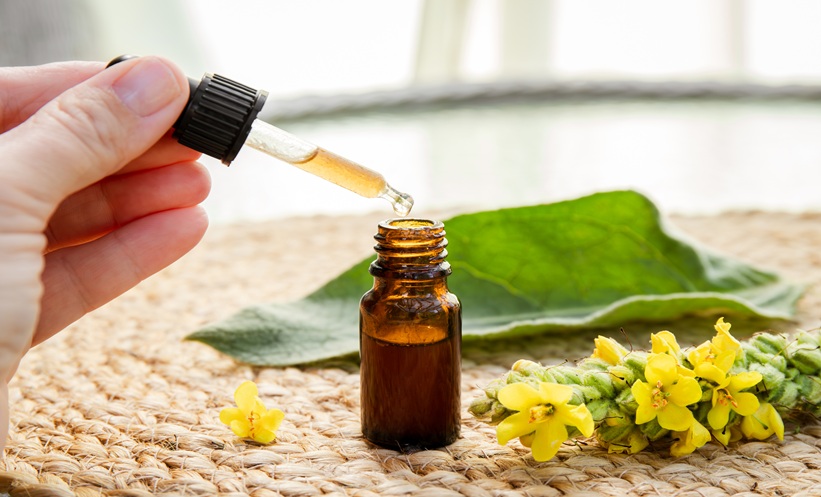
MULLEIN leaf extract showed the strongest antibacterial activity against resistant E. coli and Enterococcus in lab tests.
Testing Plant Fractions Against Resistant Pathogens
A new laboratory study evaluated whether pyrolysis-derived plant fractions could inhibit antibiotic-resistant bacteria, and whether the choice of culture medium changes what clinicians and researchers might interpret as “activity.” Using a PID-controlled pyrolysis system, investigators produced extracts from rosehip fruit, orange peel, corn silk, spurge root, and Mullein Leaf.
Antibacterial effects were assessed via agar well diffusion against four clinically important pathogens: Escherichia coli, Pseudomonas aeruginosa, Staphylococcus aureus, and Enterococcus faecalis. Ampicillin served as the positive control. A core novelty was the side-by-side comparison of performance on nutrient agar and Müller-Hinton agar, highlighting how media composition can alter diffusion and apparent growth inhibition.
Mullein Leaf Extract Shows Strongest Signal
Across all tested strains, the Mullein Leaf extract generated the largest inhibition zones among the plant fractions. On nutrient agar, the inhibition zone reached 18.85 mm for E. coli and 17.15 mm for E. faecalis. On Müller-Hinton agar, the same extract produced smaller zones (13.05 mm and 13.60 mm, respectively), suggesting that measurable antibacterial effects were medium dependent.
Corn silk and spurge root extracts showed moderate antibacterial activity, with a consistent pattern of larger inhibition zones on nutrient agar than on Müller-Hinton agar.
Why Agar Choice May Matter
Notably, even ampicillin produced substantially larger inhibition zones on nutrient agar for some organisms, reinforcing that culture medium selection can influence the magnitude of observed inhibition. The authors conclude that pyrolysis-derived plant fractions, particularly mullein leaf, may represent promising natural antimicrobial candidates, while also emphasizing that agar choice is a critical variable when comparing results across studies.
Reference: Demirel MH et al. Antibacterial efficacy of pyrolysis-derived plant fractions against resistant pathogens: a comparative evaluation using nutrient and Müller-Hinton agar. J Sci Food Agric. 2026; DOI: 10.1002/jsfa.70455.
- Author: