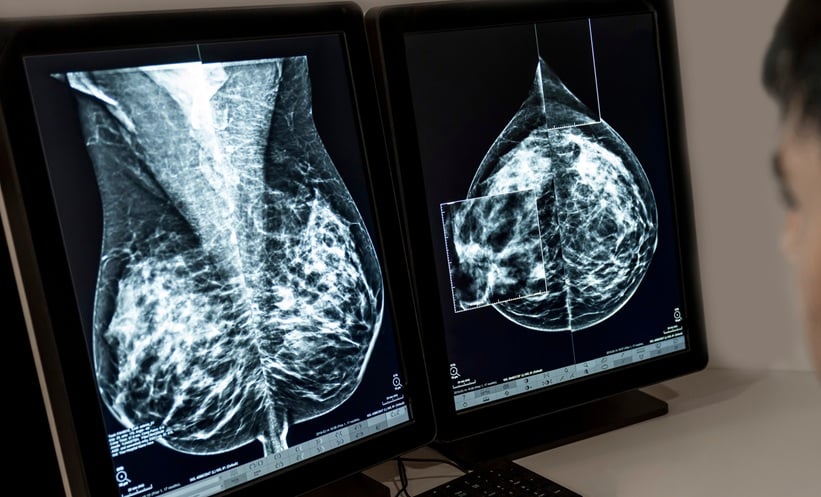
MAMMOGRAPHIC surveillance significantly lowers mortality among survivors of breast cancer and the use of adjunct imaging techniques may enhance early detection, a 2026 systematic review and meta-analysis has found.
Although, mammographic surveillance had a lower diagnostic accuracy in survivors of breast cancer than in the screening population. Adjunct imaging modalities, including magnetic resonance imaging (MRI), can enhance early detection.
Mammography Surveillance in Survivors of Breast Cancer
A growing number of survivors of breast cancer require post-treatment surveillance to improve outcomes. Breast cancer is the most common cancer diagnosed in women, and its prevalence is rising globally.
The systematic review and meta-analysis assessed surveillance techniques including mammography, ultrasonography, MRI, and digital breast tomosynthesis. Overall, 18 studies met the eligibility criteria.
The pooled sensitivity, specificity, and accuracy of mammographic surveillance were 81%, 71%, and 76% respectively. A 50% reduction in mortality risk was linked to mammographic surveillance, compared to individuals without surveillance.
MRI showed better sensitivity (91%) and specificity (82%), than both mammography and ultrasonography.
Limitations
There was high heterogeneity between studies, which could have stemmed from variations in surveillance protocols, imaging frequency, and outcome definitions. Discrepancies were also noted in mortality endpoints because some studies assessed breast cancer-specific mortality, whereas others considered all-cause mortality. Where possible, breast cancer mortality was used.
Most included studies were conducted in high-income countries, limiting generalisability.
Clinical Implications
The pooled sensitivity, specificity, and accuracy of mammographic surveillance, notably lower than 92% often cited at initial screening or in diagnostic settings, could be explained by unique challenges in post-treatment imaging. For example, interval cancer, scarring, and architectural distortion are more prevalent in survivors of breast cancer.
Breast-conserving therapy, in particular, frequently produces post-surgical and radiation-induced changes that obscure subtle lesions.
The analysis nonetheless highlights the importance of mammographic surveillance in post-treatment care as an essential element of reducing mortality among survivors of breast cancer. Standardised surveillance protocols were suggested to improve post-treatment monitoring and patient outcomes.
Researchers proposed that the integration of AI-driven image processing in mammographic surveillance may improve sensitivity and specificity.
Reference
Icanervilia A V et al. Radiology surveillance for breast cancer survivors: a systematic review and meta-analysis. Asian Pac J Cancer Prev. 2026;27(2):433-442.
- Author: