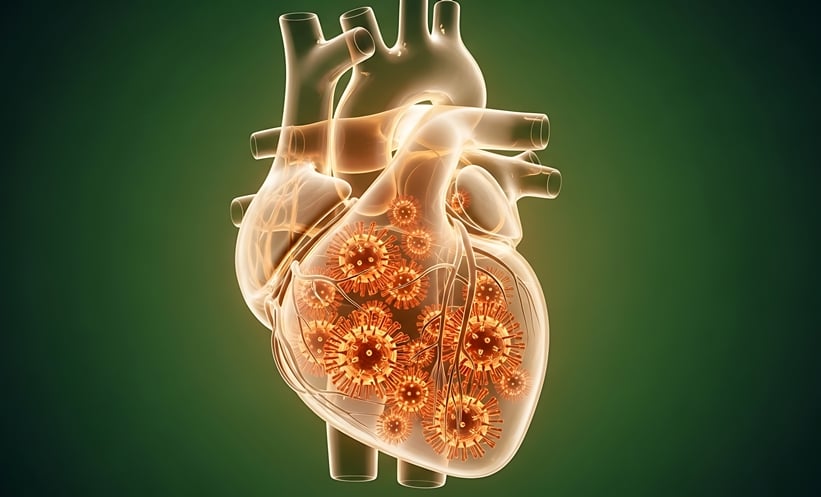
NEW research reveals how influenza can directly damage the heart by hijacking immune cells, leading to long-lasting cardiac dysfunction even after lung infection clears. The study demonstrates that severe influenza A virus infection triggers a cascade where the virus infects specialised immune cells that then ferry it to heart muscle cells, unleashing harmful inflammatory signals.
Influenza heart damage refers to cardiovascular complications following influenza infection, where the virus or the body’s immune response impairs heart muscle function. While clinicians have long observed heart complications after severe flu cases, the precise mechanism linking respiratory infection to cardiac injury remained unclear until now.
Immune Cells Become Influenza Transporters
The research identifies a specific subset of circulating immune cells called pro-dendritic cell 3 (pro-DC3) that express high levels of CCR2, a chemokine receptor. These pro-DC3 cells become infected in the lungs shortly after influenza exposure. The heart, which naturally produces high levels of CCL2 , the ligand for CCR2, acts like a magnet, preferentially attracting these virus-laden immune cells.
Once in the myocardium, the virus escapes from the infected pro-DC3 cells and directly infects cardiomyocytes, heart muscle cells. This triggers strong production of type-I interferon (IFN-I), a key antiviral signalling molecule. However, excessive IFN-I binding to its receptor IFNAR1 on heart cells causes direct tissue damage and compromises cardiac pumping efficiency.
Targeted Protection Preserves Heart Function
Importantly, the study shows this heart damage can be prevented without weakening the lung’s antiviral defences. Using modified mRNA to deliver a dominant-negative version of IFNAR1 specifically to cardiomyocytes dramatically reduced cardiac injury while maintaining effective influenza immunity in the lungs.
These findings suggest that brief, targeted interventions blocking excessive interferon signalling in heart tissue could protect against influenza heart damage during severe infections. For clinicians managing high-risk flu patients, this opens possibilities for cardioprotective strategies alongside standard antiviral treatments, potentially reducing long-term heart failure risk following severe respiratory infections.
Reference
Downey J et al. Influenza hijacks myeloid cells to inflict type-I interferon-fueled damage in the heart. Immunity. 2026; DOI:10.1016/j.immuni.2025.12.011.
- Author: