A RECENT surge of maternal deaths in conflict and fragile settings, where an estimated two-thirds of all maternal deaths occur, has been highlighted by WHO.
Of an estimated 260,000 global maternal deaths in 2023, 61% took place in countries and territories experiencing conflict or institutional and social fragility, as defined by the World Bank.
Conflict settings are identified based on the intensity of violence and number of conflict-related deaths relative to population. Institutional and social fragility is identified based on the quality of governance, policies, and institutions, as well as specific manifestations of fragility.
Global Fragility, Maternal Deaths and Access to Care
There are now more violent conflicts globally than at any time in the past three decades, amid the largest forced displacement crisis ever recorded.
Scientist Jenny Cresswell, sexual and reproductive health and research, WHO, said: “Nearly all maternal deaths are due to preventable causes.
“The medical knowledge that we need to prevent most complications has existed for decades. The thing that we struggle with is ensuring there are robust health systems in place so that women are getting timely access to quality care.
“Is there a skilled health provider available? Are they operating in an environment where they have the right equipment, the right supervision structures, where they are safe, and so on?
“If there’s any barrier to a woman accessing that environment when she’s in labour or otherwise needs care, then the risk of adverse outcomes, death being the most extreme, is going to happen more frequently.”
The WHO scientist emphasised that maternal health is part of the broader umbrella of sexual and reproductive health that includes, for example, comprehensive contraceptive care and safe abortion services.
“The challenges that we see in many low resource settings are even more acute. Supply chains are disrupted. Skilled health providers may be operating in less safe or unsafe working conditions,” Cresswell added.
“They may be less able to access training, supervision, or other resources. Healthcare professionals are people as well and no one should be working in unsafe conditions.”
The 17 countries and territories classified as conflict settings by the World Bank were home to 10% of the global population of women of reproductive age, 21% of all live births, and 55% of all maternal deaths in 2023.
The 20 countries and territories classified as experiencing institutional and social fragility were home to 2% of all women of reproductive age, 4% of all live births, and 7% of all maternal deaths.
Cresswell continued: “Conflict can also lead to internal displacement or international migration. We talk about intersectionality: where gender, ethnicity, age, migration status…all these things connect us.
“[There may be] barriers for women accessing care, for example, because she’s perceived to be of a lower status. Perhaps she doesn’t speak the vernacular language. Perhaps she’s just not familiar with the healthcare system because it’s not what she’s used to. Or she may not have the same rights as someone who is more permanently settled in that area. Access is a key underlying theme.”
Healthcare Systems in Conflict Settings
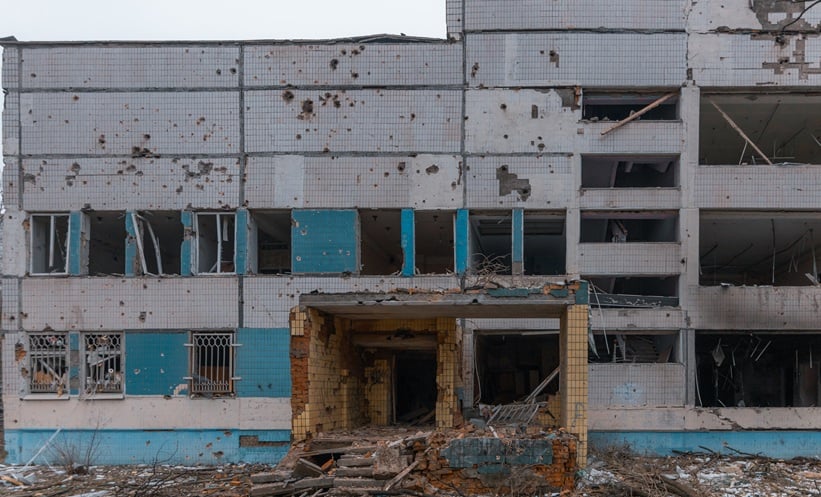
Conflict brings with it an inherently greater risk of death, affecting the stability of health systems and quality of health services.
In conflict settings, humanitarian crises can simultaneously lead to an increased demand for health services, the disruption of the routine functioning of healthcare provision, unsafe conditions, damage to infrastructure, targeting of health facilities and workers, and so on.
Pregnant women, mothers, and babies often lack access to trained healthcare professionals, basic and emergency obstetric and newborn care, and essential postnatal services.
In 2023, the maternal mortality ratio (MMR) in countries affected by conflict was more than 500 maternal deaths per 100,000 live births.
A 15-year-old girl living in a country or territory affected by conflict had a one in 51 lifetime risk of eventually dying from a maternal cause, compared with one in nearly 600 for the same demographic living in a country or territory free from conflict or fragility.
In 2025, more than 300 million people were estimated to require urgent humanitarian assistance and protection as multiple crises escalated.
Maternal Health and Climate Vulnerability: The ‘Perfect Storm’
Experts have noted the convergence of multiple crises that together impact maternal mortality.
Cresswell said: “There are increasing concerns over the climate process and increased humanitarian emergencies. Climate vulnerability is taking place in many regions of the world, which have also historically been fragile or seen a lot of conflict. Things like droughts and floods can cause displacement or lead to other pressures on our systems.
“Simultaneously, we’re seeing cuts in Official Development Assistance in overseas development systems, which is leading to reduced funding. Cuts will impact the poorest countries’ vital services hardest. There is a perfect storm right now of different pressures on people’s access to care.”
Sustainable development goal target 3.1 aims to reduce the global MMR to less than 70 maternal deaths per 100,000 live births, with no country having an MMR greater than 140 deaths per 100,000 live births by 2030.
If the same rate of MMR reduction observed from 2016-2023 continues, 45 countries or territories are predicted to have an MMR of more than 140 in 2030, more than half of which are classified as conflict-affected or fragile settings.
Reference
World Health Organization. Maternal mortality in fragile and conflict-affected situations: technical brief. 2025. Available at: https://iris.who.int/handle/10665/384832. Last accessed 17 February 2026.
Featured image: got on Adobe Stock
- Author: