The Impact of Wildfire Smoke PM2.5
A MAJOR ecological study across the contiguous USA has linked chronic exposure to wildfire smoke PM2.5 with increased deaths from multiple causes, suggesting there may be no safe level of long-term exposure. Researchers estimate that wildfire smoke PM2.5 is associated with about 24,100 all-cause deaths per year between 2006 and 2020. The analysis found that mortality rose steadily as annual smoke particle levels increased, with no evidence of a threshold below which risk disappeared.
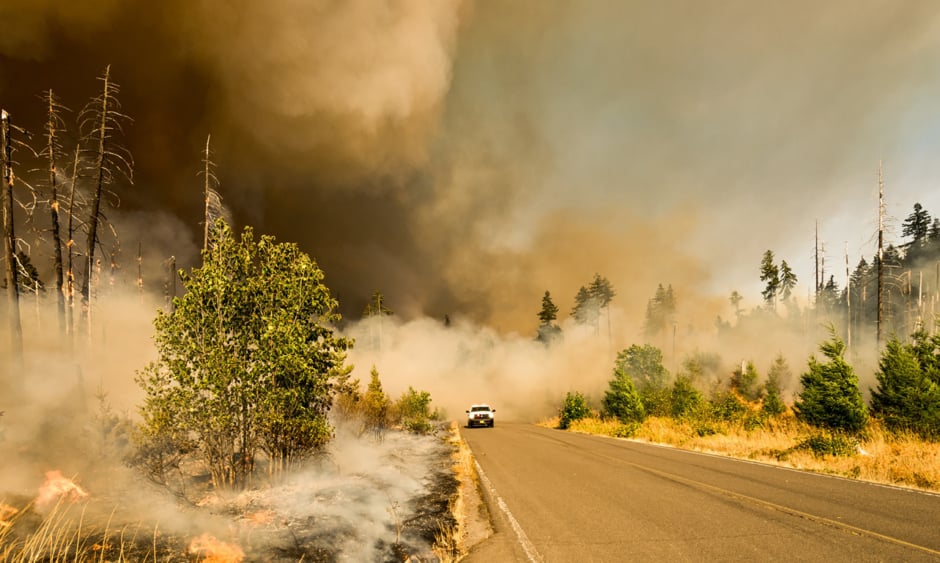
Wildfire smoke PM2.5 refers to tiny particles, ≤2.5 µm, generated specifically by wildfires and capable of penetrating deep into the lungs and bloodstream. In this study, annual wildfire smoke PM2.5 exposure was linked to higher all-cause mortality and to deaths from neurological, circulatory, cancer, respiratory, endocrine, metabolic and mental health conditions, but not to deaths from transport accidents or falls, which were used as negative controls.
Advanced Methods Strengthen Causal Signal
To address the challenge of separating cause from correlation, the team used a doubly robust approach that combined outcome regression with inverse probability weighting through a flexible generalised propensity score. This method was designed to capture nonlinear relationships and interactions between confounders, and to relax assumptions about the distribution of exposure. The lack of association with the negative control outcomes supports the view that the observed mortality effects are unlikely to be driven by uncontrolled confounding.
For each 0.1 mg/m3 increase in annual wildfire smoke PM2.5, the study attributed around 5,600 extra all-cause deaths per year, adding up to roughly 24,054 deaths annually across the USA. Compared with previous work on all-source PM2.5, the findings imply that wildfire-derived particles may be around five times more toxic than general fine particulate pollution. The strongest associations were seen for neurological disease mortality, followed by circulatory and cancer deaths, particularly in younger communities, more rural counties and in cooler summer and winter conditions.
No Safe Threshold and Policy Gaps
The exposure–response curves for all-cause mortality rose monotonically, especially at higher exposure levels, indicating increased risk even at relatively modest annual smoke concentrations. This long-term signal adds to evidence from short-term studies and highlights wildfire smoke PM2.5 as a major, and growing, public health threat.
Despite this, wildfire smoke PM2.5 is currently excluded from regulatory attainment calculations in the USA because wildfires are classed as natural disasters. The authors argue that, given most fires are linked to human activity and can be mitigated through measures such as prescribed burns, excluding smoke from regulation underestimates its true health burden.
With climate change expected to drive more frequent and intense fires, the study reinforces the need for targeted mitigation, better land management, and stronger protection of vulnerable communities to reduce premature deaths linked to wildfire smoke PM2.5.
Reference
Zhang M et al. Wildfire smoke PM2.5 and mortality rate in the contiguous United States: a causal modeling study. Sci Adv. 2026;12(6):eadw5890.
- Author: