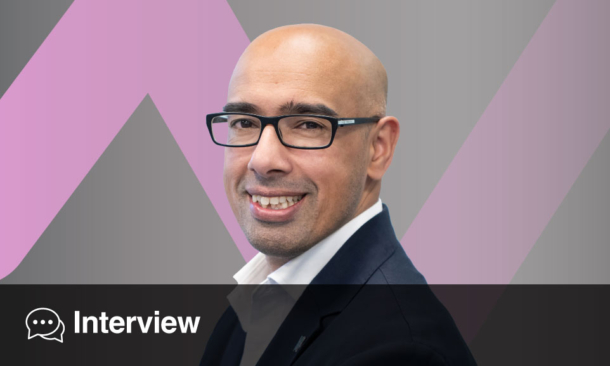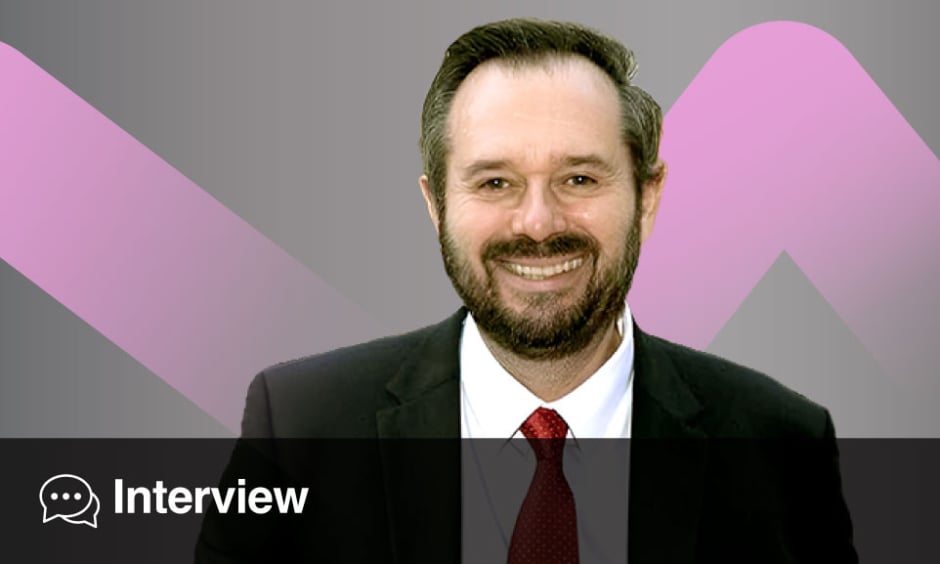
Hugues Cartier | Dermatologist, Centre Médical Saint-Jean, Arras, France; Scientific Director, International Master Course on Aging Science (IMCAS)
Citation: EMJ Dermatol. 2026; https://doi.org/10.33590/emjdermatol/694P61QV

What first inspired you to pursue dermatology, and was there a defining moment early in your career that confirmed it was the right path for you?
Yes, when I was a resident, a long time ago, I needed to decide which specialty I was interested in. Psychiatry is interesting on paper, but in life, it’s quite different. Gynaecology is very interesting, because you have medical disease and surgery. Dermatology was also really interesting, because you need to use your brain and your hands. It’s manual, you can operate, you can prescribe, and you see people of many different ages, from babies to elderly people. So, for me, it’s like a general practitioner, but one dedicated to dermatology.
During my residency, I could focus on allergy, phlebology, dermatologic surgery, and tropical disease. I spent a good amount of time in Brittany, Lille, and Paris in France, as well as in French Guiana and Cameroon. Now I’ m practicing in Arras, France, a small and charming town that is not so far from London, UK, and Paris, in a private practice and at a hospital. It’s very important when you organise a congress, like the International Master Course on Ageing Science World Congress (IMCAS), to remain a practicing doctor.
Were there any mentors or figures who particularly shaped the way you practice dermatology or think about ageing science today?
My father was a dermatologist in Arras. When I decided to go into dermatology, my father, who has passed away now, was probably very proud. My mother was a doctor too, but in history and philosophy, so quite different! My father was one of the founders of the International Society of Dermatologic Surgery (ISDS), alongside Perry Robins, Professor Emeritus of Dermatology at the New York University Medical Center, USA, nearly 50 years ago. I don’t need to see a psychoanalyst to know it probably changed my life: passion, creativity, commitment. This is probably why, after 3 decades of practice, I became president of the French laser group, vice-president of the French Society of Aesthetic Medicine (SFME), and have been involved in the coordination and management of IMCAS for the past 6 years.
How did your role as Scientific Director of IMCAS come about, and what initially attracted you to taking on this responsibility?
The founder and honorary president of IMCAS is Benjamin Ascher. He is a plastic surgeon and he’s probably one of my mentors in life. At the beginning, 25 years ago, it was difficult to combine plastic surgery, dermatology, cosmetic doctors, and other specialties. Benjamin probably changed minds as to how to create this new atmosphere.
In 2019, he decided to sell IMCAS to Comexposium Healthcare (Paris, France) and gradually handed over the reins. He asked me and Sébastien Garson, Scientific Director of IMCAS, to continue this wonderful adventure with Severine Dubarry Bardon, our CEO, and a fantastic team, organising four events and numerous partnerships with academic societies. Moreover, we have many colleagues on the board to help us create all these events.
It’s crazy to organise IMCAS congresses. In Paris, you have 22,000 people, more than 1,000 speakers, and more than 350 sessions to manage.
It’s a full day and night dedicated to medicine: practising at the hospital and my clinic, and education at IMCAS. You need to be passionate or crazy! But it’s impossible without a board of doctors and the incredible staff at IMCAS.
What does ‘scientific excellence’ mean to you in the context of a global congress like IMCAS?
So, the excellence probably comes from mixing science and business. It’s a good mixture, but I insist that the most important part of IMCAS is the science because it’s my field of interest.
Many doctors note that IMCAS is more and more scientific, but it is difficult not to go overboard. It’s difficult to refuse entry to those who come just to show off. We live in a superficial world.
Too many people, too many speakers, too many sessions, and not enough time to see everything: this is a criticism levelled by some colleagues, which I understand, but there is such energy in Paris, France. That is essential for me.
What were your personal highlights from IMCAS this year, either a session, a debate, or a moment that stood out to you?
It is difficult, because we receive 140 nations, we have more than 350 sessions, and we have a cinema video show, which is very impressive, but it’s quite frustrating for me, because we have no time to see what we create.
I could mention the sessions on longevity, which concern us all to some extent, or the session on lip enhancement, which is a flagship session. I could also mention many others. There is something for everyone: hair, skin ultrasound, surgery, gynaecology, pigmentation, clinical dermatology, etc. We have a full day dedicated to cosmetology with Dominique du Crest, Founder of SkinAid. It never stops.
We are, along with the IMCAS team, very proud to organise, as a pre-congress in partnership with Cutaneous (Amsterdam, the Netherlands), the first international summit on ultrasonography dedicated to facial aesthetic procedures.
Last but not least, there are the anatomy sessions, the DNA of IMCAS; you have more than 3,000 people looking to attend the anatomy sessions. It’s difficult to copy us, because we have the power to organise what we want. We travel a lot, with Sébastien Garson, to try to create partnerships with academic and scientific societies. They help us to elevate the level of science.
Organising a programme like the one in Paris is not so easy, but in the end, it’s like cooking. Sometimes it works very well, sometimes not so well. But we try. We have the liberty and we have the power to actually decide what we want to do.
Why do you think Paris continues to be such an ideal setting for IMCAS, both scientifically and culturally?
We organise an event in Bangkok, Thailand, an event in Shanghai, China, and one in São Paulo, Brazil. I say ‘we’ because I’m not alone. IMCAS is a team and a large community of doctors. We travel the world to organise lectures with different academic societies we are in partnership with, but for Paris, it’s Paris. I don’t know the future, but I would prefer to stay in Palais de Congrès; I wouldn’t want to do it anywhere else. The atmosphere in the centre of Paris for colleagues from around the world, 1 km from the Arc de Triomphe, is incredible. They are 5 minutes from Champs–Élysées. Moreover, we have a gala dinner for speakers with more than 600 people at the Palais Brongniart. It’s a beautiful place to organise that, and a chance to highlight the city, to highlight France.
From your perspective, what are the most important emerging trends in dermatology and aesthetic medicine over the next few years?
We see so many pictures modified by AI on Instagram (Meta Platforms, Menlo Park, California, USA) and in magazines. We want to avoid seeing exactly the same in Paris. If colleagues show us a picture that has a before and after with a modification by AI, they will be blacklisted, because we need to have the truth. However, we know that doctors have to use AI for many things, maybe for their business or to organise their clinic, but, most importantly, to help them find publications or to summarise a book or an article. AI can also be used to help us see which procedures could be more adapted but, ultimately, a decision needs to be made between the doctor and the patient.
In addition to longevity, biohacking, and regenerative medicine, I believe we need to develop imaging techniques in all their forms to provide our experts in the field of aesthetics and wellbeing with more data. The field of aesthetic medicine is often criticised for not being real medicine, so we need to prove the opposite, which is why IMCAS has created a foundation dedicated to creating and supporting research projects.
How do you see the relationship between medical dermatology and aesthetic dermatology changing in the future?
For me, there is no reason to differentiate them. We must practise medicine in the same way. We must remain humble, clear, and loyal to the patient. We have a wonderful profession. There is no need to do more than that.
Looking ahead, what do you hope IMCAS will represent to the next generation of dermatology professionals?
For a few years, we have had sessions dedicated to young people, and we have awards for laboratories, which is a new thing on stage. We’ve also pushed for the new generation of doctors. We have a jury, and, at any congress we organise, we have a session dedicated to young dermatologists, young plastic surgeons, and young aesthetic doctors. It is very important to push for the future, and to prepare doctors and young people. Last year, we created a foundation, the IMCAS fund, dedicated to research and education in dermatology and plastic surgery. After 25 years, it is important for IMCAS to prove that our community of doctors can elevate science in this field.
Some professors have said that IMCAS is only commercial, but when they see the programme and they see what we have been doing for the last few years, they say ‘hats off to you’. This is the reason we have a lot of professors now who help us create and organise the different sessions. So yes, for the future, education, education, and more education to protect patients, because looking at the power of social media, we need to educate patients and say, be aware you are in a danger zone. It is difficult to explain, because when you have an influencer, some patients say: “Who are you to say that. Look on the website. They said that they promote this product.” I say yes, but why? Where are the publications? So, that’s it. Education. Humility. These are the reasons I’m happy to do my job in my clinic at the hospital and at IMCAS.