SCIENTISTS have discovered a bacterium that resists many modern antibiotics in a 5,000-year-old layer of ice in a Romanian glacier cave.
Psychrobacter sp. SC65A.3 was found in the Scarisoara Ice Cave and carries more than 100 genes related to antimicrobial resistance.
It can survive drugs used to treat serious infections including tuberculosis, colitis, and UTIs.
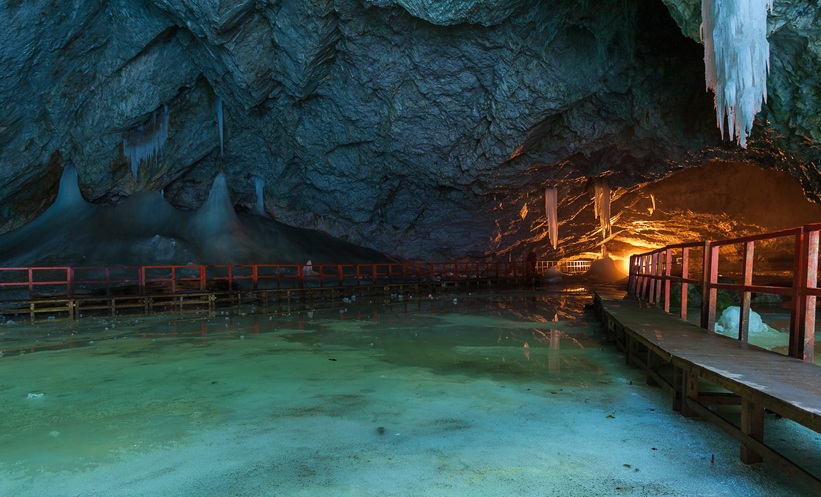
Scarisoara Ice Cave
Scarisoara Ice Cave is one of the most extensively studied ice caves globally. Its 100,000 m3 perennial ice block dates back approximately 13,000 years.
Researchers emphasised that ancient cryospheric environments, such as the Scarisoara Ice Cave, may preserve overlooked reservoirs of antimicrobial resistance and bioactive potential.
To retrieve the organism, scientists drilled a more than 25 metre core from a section of the ice cave. They then isolated the genomic DNA and used rRNA gene sequencing to identify the strain.
Resistance to Antibiotics
Researchers found that the bacterium exhibited resistance to 10 antibiotics across eight classes.
SC65A.3 is the first Psychrobacter strain found to resist narrow spectrum antibiotics such as clindamycin, as well as metronidazole, and six out of the 21 broad-spectrum antibiotics including trimethoprim.
The antibiotics that the Psychrobacter strain exhibited resistance to are commonly used to treat UTIs and infections affecting the lungs, skin, bloodstream, and reproductive system.
All is Not Lost: Inhibiting ESKAPE Pathogens
The Psychrobacter bacterium was also found to prevent the growth of 14 ESKAPE-group pathogens, a group of six drug-resistant bacteria that frequently cause life-threatening hospital-acquired infections.
Genetic analysis of the bacterium also classified nearly 600 genes with unknown functions. Researchers suggested an untapped potential for discovering novel biological mechanisms using the Psychrobacter bacterial strain.
While it can cause infection, the strain is promising for biotechnological developments.
Biotechnological and Medical Exploitation
In their analysis of Psychrobacter sp. SC65A.3, researchers provided the first whole-genome sequence from millennia-old cave ice.
The bacterium analysed had a distinctive profile associated with antibiotic resistance, antimicrobial activity, enzymatic potential, and thermal adaptation. Scientists highlighted the opportunity for biotechnological and medical exploitation.
References
Paun VI et al. First genome sequence and functional profiling of Psychrobacter SC65A.3 preserved in 5,000-year-old cave ice: insights into ancient resistome, antimicrobial potential, and enzymatic activities. Front. Microbiol. 2026;DOI:10.3389/fmicb.2025.1713017.
Paun VI et al. Total and potentially active bacterial communities entrapped in a late glacial through holocene ice core from Scarisoara ice cave, Romania. Front Microbiol. 2019;DOI:10.3389/fmicb.2019.01193.
Paun VI et al. First report on antibiotic resistance and antimicrobial activity of bacterial isolates from 13,000-year- old cave ice core. Sci Rep. 2021;DOI:10.1038/s41598-020-79754-5.
Featured image: Tomasz Wozniak on Adobe Stock
- Author: