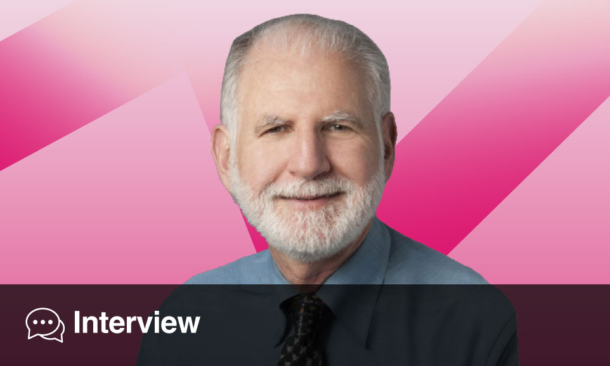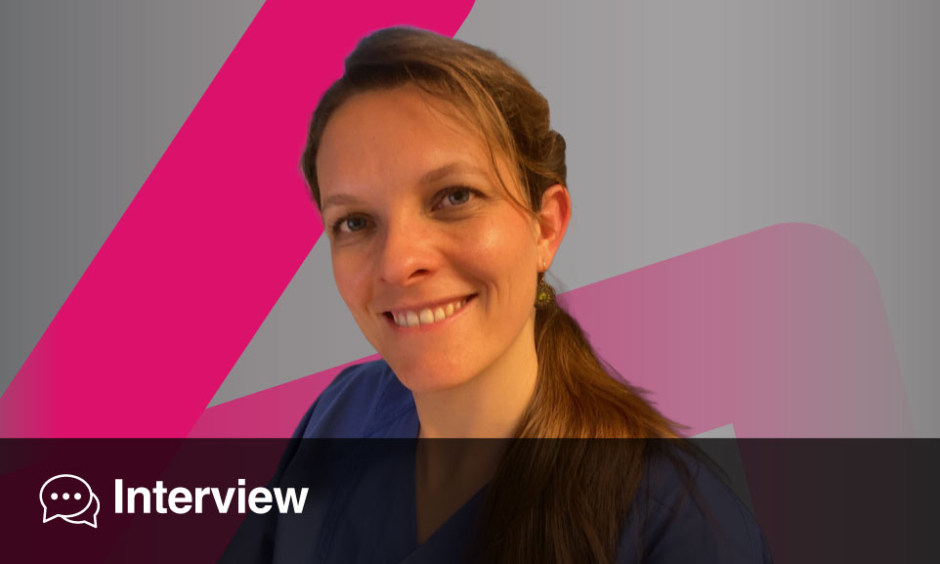
Anna Ossami Saidy | Doctor in Specialist Training, Department of Haematology and Cell Therapy, Helios Hospital Berlin-Buch, Germany
Citation: EMJ Hematol. 2026; https://doi.org/10.33590/emjhematol/X62S2JP4

Congratulations on receiving the Jian-Jian Luan Award. What does this recognition mean to you?
This award is a prestigious distinction within the European Society for Blood and Marrow Transplantation (EBMT), and it is a great honour that our abstract was selected. Having been involved with the EBMT for several years, I have truly valued the international collaboration within its lively and supportive community, which makes this award personally meaningful to me. Importantly, I would like to emphasise that our work is a collective effort, one that involves statisticians, data managers, all the contributing centres, the members of the Lymphoma Working Party (LWP), and, most importantly, the patients who share their data with us.
Can you briefly describe the research that led to this achievement?
Anti-cluster of differentiation (CD)19 CAR-T cell therapy is the standard of care treatment for patients with large B cell lymphoma with refractory disease or early relapses in the second-line setting in Europe. We do have two approved products available for our patients: axi-cel and liso-cel. From pivotal trials, we know that both are efficient. However, second-line setting data are scarce regarding the comparison of both products with respect to efficacy and toxicity. Clinical trials with a direct comparison are also very unlikely to be conducted. Therefore, within the LWP, we initiated an investigation to compare the efficacy and toxicity of both products using the substantial dataset documented by the EBMT. Such an analysis can be highly relevant for clinical decision-making.
How does your work contribute to advancing outcomes in transplantation or cellular therapy?
Ideally, our results will enable physicians to make more informed decisions about which product to choose for individual patients. Given the frequent use of CAR-T cells today, this could significantly impact the treatment courses of many patients.
What inspired you to pursue research in this field?
Treatment options and diagnostic means in aggressive lymphoma are rapidly evolving. It is exciting to work in such a dynamic field, and it is great to be able to contribute to the advancement of knowledge. Within EBMT, I have had the privilege to work with many inspiring people, which is highly motivating during times of setbacks or difficulties.
What were the biggest challenges you faced during your research journey?
Balancing family life with professional responsibilities has always been my greatest challenge. However, while it can be difficult to manage both, they also positively influence each other. For example, the strength I draw from family life helps me to stay focused and resilient in scientific projects when things get demanding.
How has mentorship or collaboration within EBMT influenced your career?
Mentorship, from my point of view, is one of the most important factors for a successful career. I am lucky and happy to have received a lot of support from my chief physician and several people from the EBMT. As I mentioned before, the international collaboration within the EBMT is not only scientifically inspiring, but also personally enriching. This is certainly one of the reasons why I enjoy working in the scientific area.
What advice would you give to young investigators aspiring to make a meaningful impact in our field?
It is really helpful to have a mentor who can help with connecting young investigators to their field of interest and give some guidance along the way. Collaborative groups, like the working groups of the EBMT, also offer a great opportunity to engage in compelling scientific projects. Young researchers are always welcome to contribute their ideas and should not hesitate to get involved.