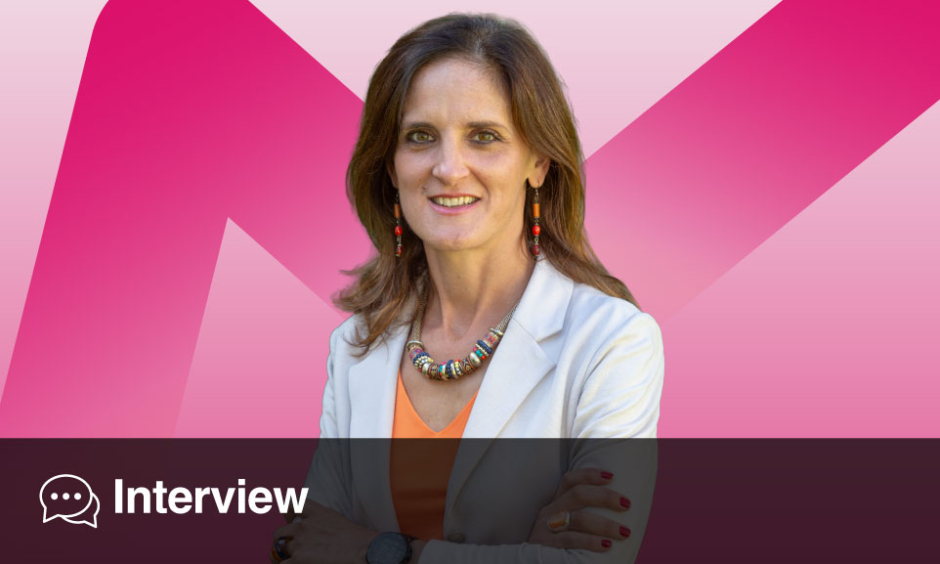
Hildegart González | Full Professor, Faculty of Nursing, University of Navarra, Pamplona, Spain; and Senior Policy Service Professor, Center for Health Policy and Media Engagement, George Washington University, USA
Citation: EMJ Hematol. 2026;14[Suppl 2]:26-28. https://doi.org/10.33590/emjhematol/X62S2JP4

Your keynote focuses on advancing the image of nursing. Why is this conversation particularly urgent in 2026?
The nursing profession is facing a crisis stemming from the dissonance between its professional and scientific identity and the distorted image projected by the media and social media, where stereotypes of subordination to physicians or purely vocational roles devoid of knowledge still predominate. This misrepresentation negatively affects the way society perceives nurses, but it also undermines the sustainability of health systems, as it contributes to nursing shortages by discouraging talent recruitment, lowering professional self-esteem, and excluding nurses from policy decision-making arenas where health strategies are designed.
Although the pandemic increased nurses’ media visibility by portraying them as heroes, what was communicated did not always reflect the competencies that enable them to autonomously perform the functions that make them the backbone of healthcare systems. Since the pandemic, their media presence has declined once again, rendering their contribution invisible despite being the largest healthcare profession.
To reverse this situation, it is imperative for nurses to adopt a proactive communication stance, and research and develop political competencies that enable them to lead their own narrative before society and legislators. It is essential to integrate communication and public speaking training at the undergraduate level and to strengthen the role of professional organisations through expert spokespeople capable of positioning nursing knowledge on the public agenda. Ultimately, building an authentic brand image aligned with 21st century nursing is a fundamental strategic investment to safeguard the right to health, as communicating effectively is also a form of caring.
How has the role of nurses in transplantation and cellular therapies evolved in recent years?
In recent years, the role of nurses in transplantation and cellular therapies has evolved from a predominantly clinical function to a highly specialised, autonomous, and strategic role within multidisciplinary teams that requires continuous learning. In the field of transplantation, nurses actively participate in process coordination, donor and recipient evaluation, pre- and post-transplant education, and long-term follow-up to prevent rejection and infections. Evidence shows that their involvement improves therapeutic adherence, reduces complications, and strengthens patient safety, consolidating their role as clinical leaders and care managers in environments characterised by high technological and human complexity.
In your opinion, what systemic changes are needed to strengthen nursing leadership in transplantation and cellular therapy?
To strengthen nursing leadership in highly specialised fields, such as transplantation and cellular therapy, the most relevant change I can identify is that nurses must be able to explain to society what their work entails and why they are so important and necessary within the healthcare system. Currently, there is a profound disconnect between the practical and scientific reality of the profession and society’s understanding of it, which renders their essential contribution to 21st century health systems invisible.
How can theEuropean Society for Blood and Marrow Transplantation (EBMT)serve as a platform to elevate the professional visibility of nurses?
I consider the EBMT to be a relevant platform for elevating the professional visibility of nurses by offering nursing leadership spaces at its congresses, opportunities for research participation and clinical guideline development, and active representation of nursing within multidisciplinary teams and international projects.
The fact that the EBMT Congress includes an entire track of sessions led by and for nurses, while also sharing many sessions with other healthcare professionals, represents a major strength. It provides visibility into advances led by nurses in this field and fosters the strengthening of interdisciplinary knowledge and collaboration, which are essential in healthcare. Furthermore, it facilitates continuing education and access to global collaboration networks. Undoubtedly, all of this reinforces recognition of nurses as experts in transplantation and cellular therapy.
How should education and career pathways evolve to prepare nurses for expanding roles in advanced therapies?
To prepare nurses for expanding roles in advanced therapies, education must go beyond exclusively technical training and robustly integrate communicative, research, and political competencies. The development of research capacity is essential, as only through the generation and transfer of evidence can nurses substantiate their practice, gain scientific legitimacy, and effectively influence health policies. At the same time, they require communicative leadership to construct their own narrative that makes their expert contribution visible and translates evidence into messages understandable to society and decision-makers. Therefore, curricula and continuing professional development must prepare nurses as knowledge producers, interdisciplinary and public interlocutors, and political agents, understanding that researching, communicating, and influencing policy are also forms of caring and of ensuring the sustainability of the healthcare system and a healthier society.
How can multidisciplinary teams better integrate and empower nursing voices?
Many actions can be implemented to effectively integrate and empower nursing voices within multidisciplinary teams. I will briefly outline some of them:
Promoting horizontal structures that enable a transition from hierarchical models toward democratic communication, eliminating assumptions of disciplinary superiority.
Implementing a 360° communication model to ensure that clinical information flows clearly and professionally among all team members.
Encouraging nurses to act as spokespeople for their own scientific evidence, preventing other groups from assuming their representational role both within and beyond healthcare settings.
Investing in joint collective training in communicative, research, and political competencies, enabling nursing knowledge to be conveyed in an engaging and relevant manner at decision-making and policy-design tables, capitalising on nurses’ unique understanding of patient needs.
While all these measures are effective, the most important element is that nurses assume an active role within interdisciplinary teams, contributing their own disciplinary knowledge, research capacity, and holistic vision of the patient as an irreplaceable input in clinical and strategic decision-making.
What lasting impact do you hope your keynote will have on the next generation of nurses?
I would like nurses to leave my session empowered and convinced that they must move from being an ‘invisible and secondary discipline’ to becoming leaders of their own narrative and agents of change within the healthcare system.
I hope that the nurses attending my session become fully aware of the adverse consequences generated by the inconsistency between their real identity and the distorted media and public image that society holds of them. This dissociation not only devalues the profession but also directly impacts the safety and quality of care, weakens the nurse–patient relationship, increases burnout, and fosters a chronic nursing shortage by discouraging new talent recruitment.
I hope that after hearing me, they will be convinced to work toward eliminating these adverse consequences by contributing to the dissemination of an authentic and coherent image of their profession. To achieve this, it is essential for nurses to abandon a secondary position and adopt a proactive stance, assuming that communicating is also caring. This implies that nurses must stop allowing other healthcare professionals, groups, or media outlets to define who they are and what they do, and instead become the narrators of their own professional reality, which is strategic in its harmonious integration of scientific and humanistic care.
I hope they leave convinced that they must invest not only in continuing to develop technical competencies, but also in:
Communicative competencies: To act as qualified spokespersons before other healthcare professionals, journalists, and society, conveying nursing knowledge in a relevant and compelling manner across all forums.
Research competencies: Since evidence-based knowledge is the strongest lever for influencing and proposing improvements that strengthen care.
Political competencies: Understood as a moral and disciplinary responsibility necessary to participate effectively in decision-making arenas where resources are allocated, practices are regulated, and health policies affecting citizens are designed.