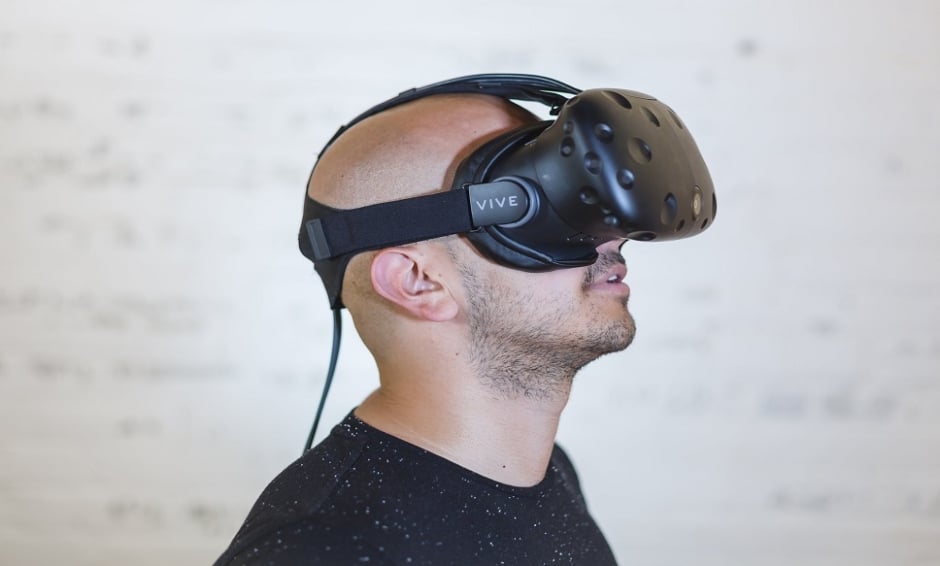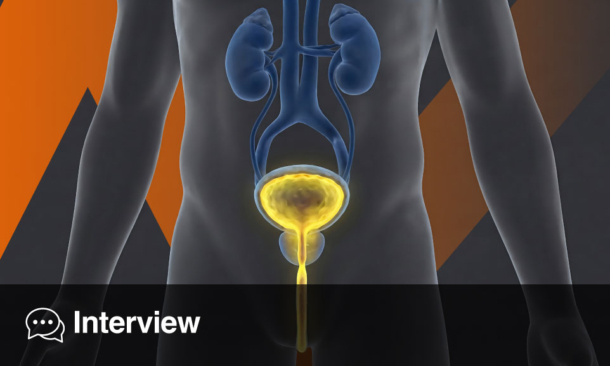
VIRTUAL reality (VR) may reduce patient anxiety ahead of medical procedures by helping them better understand the treatment, Solomon Bracey, medical student, University of Southampton, UK, reported today at the Annual Congress of the European Association of Urology 2026.
Health Literacy
Routine pre-procedure consultation includes giving patients a leaflet of key information before they consent to treatment. This sets out what will happen and the risks and benefits involved, which they can then discuss further with their clinician.
Around six in 10 adults in England struggle to understand complex medical information, which affects their ability to make a fully informed decision regarding whether to undergo a procedure. In fact, more than 40% struggle with low health literacy, which rises to above 60% when the information includes digits as well as words.
Information leaflets often contain medical jargon and are written in a style that exceeds most people’s reading skills, researchers reported.
Bracey said: “There is currently a mismatch between the complexity of information provided to patients and the level which most people can comprehend.
“This risks people consenting to procedures they don’t fully understand.
“VR has been shown to improve learning and knowledge retention, and our study suggests it could be used to help people make more fully informed decisions about their health.”
Virtual Reality in Shockwave Lithotripsy Consent
The study, lead by consultant urological surgeons Bhaskar Somani and Amelia Pietropaolo, University of Southampton, UK, tested the use of VR as part of the consent process for shockwave lithotripsy, a procedure to treat kidney stones. It is a non-invasive treatment that uses high-energy sound waves to break kidney stones into smaller pieces.
Researchers analysed 150 patients aged 22-80-years-old during the procedure consent process. Patients stood in a virtual operating room and watched a 3D demonstration of the procedure that zoomed into the kidneys to show the effect of the shockwaves on kidney stones.
They could move around the room to see the patient’s anatomy and the surgical instruments from various angles. The animation also highlighted key risks and benefits.
Patient Responses
Researchers then used questionnaires to compare patient sentiment before and after the VR experience. After VR, patients reported a better understanding of what to expect from shockwave lithotripsy. They also felt less anxious about undergoing the procedure.
The impact was particularly pronounced among patients aged 65 and above, but there was no significant gender difference in response.
Implications for Patient Consultation
Matthew Bultitude, consultant urological surgeon, Guy’s and St Thomas’ NHS Foundation Trust, UK, said: “The use of VR is an exciting idea that could enhance the patient experience during the consent process.
“Technology should never replace a conversation with a clinician, where patients have a chance to ask detailed questions, but it could help to level the playing field in terms of health literacy, so that everyone comes into that discussion with the same baseline level of information.”
References
Bracey S et al. Exploring the impact of virtual reality to improve the consent process and provide counselling for patients undergoing shock wave lithotripsy. EAU26, 13-16 March, 2026.
Rowlands R et al. A mismatch between population health literacy and the complexity of health information: an observational study. Br J Gen Pract. 2015;65(635):DOI:10.3399/bjgp15X685285.
NHS. Health literacy. Available at: https://service-manual.nhs.uk/content/health-literacy. Last accessed: 16 March 2026.
Featured image: WavebreakMediaMicro on Adobe Stock
- Author: