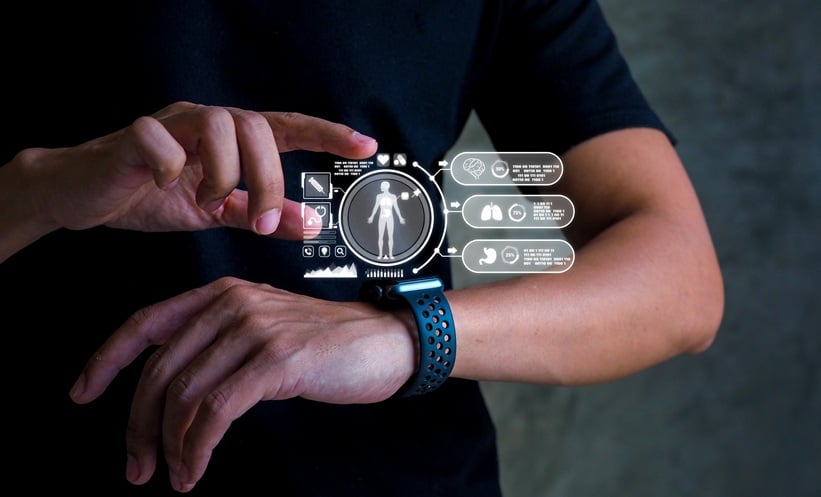
DIGITAL biomarkers from wearable devices could revolutionise brain health monitoring, offering continuous, low-burden tracking of cognition and mood in everyday life. Researchers say this approach may help detect early changes in brain function before symptoms appear.
Brain health encompasses cognitive abilities, emotional regulation, and mental well-being. Traditional monitoring relies on time-intensive assessments that are often sporadic and burdensome. Passive, wearable-based technologies could transform this landscape by capturing real-world, continuous data.
Digital Biomarkers Reveal Daily Brain Health Patterns
The study followed 82 cognitively healthy adults over 10 months, collecting both passive and active data on behaviour, physiology, and environmental exposures. Wearables captured metrics such as movement, heart rate, and sleep patterns, while mobile devices tracked environmental factors. Data quality was exceptionally high, with 96% daily coverage, enabling robust analysis.
Using artificial intelligence, researchers predicted 21 cognitive and mental health outcomes. Patient-reported outcomes proved more predictable than performance-based tasks, suggesting that everyday experiences provide meaningful insight into brain health.
Environmental and Physiological Signals Are Key Predictors
Feature-importance analyses showed that environmental exposures, like light, location, and ambient conditions, explained differences between participants. Physiological and behavioural rhythms, such as heart rate variability and activity patterns, tracked changes within individuals over time. Together, these signals offer a rich portrait of both inter- and intra-individual brain health variability.
Implications for Population-Level Monitoring
The findings demonstrate that digital biomarkers collected passively from wearables can reliably capture cognitive and emotional changes in real-world settings. This approach could support large-scale population monitoring, early detection of cognitive decline, and personalised interventions.
By combining wearable technology, mobile sensors, and AI-powered analytics, researchers envision a future where brain health is continuously monitored, reducing the reliance on periodic, high-effort clinical assessments. Such tools could transform public health strategies and clinical care for neurological and mental health conditions.
Reference
Matias I et al. Digital biomarkers for brain health: passive and continuous assessment from wearable sensors. NPJ Digit Med. 2026;9(1):197.
Featured image: woravut on Adobe Stock
- Author: