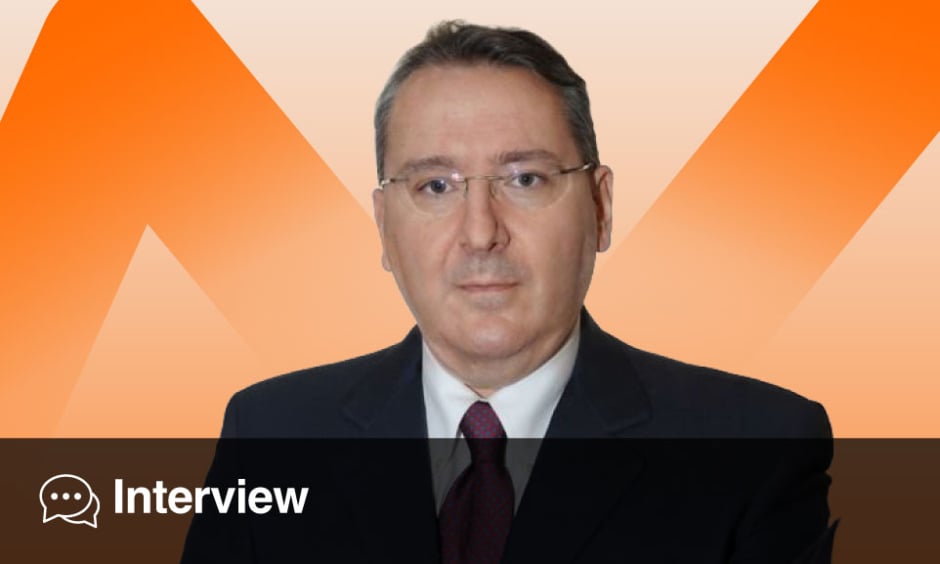
Cosimo De Nunzio: Member of Scientific Congress Committee, European Association of Urology (EAU); Associate Professor of Urology, Sapienza University of Rome, Italy
Citation: EMJ Urol. 2026;14[1]:56-58. https://doi.org/10.33590/emjurol/G253FQ8E

At the European Association of Urology (EAU) Congress each year, we see a huge range of new research and technologies. If you had to highlight one innovation or idea from this year’s meeting that could shape the future of urology, what would it be?
Every year during the EAU Congress, several innovations are presented or discussed. Particularly, I would like to underline the ‘game changer session’, or ‘late breaking session’, where new, innovative research is presented and discussed. Particularly this year, Jean Nicolas Cornu from France presented the results of the VAPOUR trial. It is the first trial to randomise patients between medical therapy versus minimally invasive treatments, such as water vapour therapy. The results are innovative, as they propose minimally invasive surgical therapies (MIST) as an alternative to first-line interventional therapy (FIT) and medical treatments. FIT is a new paradigm, but costs and risk of serious complications, as well as risk of retreatment, should be evaluated in future studies. Patients’ perceptions of this new, possible therapeutic option is also an important issue to debate.
With ageing populations across Europe, how do you expect the overall burden of urological diseases to evolve over the next decade, and what challenges will that create for healthcare systems?
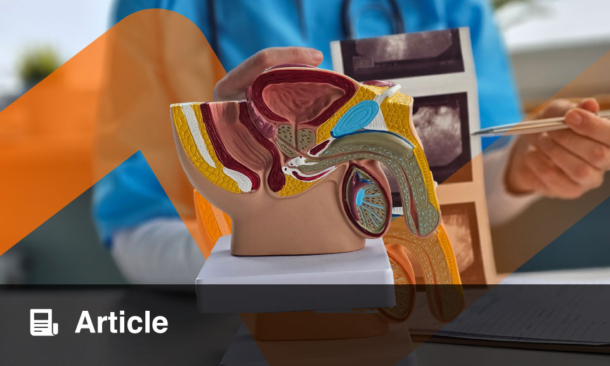
Several urological conditions, such as lower urinary tract symptoms (LUTS), benign prostatic hyperplasia, prostate cancer, erectile dysfunction, and incontinence, are age-related conditions and, considering the ageing effect of the current European population, their burden will continue to increase over the next years and decades. As a urologist, we also directly manage other frequent conditions, such as stone diseases, urinary tract infections, and urological cancer (including prostate cancer, one of the most frequent cancers in men). This scenario is an important challenge for a urologist, but particularly for the healthcare authorities. Urological procedures are also a technologically demanding option, and the increasing costs of several new minimally invasive treatments will further expand this scenario. As urologists, we have to work closely with our health authorities to identify the best diagnostic and therapeutic treatment to reduce low volume care by reducing unnecessary exams or treatment and financially improve our patients’ care.
We’re seeing rapid developments in AI and digital health tools across medicine. What role do you think these technologies could play in diagnosing and managing lower urinary tract symptoms in the future?
AI is a hot topic, and I am sure that it will not replace our work if we are able to use AI in our clinical practice. In LUTS/benign prostatic obstruction (BPO) management, several applications are under investigation: to directly store and evaluate a patient’s bladder diary and questionnaires, to analyse invasive urodynamic traces, to identify possible outcomes of success, or to plan surgeries. However, its routine use is still not established, and some ethical and legal issues are still prevalent, but I am sure, in the near future, AI will help urologists and patients to obtain better care.
There’s also growing interest in biomarkers and advanced imaging. Do you think these technologies could eventually help identify patients at risk of disease progression earlier?
It is an option, but probably more in an oncological setting, where there are several attempts to better standardise MRI reading in patients at risk of prostate cancer or to better predict kidney cancer histology reports on CT images. Integrating data from imaging, biomarkers, and clinical data will probably be used to identify patients at risk of progression. Now, on BPO, data from ultrasound or MRI, including detrusor thickness, have failed to clearly demonstrate being good predictors of progression.
Research in this field often depends on large datasets. Turning specifically to BPH, how important are international collaboration and clinical registries for advancing BPH research across Europe and globally?
It is fundamental. Now, we work in a global era, and we are able to evaluate large databases. Including data from several countries and regions can improve the possibility of generalising this data. However, I strongly believe that large databases and registries are an opportunity, but they are not a marker of quality. Identifying the right topic with the appropriate study design and appropriate team is the key to success.
In your view, what are the biggest unmet needs in BPH management today?
We are in an era of new minimally invasive treatments. They are effective and will probably be proposed as FIT in the next few years. However, patients generally avoid surgeries of all types, including MISTs. We need new pharmacological treatments: innovative, effective, and with few adverse events. The latest drugs for LUTS/BOP were introduced into the market more than 10 years ago. LUTS/BPO is a benign condition, and we need to work more on patients’ perceptions and expectations.
Looking ahead, what do you think could be the biggest breakthrough in the management of BPH and LUTS over the next decade?
MISTs as FIT could be an important breakthrough, but we need more data on comparative studies, on retreatments, on the effect on BPO progression, and, finally, on appropriate cost analysis. MISTs are expensive procedures and, in some countries, they are not reimbursed. This could be a form of disparity in LUTS/BPO management.
What first inspired you to pursue a career in urology? Was there a specific mentor or experience that contributed to pursuing it?
Regarding my career, the first challenge was undoubtedly choosing a specialty. I wanted to be a surgeon, but I wasn’t sure which discipline to pursue. As is often the case in medicine, my first mentor, Giorgio Franco, currently Professor of Urology at Sapienza University, Italy, played a key role. Thanks to him, I decided to spend a fellowship in the UK, specifically in Newcastle and Sheffield, where I met another key mentor of my career, C Chapple, Consultant Urological Surgeon at Sheffield Teaching Hospitals. I was lucky as, after my residency, I was appointed as Junior Consultant at Osperdale Sant’Andrea, Sapienza University, Italy, where I worked. I still work closely with Hassan Fattahy, my father in urology, Lucio Miano, and Andrea Tubaro, from Ospedale Sant’Andrea, Sapienza University of Rome, Italy, who completely changed my career and pushed me to start an academic career. This is only to underline that mentorship is fundamental in medicine, and identifying the right mentor is the firsts step to improve as doctors, urologists, surgeons, and as a person.
You previously chaired the Young Academic Urologists BPH group within the EAU. From that perspective, what further advice would you give early-career researchers who want to enter this field?
My suggestion is to work hard from the beginning. Our careers are a 100-metre race, but it is also like a marathon. We should be prepared. Follow your passion, invest in your skills, and attend courses and departments outside your country. Good interaction with mentors and colleagues is also important. Regarding LUTS/benign prostatic hyperplasia research, it is a frequent condition, where young researchers can be involved from the basic research to the clinical and surgical management. Personally, LUTS/BPH is the right pathway to start your urological career and to improve your clinical and surgical skills.
Looking ahead, what skills or areas of expertise do you think will become most important for the next generation of urologists?
The young generation of urologists are strongly attracted to surgery, particularly robotic surgery, and I can understand. I received training in open laparoscopic and robotic surgery and this is helpful for my current activities. My suggestion is not to focus on a single procedure or technique from the beginning, and, particularly for those interested in uro-oncology, to be prepared not only for surgery, but also to discuss with oncologists and radiotherapists the several innovative treatments which are now recommended or are in the pipeline. We urologists are not only surgeons.