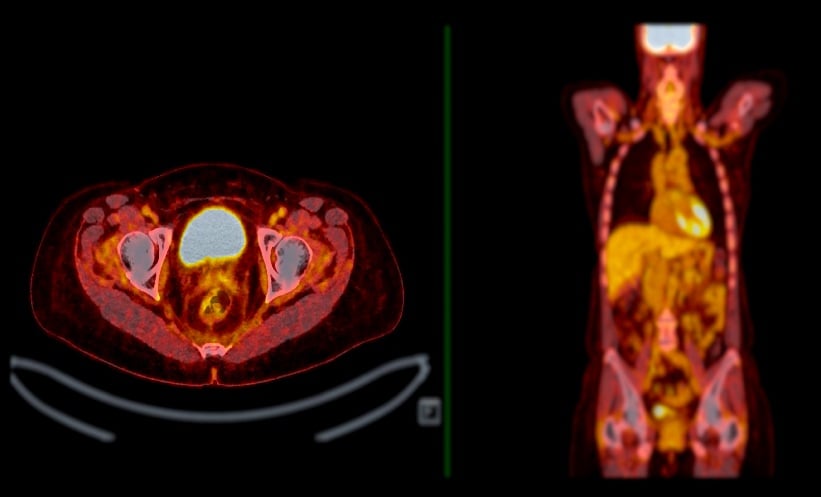
ANALYSIS of NHS data from 2021 indicates that England delivered fewer PET-CT scans than clinical guidelines recommend, with actual provision roughly 50% lower than modelled demand. PET-CT, a hybrid imaging technique essential for detecting and staging cancers and certain neurological conditions, was particularly under-utilised for prostate cancer, neuroendocrine tumours, dementia, and breast cancer. Modelled estimates based on updated 2013 and 2022 clinical guidelines suggest that without strategic investment, this gap could widen as demand rises with population growth and evolving disease prevalence.
Key Conditions Driving PET-CT Demand
Prostate cancer, one of the most common malignancies in men, was a major driver of PET-CT utilisation, particularly for detecting metastatic disease and guiding therapy. Lymphoma, including both Hodgkin’s and non-Hodgkin’s subtypes, relies on PET-CT for accurate staging and monitoring treatment response. Breast and gynaecological cancers depend on advanced imaging to detect metastatic progression in advanced disease. Rare but increasingly recognised neuroendocrine tumours also require PET-CT to locate tumours that conventional imaging may miss. Dementia and cardiovascular disease are additional contributors, reflecting PET-CT’s expanding role beyond oncology.
Modelled Data Quantifies the Shortfall
Using 2013 and 2022 clinical guidelines, PET-CT requirements were modelled according to disease incidence and stage, then compared with NHS scan volumes from 2021. In 2021, England performed 239,367 PET-CT scans, whereas guideline-based modelled estimates indicated a requirement of 361,900 scans. This means the number of scans delivered was roughly 50% lower than recommended. For several key conditions including prostate cancer, neuroendocrine tumours, dementia, and breast cancer, the number of scans performed met only 15–50% of guideline-recommended levels, highlighting a substantial gap between actual provision and evidence-based need.
Limitations and Regional Variation
The model provides national-level estimates and does not account for regional differences in scanner availability, workforce, or commissioning practices. Comparisons with Finland offer useful benchmarks but may not fully reflect UK service structures. Some rarer indications were not modelled individually, meaning true demand could be higher. The estimates represent potential clinically indicated demand, not what could be achieved under current resource constraints.
Implications for Healthcare Planning
Without strategic investment, gaps in PET-CT provision are expected to widen, particularly for dementia, prostate cancer, and neuroendocrine tumours. Expanding workforce capacity, improving access to tracers and scanners, and enhancing data collection are crucial for responsive service planning. Continuous monitoring of PET-CT utilisation will be essential to refine capacity planning and ensure equitable allocation of imaging resources across England.
Reference
Smith NAS et al. Assessing current and future demand for PET-CT imaging in England: a comparative analysis of 2013 and 2022 Royal College of Radiologists Guidelines. BJR Open. 2026;DOI: 10.1093/bjro/tzag006.
Featured image: Samunella on Adobe stock
- Author: