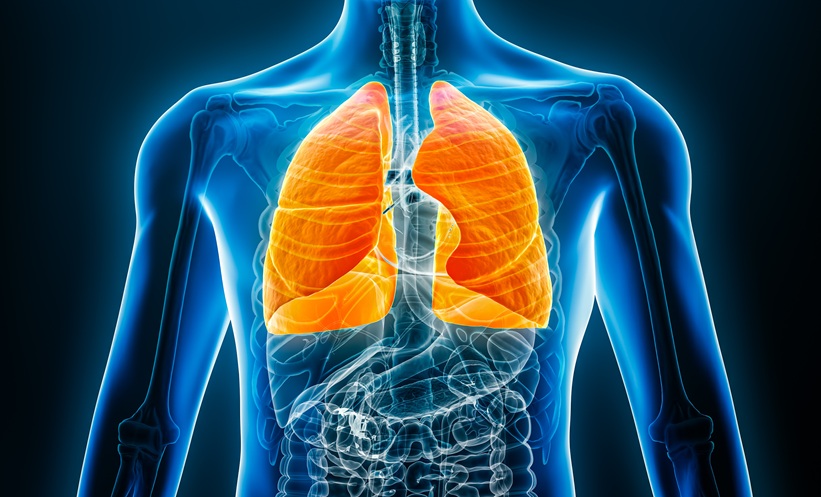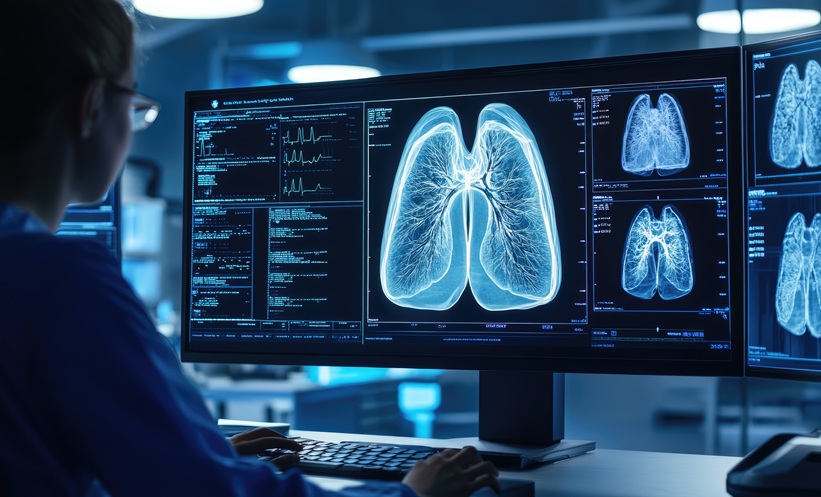
A CUTTING-EDGE artificial intelligence (AI) model may dramatically improve lung cancer detection, offering hope for earlier diagnosis and better survival rates.
Lung cancer remains one of the deadliest cancers worldwide, causing nearly 7.6 million deaths each year. Early diagnosis is critical, yet standard CT scans often struggle with unclear tumour margins and high false-negative rates, limiting timely interventions.
AI-Assisted Approach Could Improve Lung Cancer Detection
Researchers have developed a hybrid AI model called C-Swin, combining a Convolutional Neural Network (CNN) with a Transformer-based system. The key benefit of this model is that it is able to extract fine-grained local lesion features from CT scans while also analysing the overall lung structure.
This dual approach improves lung cancer detection accuracy and reduces the risk of missing small or hard-to-see tumours.
Clinical Performance and Accuracy
Tested on a publicly available dataset (IQ-OTH/NCCD), the C-Swin model achieved an average accuracy of 96.26%, with precision of 97.48% and recall of 96.39%. Its F1-score of 97.42% indicates a balanced performance in identifying true positives without overcalling false positives. Compared to existing methods, this represents an improvement of 2–7%, suggesting a meaningful advantage in routine clinical settings.
Implications for Clinicians
For practising clinicians, the C-Swin model could function as a reliable second reader for CT scans, helping to highlight suspicious regions and reduce the likelihood of missed diagnoses. Earlier and more precise tumour detection enables timely referral, treatment planning, and potentially better patient outcomes.
By capturing subtle lesion details and improving classification performance, this AI-supported approach addresses key limitations of current imaging methods. While further validation in clinical workflows is needed, the results indicate that lung cancer detection could become faster, more consistent, and more accurate, ultimately supporting improved decision-making in respiratory care.
Reference
Yousafzai SN et al. A hybrid deep learning approach integrating CNN and transformer for lung cancer classification using CT scans. Sci Rep. 2026; DOI: 10.1038/s41598-026-41161-7.
Featured image: anak on Adobe Stock
- Author: