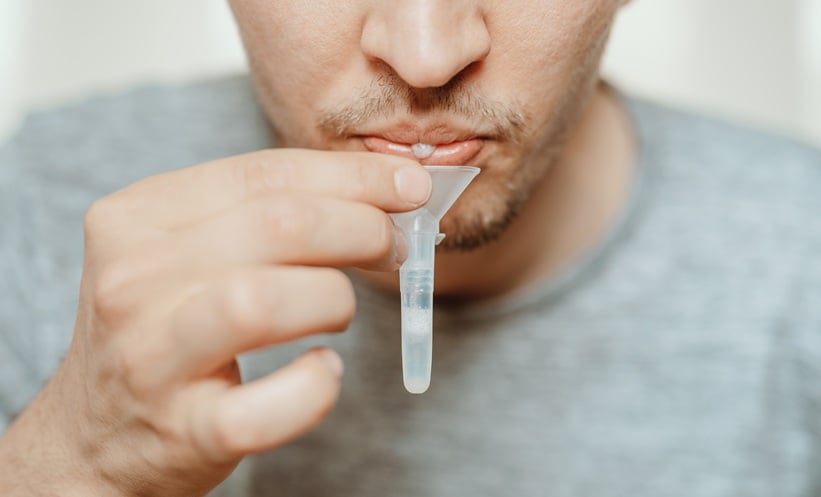
SALIVARY markers are emerging as a non-invasive tool for Alzheimer’s diagnosis, but new evidence highlights inconsistent diagnostic performance, with variability in testing methods significantly affecting accuracy and limiting clinical reliability across studies.
Variability in Salivary Markers for Alzheimer Diagnosis
Salivary markers have been proposed as an accessible alternative to blood or cerebrospinal fluid biomarkers for Alzheimer disease detection. However, inconsistent findings across studies have raised concerns about their diagnostic utility. This systematic review specifically examined how methodological differences influence the reliability of salivary markers in identifying Alzheimer disease.
Salivary Markers Review
This systematic review followed PRISMA guidelines and searched four databases from inception to 2025, identifying 3118 studies, of which 18 met inclusion criteria. The analysis evaluated diagnostic performance of salivary markers including amyloid beta Aβ42 and lactoferrin, focusing on sensitivity, specificity, and area under the curve.
Across studies, substantial heterogeneity in diagnostic accuracy was observed, largely driven by pre-analytical variability. Factors associated with improved diagnostic performance included fasting prior to sampling, use of unstimulated saliva, and storage at −80°C. In contrast, time of collection, recipient material, and centrifugation methods showed no consistent association with diagnostic accuracy. Several studies failed to distinguish Alzheimer disease from cognitively unimpaired individuals, including one lactoferrin study using stimulated saliva, one Aβ42 study without fasting, one total tau study using centrifugation at 500 g at 4°C, and one neurofilament light study without fasting. No included study fully adhered to standardised guidelines for saliva sampling, processing, and analysis, contributing to persistent variability in reported sensitivity and specificity.
Clinical Implications for Salivary Markers
These findings suggest that while salivary markers hold promise for non-invasive Alzheimer diagnosis, their current clinical utility is limited by inconsistent methodologies. Standardisation of pre-analytical protocols will be essential to improve reproducibility and diagnostic confidence. Future research should prioritise large-scale validation studies using uniform protocols to determine whether salivary markers can reliably support early Alzheimer detection and routine clinical decision making.
Reference
Borelli PV et al. Diagnostic performance of salivary markers of Alzheimer’s disease: a systematic review. Alzheimers Dement. 2026;DOI:10.1002/alz.71248.
Featured image: Shotmedia on Adobe Stock
- Author: