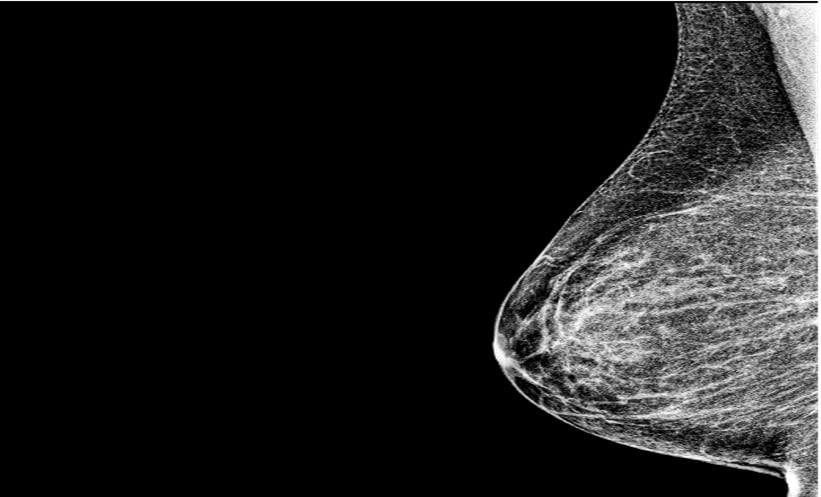
CONTRAST-ENHANCED mammography (CEM) demonstrates comparable performance to MRI in assessing tumour size and identifying additional malignant lesions, with closer agreement to histopathology in measuring disease extent, according to a retrospective analysis.
CEM combines conventional mammography with contrast enhancement to improve visualisation of tumour vascularity. In breast cancer imaging, accurate estimation of tumour size and spread is essential to guide surgical planning and detect multifocal or multicentric disease.
High Agreement Between CEM, MRI and Histopathology
The study included 52 women with biopsy-confirmed breast cancer who underwent both CEM and MRI. Two radiologists independently reviewed imaging studies at separate times and were blinded to pathology outcomes, reducing recall bias.
CEM identified 51 of the 52 primary tumours, while MRI detected all cases.
Tumour size measurements were very similar between the two imaging methods. The average size was 24.9 mm on CEM and 25.2 mm on MRI. The high intraclass correlation coefficient (0.975) indicates that strong agreement between the two techniques.
When compared with post-operative histopathology, CEM’s assessment of total disease extent matched exactly on average, with both reporting a mean of 32.6 mm. MRI, in contrast, slightly overestimated disease extent, with a mean measurement of 35.0 mm.
Larger differences of more than 20 mm were seen in five patients, mainly in cases involving non-mass enhancement, where imaging interpretation can be more challenging.
Implications for Breast Cancer Imaging
CEM demonstrates strong performance and may represent a viable alternative to MRI for preoperative assessment in selected patients, while still requiring recognising its limitations.
One index tumour was not detected by CEM, whereas MRI identified all lesions. Although this represents a small proportion of cases, even limited instances of under-detection are clinically relevant in oncology, where accurate characterisation of disease burden informs treatment planning.
The abstract does not provide an explanation for this discrepancy. Importantly, images were reviewed independently by two radiologists who were blinded to pathology, reducing the likelihood that the finding reflects simple interpretative error. Instead, it may relate to modality-specific limitations or case complexity, though this cannot be confirmed from the available data.
Overall, while CEM demonstrates strong performance and may serve as an efficient alternative option to MRI in selected settings, the results reinforce the importance of recognising its potential limitations alongside MRI, particularly when complete lesion detection is critical for clinical decision-making.
Reference
Ziada K et al. Comparison of preoperative breast cancer disease extent on Contrast-Enhanced Mammography (CEM) versus Magnetic Resonance Imaging (MRI). Clin Radiol. 2026;DOI:10.1016/j.crad.2026.107356.
Featured image: murasal on Adobe stock
- Author: