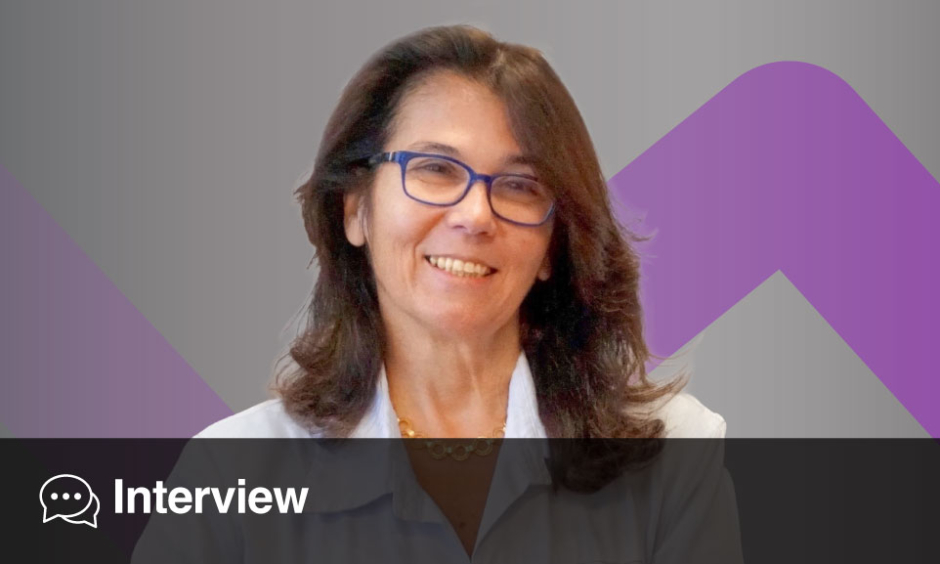
Minerva BeckerPresident, European Society of Radiology (ESR); Geneva University Hospital, University of Geneva, Switzerland
Citation: EMJ Radiol. 2026;7[1]:44-47. https://doi.org/10.33590/emjradiol/S835X424

Congratulations on such a successful congress! Now that the European Congress of Radiology (ECR) 2026 has concluded, what do you consider its most defining achievements? Were there particular discussions or developments that, in your view as President, best captured the current state of radiology in Europe and beyond?
Looking back, I believe that ECR 2026’s most defining achievement was that it truly lived up to its theme, ‘Rays of Knowledge’. We saw an exceptional level of scientific engagement with a record number of abstracts, well over 11,000, submitted for the Congress. We also know that we had over a 9% increase in the number of participants compared to the previous year, and all of this reflects the vitality of our field and the global willingness to share knowledge across borders.
Perhaps just as importantly, we placed education at the centre of the meeting. This was done through hands-on workshops, the new sub-specialty on stage format, broad access through digital on-demand learning, and new types of engaging educational sessions. This combination of scientific excellence and educational accessibility is one of the clearest signs of a healthy, forward-looking radiology community. What also really impressed me, because this stood out very clearly, was the maturity of the conversations around AI, because, at ECR 2026, AI was not presented as something abstract or futuristic, but increasingly as something that must prove its value in real clinical workflows. This was visible in the AI Theatre, in the Pixel Pandemonium, and in the AI workflow guided tours, and really captures where radiology stands today. So, it’s not about asking whether AI will arrive, but how we implement it responsibly and effectively, in a way that really supports radiologists and improves patient care. Perhaps the third defining achievement is the way the Congress highlighted the expanding role of radiology far beyond interpretation alone. We had the inaugural on Alzheimer’s Day, which was extremely meaningful, because it showed how central imaging has become in early diagnosis, treatment selection, and longitudinal monitoring, at a time when we have new disease-modifying therapies that are changing all the clinical pathways. Also, the discussions we had about the European Cardiovascular Health Plan underlined the growing role of radiology in prevention, early detection, and multidisciplinary public health strategy. I believe that what ECR 2026 clearly showed is that radiology is entering a new phase, where we are more connected to patients, more integrated with other specialties, more shaped by intelligent technologies, and more committed than ever to education as the foundation of our progress.
The theme ‘Rays of Knowledge’ positioned imaging as a source of clarity, integration, and progress in patient care. In hindsight, how successfully do you feel the Congress translated this into tangible learning and collaboration? Were there moments where the theme resonated especially strongly?
Looking back, I really feel that the theme, ‘Rays of Knowledge’, was truly brought to life throughout the Congress, because it was visible, not only in the scientific programme, but also in the way people learned from each other across subspecialties, disciplines, and borders. There was a real sense that radiology is becoming an even stronger connecting force in patient care, and what resonated especially for me were the moments where imaging was shown as a bridge between technology and clinical practice, a bridge between radiologists and other specialties, and perhaps, ultimately, between knowledge and better outcomes for patients. For me, this is exactly what ‘Rays of Knowledge’ was meant to express: clarity, collaboration, and progress in action.
AI was another main theme this year, especially in the In Focus programme, ‘The Art of Artificial Intelligence in Clinical Practice’. After hearing the debates and practical examples presented in Vienna, Austria, how would you describe the state of AI integration in everyday radiology? What practical, regulatory, or educational steps are now required for it to become standard practice?
I came away from Vienna feeling genuinely optimistic. What this year’s ECR showed very clearly is that AI and radiology have moved beyond this purely experimental stage, but it is not yet routine everywhere. The debate, as I mentioned earlier, was much more mature this year; it was less about hype and much more about where AI truly adds value in clinical care. For example, we looked at everything, from screening and oncologic follow-up, to ethics, bias regulation, and the AI workflow guided tours. They showed very concrete cases, such as mammography workflows with AI-based work list prioritisation, integrated reporting, and chest screening workflows. To me, this is the key message: AI is no longer just a side conversation in radiology; it is becoming part of the workflow, but in a careful, targeted, very clinical way. For AI to become standard practice, three things now matter most, in my opinion. Firstly, on a practical level, systems must integrate smoothly into everyday reporting environments and support radiologists rather than interrupt them. Secondly, on a regulatory level, we need clarity and trust, and the European Society of Radiology (ESR) has rightly highlighted AI literacy, data governance, transparency, human oversight, alignment with medical device regulations, clear responsibilities for deployers, regulatory sandboxes, and strong post-market monitoring as essential foundations for a safe implementation under the European AI Act. Thirdly, on an educational level, AI literacy must now become an integral part of routine professional training, so that radiologists understand not only what these tools can do, but also their limitations.
In other words, if we get these three pillars right, workflow, regulation, and education, then I believe that AI will move from promising innovation to dependable daily practice.
As a radiologist whose expertise revolves largely around the head and neck, did you observe any notable scientific or technological shifts presented this year that may influence head and neck imaging in the near future?
It is a sort of a consensus that head and neck imaging is becoming both more precise and more practical at the same time. We saw, for example, strong signals around AI-supported analysis and radiomics, including work on outcome modelling, and much more. We’re now focusing much more on the impact of imaging on treatment and outcomes. For example, in oropharyngeal cancer, there were also presentations about schwannomas and the impact of imaging on response to treatment, automatic body composition biomarkers from routine CT, and longitudinal Neck Imaging Reporting and Data System (NI-RADS)-based follow-up for recurrence risk. All of this suggests a near future in which our reports will be increasingly structured, prognostic, and much better integrated in therapeutic decisions, from the reporting point of view.
In terms of the technology side, development stood out; faster MRI through deep learning reconstructions, with reported scan time reductions of up to 50–70%, without loss of diagnostic image quality. Then, photon-counting CT was presented as improving visualisation of the temporal bone and sinonasal imaging, with important attention also paid to radiation doses.
Taken together, all of these advantages point to head and neck imaging becoming faster, sharper, and more clinically impactful. I would say that the direction is really encouraging. We’re moving towards better characterisation, better follow-up, and, ultimately, more personalised care for our patients.
ECR has long emphasised radiology’s central role across oncology, emergency medicine, neurology, cardiology, and beyond. How did this year’s Congress strengthen interdisciplinary dialogue in a meaningful way, and how will radiology continue to position itself not as a service specialty, but as a strategic clinical partner?
This year’s Congress definitely strengthened the interdisciplinary dialogue in a very practical way. We not only had the well-known ConnAction sessions, 11 scientific sessions dedicated specifically to radiology-connecting disciplines, but this multidisciplinary spirit was also visible in many other meetings. We had multidisciplinary discussions on lung cancer, Alzheimer’s disease, and cardiovascular prevention. We had new formats, such as ‘From Symptom to Diagnosis’, which were new multidisciplinary sessions, and the entire series of radiologic-pathologic correlation. These were not abstract conversations, but they showed radiologists working side by side with other clinical partners. I consider radiology to be a clinical discipline, as I mentioned in my opening ceremony, and that radiologists should be part of multidisciplinary clinical teams, working side by side with other clinical partners on diagnosis, treatment pathways, and follow- up. This is the future, and it has already started.
Radiology will continue to move beyond the idea of being just a simple service specialty by being even more present, to the point where clinical decisions are shaped more actively in these multidisciplinary teams, and are more clearly focused on outcomes, not just on imaging. This is where the strategic value of radiology is strongest, and this year’s ECR already showed that this shift is well on the way.
As you close the chapter on ECR 2026, what key insights or responsibilities will the ESR carry forward into the coming year? Where should the radiology community now focus its energy to translate this year’s ‘Rays of Knowledge’ into measurable improvements in patient care?
As we close this chapter on ECR 2026, I think that the ESR carries forward a very clear responsibility, namely, to turn inspiration into implementation. ‘Rays of Knowledge’ placed education at the centre of the Congress, and now we need to help radiology teams to translate what was discussed in Vienna into daily practice through accessible learning on ESR Connect, stronger training standards, and continued support for multidisciplinary imaging.
It also means that keeping quality and safety is very important. We have to keep it firmly in our focus, because the real progress is measured not only by innovation, but by better and more consistent care over longer periods of time for our patients and driving results, not just discussing care at congresses.
So, where should the community focus its energy? Above all, I think of areas where radiology can make a measurable difference quickly: earlier diagnosis, better follow-up in fields such as neurodegeneration, more active involvement in prevention, clinical decision-making, and responsible integration of AI into routine workflows. The ESR has already outlined the key foundation for that with AI literacy, data governance, transparency, human oversight, and post-market monitoring. I think that if we combine these principles with the collaborative spirit that we saw at the ECR 2026, then this year’s ‘Rays of Knowledge’ can become something very concrete: faster diagnosis, smarter pathways, and better outcomes for patients across Europe and beyond.
Planning for ECR 2027 will already be underway. Based on the momentum generated this year, where do you anticipate the most meaningful shifts in European radiology over the next 12 months? Are next year’s key themes already beginning to take shape?
I think perhaps the most meaningful shift over the next 12 months will be from discussion to implementation. ECR 2026 shows where this momentum now lies: practical AI in clinical workflows, a stronger role for imaging in prevention, screening, and a deeper collaboration with our clinical partners in areas such as oncology, neurodegeneration, and cardiovascular health. This is where European radiology can make its next measurable leap for patients.
ECR 2027’s theme, ‘Healthcare Reimagined: Updating the Role of Radiology’, also makes this direction clear. I would expect the coming year to focus on redefining radiology as a more visible, clinical, strategic, and data-driven partner in patient care, with topics such as practical integration of AI into radiology, workflows, redesign, governance, and trust. With the 2027 programme already underway under Matthias Prokop, Radboud University Nijmegen, the Netherlands; and Marie Pierre Revel, Hôpital Cochin, Université Paris Cité, France, the next chapter is clearly beginning to take shape.