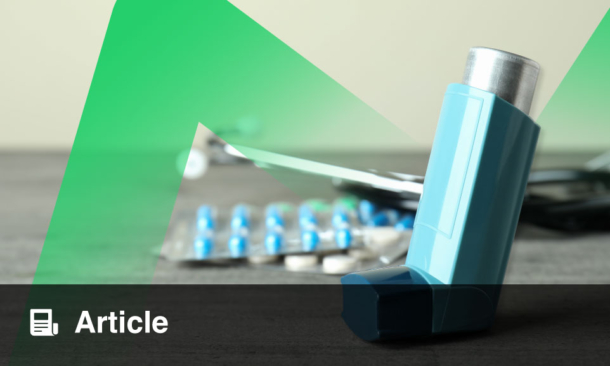
A FIRST-in-human trial has shown that an inhaled anti-thymic stromal lymphopoietin (TSLP) asthma therapy may offer a promising new approach for patients with moderate-to-severe asthma.
Asthma remains a major global health burden, particularly in patients with persistent symptoms despite standard treatments. TSLP, an epithelial-derived cytokine, plays a central role in airway inflammation, making it an attractive therapeutic target.
While existing biologics targeting TSLP are administered systemically, an inhaled approach could provide more direct lung delivery with potentially fewer systemic effects.
Inhaled Anti-TSLP Asthma Therapy Demonstrates Proof-of-Mechanism
The Phase I randomised controlled trial evaluated AZD8630/AMG 104, an inhaled anti-TSLP antibody fragment, in both healthy adults and patients with moderate-to-severe asthma. A total of 181 participants were enrolled across two study parts, assessing safety, pharmacokinetics, and pharmacodynamics.
Results showed that inhaled anti-TSLP asthma therapy was well tolerated across all dose levels, with only a low incidence of anti-drug antibodies. Pharmacokinetic analysis demonstrated dose-dependent exposure, supporting once-daily dosing.
Importantly, in patients with asthma, the highest dose (8 mg) achieved a statistically significant 23% reduction in fractional exhaled nitric oxide (FeNO) at Day 28 compared with placebo (P=0.037). FeNO is a recognised biomarker of airway inflammation, suggesting meaningful biological activity.
Additionally, treatment led to dose-dependent reductions in free TSLP levels and increased drug-target complexes, confirming effective target engagement.
Clinical Implications and Future Directions
These findings provide early evidence that inhaled anti-TSLP asthma therapy can directly modulate airway inflammation while maintaining a favourable safety profile. This “proof-of-mechanism” is a critical milestone for inhaled biologics, which aim to combine the efficacy of targeted therapies with the convenience of inhaled delivery.
As a Phase I study, the trial was not designed to assess long-term clinical outcomes. The relatively short treatment duration and small sample size also limit broader conclusions.
Further studies will now be required to optimise dosing, confirm efficacy, and determine whether reductions in inflammatory biomarkers translate into meaningful clinical benefit. If successful, inhaled anti-TSLP asthma therapy could represent a shift in how biologic treatments are delivered in respiratory medicine.
Overall, the study highlights a potentially important step forward in precision asthma care, supporting continued development of this novel inhaled biologic approach.
Reference
Doffman SR et al. AZD8630/AMG 104, an inhaled Anti-TSLP antibody fragment, for moderate-to-severe asthma: a phase 1 randomized controlled trial. J Allergy Clin Immunol. 2026;DOI:10.1016/j.jaci.2026.03.026.
Featured image: Pixel-Shot on Adobe Stock
- Author: