Author: Helena Bradbury, EMJ, London, UK
Citation: EMJ Urol. 2026;14[1]:29-33. https://doi.org/10.33590/emjurol/RE6LKV6B

AI IS no longer a distant idea, but an integrated tool significantly impacting medicine and patient care. In this timely session from the European Association of Urology (EAU) Congress 2026, experts from across the globe gathered to discuss the role of AI in urological surgery, sharing real-world examples of its successes and pitfalls that require further investigation. This feature captures select talks from the session, co-chaired by Cristian Fiori, Università degli Studi di Torino, Italy; and Alexandre Mottrie, Head of the Urology Department at OLV Hospital, Aalst, and CEO of Orsi Academy, Melle, Belgium.
AUGMENTED REALITY IN ROBOTIC SURGERY
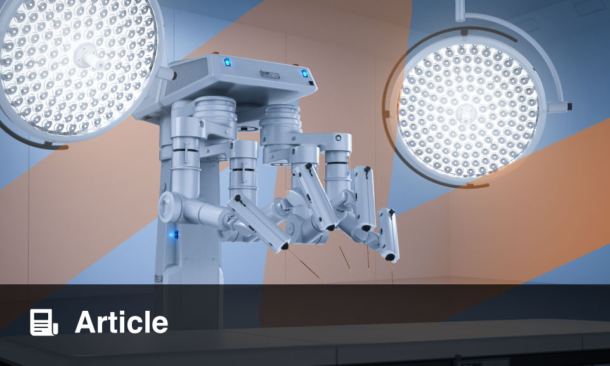
To open, Pieter De Backer, Head of Innovation at Orsi Academy, explored the use of AI in robotic-assisted surgery, drawing on three ‘waves’ of AI integration: descriptive, generative, and agentic. Descriptive AI analyses historical data to identify patterns, while generative AI learns patterns to create new content. Agentic AI, the most recent advancement, acts as a co-pilot, fully integrated within the workflow of systems. De Backer shared an example in which, during a live-streamed surgery, the agentic AI tool activated guidelines, imaging, patient information, and tumour identification based on the surgeon’s specific prompt.
De Backer concluded that augmented reality extends beyond merely superimposing images, gathering all the unintegrated information and centring the surgeon “as part of the puzzle,” ensuring that both the surgical team and people outside the operating room feel the benefit.
WHERE ARE WE IN 2026 WITH TELESURGERY?
Telesurgery, or remote surgery, is where a surgeon operates on a patient from a distance via robotic surgical systems and high-speed telecommunications, such as 5G and optical fibres. The first reported case of telesurgery famously occurred in 2001, led by Jacques Marescaux, Research Institute against Digestive Cancer (IRCAD), Strasbourg, France, and Michel Gagner, Hôpital du Sacre Coeur, Montreal, Canada, who, based in New York, performed a laparoscopic cholecystectomy on a patient based over 6,000 km away in Strasbourg.
Alberto Breda, Head of the Uro-oncological Unit and Surgical Kidney Transplantation team, Fundacio’ Puigvert, Barcelona, Spain, shared a timely update regarding telesurgery. He highlighted a 2026 study, led by Ye Wang and colleagues in China, who investigated the reliability of telesurgery to that of standard local surgery in patients undergoing robotic operations.1 It enrolled 72 participants across five hospitals in China, each randomly assigned 1:1 to undergo either telesurgery or local surgery across December 2023–June 2024. Results found telesurgery to be noninferior to local surgery and stable with a distance from 1,000–2,800 km. Secondary outcomes, such as operative basic data, complications, early recovery, oncological outcomes, and medical team workload, also did not differ significantly between the two groups.1 In line with the growing emergence of telesurgery, several committees have published clear guidelines to ensure standardised, ethical, and safe adoption of telesurgery in practice across the globe. In 2025, the EAU Policy on Telesurgery was released, detailing critical requirements for pre, during, and post-surgery.2 In 2024, the first international consensus conference specifically focused on telesurgery took place (Society of Robotic Surgery [SRS], Orlando, Florida, USA), bringing experts together to define safety, ethical, and regulatory frameworks for this surgical technique.3 Across the globe, in August 2024, the first case of telesurgery in Indonesia took place: a renal cyst marsupialisation between Bali and Jakarta, which is a distance of 1,200 km.
Sharing his own contributions, Breda spoke on how he is now regularly performing telesurgeries from Barcelona to patients based in the Canary Islands, with a latency below 35 ms.
IS TELEMENTORING A WAY TO EXPAND SURGICAL EXPERTISE BEYOND BORDERS?
Senthil Nathan, University College London Hospital NHS Trust, UK, opened with key definitions of telemedicine: telemonitoring is the remote tracking of a patient’s clinical data, whilst telepreceptoring is where a trained practitioner mentors and evaluates a trainee from a distance.
As stressed by Nathan, there is a drastic patient need for telemedicine, with five billion people currently not having access to safe and affordable surgical and anaesthesia care when needed. Moreover, 143 million additional surgical procedures are needed per year in low and middle income countries to save lives and prevent disability, and of the 313 million procedures undertaken worldwide each year, only 6% occur in the poorest countries.4
WHICH ROBOT TO CHOOSE? OPEN CONSOLE
For the latter portion of the session, speakers were invited to debate on open versus closed console for modern robot-assisted urological surgery. Open console telerobotic surgery uses a screen and 3D glasses, allowing the surgeon to see the operating room and improving communication. Closed console systems require looking into a viewfinder, offering high immersion and reduced distractions.
Josep Maria Gaya, Unidad de Uro-Oncología y Equipo Quirúrgico de Trasplante Renal Fundació Puigvert, Universitat Autònoma de Barcelona, Spain, first advocated on behalf of the open console. Examples include the Medtronic Hugo™ (Medtronic plc, Dublin, Ireland) RAS, Versius® (CMR Surgical, Cambridge, UK), and KangDuo® (Harbin Sagebot Intelligent Medical Equipment Co., Ltd, China). Touching on ergonomics, Gaya cited a 2020 study reporting that up to 50% of robotic surgeons using the Da Vinci® (Intuitive Surgical, Inc., Sunnyvale, California, USA) system, a closed console, experienced intraoperative discomfort, particularly in the neck, back, and shoulders.5
Reinforcing his point, he referenced a 2026 multicentre RCT comparing the efficacy and safety of an open versus closed system; KangDuo versus Da Vinci, respectively.6 The researchers reported that the KangDuo Surgical Robot-01 open console system significantly alleviated musculoskeletal strain, particularly in the neck and back, during robotic colorectal surgery, while maintaining equivalent technical performance.
In addition to ergonomics, Gaya spotlighted the benefits that the open console offers to the operating workflow and team communication. As the surgeon is not physically isolated, they can maintain visual contact with their surgical team, allowing for greater integration within the operating room environment. Finally, the open console improves mentorship as the mentor can move the hands of the surgeon or even do it by themselves without changing seats or requiring a second console, making it cost effective as well.
WHICH ROBOT TO CHOOSE? CLOSED CONSOLE
Véronique Phe, Santé Sorbonne Université, Paris, France, subsequently took the stage to counter his argument. She stressed that console design does not solely impact comfort, but also the performance of the surgeon, affecting cognitive focus and load, ergonomic stability over time, motor precision and tremor control, and reproducibility and safety. Whilst acknowledging the advantages of the open console, she stressed that in complex surgeries, total focus and immersion in the operation is paramount, and that the closed system offers this.
Phe continued stating that an immersive 3D view with depth perception offers strong visual focus, better tissue-plane reading and anatomic orientation, and less visual distraction during fine dissection.7
“I will choose the closed console, because I choose precision, immersion, and focus.” Her talk highlighted that surgeons have individual preferences in robotic surgery, with both closed and open consoles offering unique advantages and disadvantages.
AI IN UROLOGICAL SURGERY: DIAGNOSTIC
Prokar Dasgupta, King’s Health Partners, London, UK, subsequently offered real-world examples of AI in urological surgery. In a recent review that Dasgupta co-authored,8 his team investigated the applications of AI in diagnosis, treatment, and outcome prediction in urological diseases, and evaluated any advantages it offers over traditional methods. From the 111 articles included in the final analysis, compared to conventional statistical analysis, 71.8% of studies concluded that AI is superior in diagnosis and outcome prediction.8
In renal cancer imaging, AI can differentiate between benign small renal masses and potential malignant tumours, guiding clinical decision-making and improving the use of healthcare resources. A 2021 study by Ali et al.9 tested a blue light-based AI diagnostic platform using 216 blue light images to predict image malignancy, invasiveness, and grading. Interestingly, the reported classification sensitivity and specificity of malignant lesions was 95.77% and 87.84%, while the mean sensitivity and mean specificity of tumour invasiveness was 88.00% and 96.56%, respectively, illustrating the potential of AI-based diagnostic platforms in urological surgery.
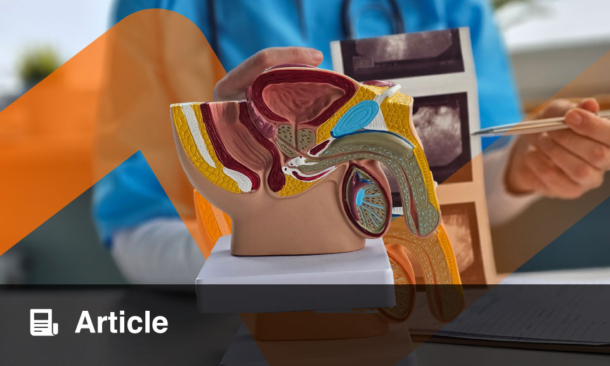
In prostate cancer, Dasgupta recognised ‘AutoProstate’, a deep learning-based, AI-driven software system designed to automate the analysis and reporting of prostate MRI scans to assist in the diagnosis of prostate cancer.10 In addition, the PANDA Challenge was launched in 2020 as a global competition and aimed to develop AI algorithms for the diagnosis and Gleason grading of prostate cancer using a large, publicly available dataset of 10,616 digitised prostate biopsies from multiple countries. The results, published in 2022, demonstrated that AI systems could perform as well as human pathologists in identifying and grading prostate cancer.11
AI IN UROLOGICAL SURGERY: THE EUROPEAN EXPERIENCE
Following on, Karl-Friedrich Kowalewski, University Medical Center Mannheim, University of Heidelberg, Germany, offered a unique, European perspective, sharing first the following definitions: ‘narrow AI’ is AI designed to excel at a specific, predefined task or limited set of tasks, such as facial recognition, language translation, or internet searches, while ‘general AI’ possesses human-like intelligence and understanding, capable of learning, reasoning, and formulating its own conclusions based on information it has gathered.
Citing a 2025 systematic review,12 investigators reported that minimal progress has been made towards clinical integration of AI over the past decade, stressing the need for diverse, multi-institutional datasets and robust validation practices, amongst other efforts.
So, where are we now? Kowalewksi spoke on foundation models for generalist medical AI. Generalist medical AIs refer to versatile AI models trained on large, diverse, and multimodal datasets, such as images, text, and genomics, and can perform a wide range of clinical tasks rather than just one.13 As an example, SurgVISTA (Surgical Video-Level Spatial-Temporal Architecture) isa pioneering, large-scale, self-supervised video foundation model designed for comprehensive surgical scene understanding.14
EDUCATION IN ROBOTIC SURGERY: WHAT IS THE FUTURE OF TRAINING?
Finally, Mottrie, co-chair of the session, addressed the audience on the topic of training and education, emphasising the need for a transition from a volume-based model, in which a surgeon is deemed proficient after completing a required number of surgeries, to criterion-referenced performance targets, a focus the Orsi Academy and the EAU have proposed collectively. He stressed that long-term monitoring of their skill and expertise is also necessary to ensure trainees are progressing at a good level throughout their development. Does this new approach work? In the PROVESA trial, 36 robotic surgery-naïve junior residents were randomly allocated to metric-based proficiency-based progression training or the current standard of care traditional training, with the primary outcome being the percentage of participants reaching the predefined proficiency benchmark.
Interestingly, the proficiency-based progression training group were approximately 10-times more likely to reach the set benchmark than the traditional training group, reinforcing the need for more quantitative, objective-based training methods.15 However, as highlighted by Mottrie, continued training and support is crucial, even for the expert surgeons, noting large inconsistencies in surgery standards and outcomes in this cohort. As a takeaway, he recommended the audience complete quality assessments and general re-certifications to ensure that consistency is maintained in urological surgeries.
CONCLUSION
With the rise of AI in medicine, the future of urological surgery is a promising but uncertain one. This session offered a timely and thought-provoking discussion, bringing together expert insights on the evolving landscape of robotic surgery, from AI integration and surgical consoles to global disparities in technological advancement and the future of surgical education.