BACKGROUND AND AIMS
Polycystic ovary syndrome (PCOS) is a highly heterogenic multifactorial disorder. Genetic, environmental, and cultural aspects, as well as eating habits, impact the various symptoms of PCOS. Understanding ethnic differences in PCOS can lead to a more personalised detection and management of this condition.1,2
The objective is to study ethnic differences in the phenotype and characteristics in two cohorts of patients with PCOS at two expert university medical centres in Italy and Russia.
MATERIALS AND METHODS
In a cross-sectional study, the authors analysed two retrospective cohorts of patients from Italy and Russia. All patients met the Rotterdam criteria (2003) for diagnosis and were between 20–41 years of age. They visited the outpatient departments of both clinics.
PATIENTS
The authors included 111 Italians and 94 Russians with PCOS and analysed clinical characteristics like height, weight, BMI, waist circumference, and age of menarche. They compared the structure of the phenotype and hyperandrogenic features (clinical and biochemical). Patients were age-matched: 25.4±4.7 years old.
The main outcome measures were clinical and biochemical characteristics of PCOS, and the phenotype structure in two different ethnic cohorts.
RESULTS AND DISCUSSION
The Russian cohort had lower BMI (23.4 [16.1–48.2] versus 25 [17.6–54.7] kg/m2; p=0.02) and waist circumference (71.0 [61–97] versus 83.0 [62–140] cm; p=0.0006), larger height (167.5 [154–185] versus 165.0 [143–180] cm; p=0.001), and a higher age of menarche (13.0 [9–16] versus 12.0 [9–17] years; p=0.0004) compared to the Italian cohort.
Half of the patients in both cohorts had phenotype A: 51% in Russians and 54% in Italians. The relationship between the rest of the types differed significantly: phenotype B was prevalent in 15% of the Russian cohort and 34% of the Italian cohort, phenotype C was prevalent in 11% of Russians and 5% of Italians, and phenotype D was prevalent in 23% of Russians and 7% of Italians (p=0.00023; Figure 1).
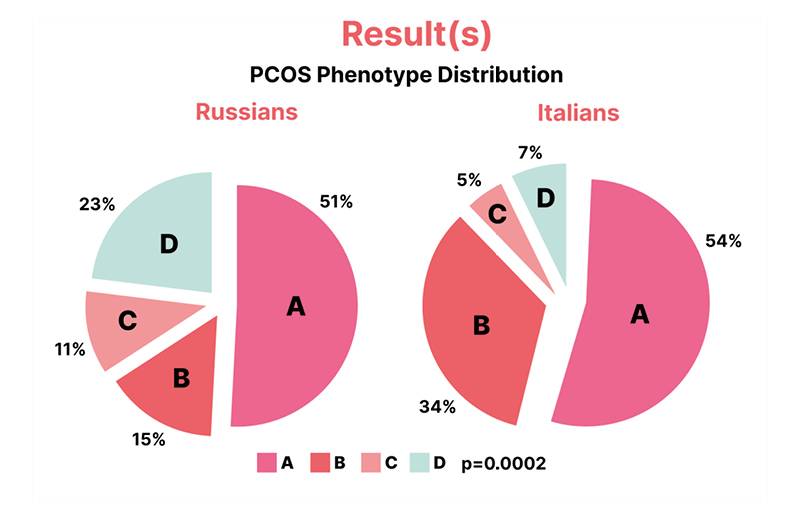
Figure 1: PCOS phenotype distribution in two cohorts: Italian and Russian.
PCOS: polycystic ovary syndrome.
It is considered that the prevalence of hyperandrogenemia is similar among different races and ethnicities,2 but the authors’ study has proved the opposite. They have found the difference not only in clinical hyperandrogenism but also in biochemical markers.
The ratio of patients with hirsutism (using the national approved Ferriman–Gallwey cutoff score) is higher in Italians compared to Russians in hyperandrogenic phenotypes (HA): 88% in Italians versus 49% in Russians (p<0.00001). This was in accordance with biochemical HA markers: free androgen index (FAI; 6.24 [0.74–35.10] versus 4.00 [0–25.6]; p=0.01), total testosterone (2.08 [0–4.51] versus 1.76 [0.2–5.7] nmol/L; p=0.03), and 17 OH progesterone (1.35 [0.37–8.36] versus 1.04 [0.10–6.32] nmol/L; p=0.002).
The reasons for the difference in hyperandrogenic features in various ethnicities are believed to be connected to different 5α‐reductase activity (with difference in clinical but not biochemical HA), to the binding capacity of androgens to androgen receptors (with difference in clinical but not biochemical HA), and to the rate of obesity (positively correlated with 5α‐reductase activity, sex hormone binding globulin, and insulin resistance).2 None of these reasons can be fully applied to the authors’ results. Although total testosterone, FAI, and hirsutism were positively correlated with BMI, the difference in the rate of obesity and excess body weight in the groups cannot explain the entire difference in HA characteristics between the groups. Nevertheless, it can be connected to the 17β‐hydroxysteroid dehydrogenase and 3β‐hydroxysteroid dehydrogenase activity, which needs further study.2
CONCLUSION
There are some differences in the phenotypic aspects of PCOS in different ethnic groups.
The ratio of patients with HA phenotypes (A+B+C) and hirsutism, as well as androgen levels, is higher in Italian than in Russians, which cannot be fully explained by the impact of higher BMI in Italians. The Russian cohort is characterised by a higher age of menarche compared to the Italian cohort.
Future research should aim to know the impact of these differences on metabolic and infertility characteristics, as well as psychological characteristics. Nationwide comparative studies will pave the way for more national-specific clinical practice guidelines and better patient management.