A DEEP learning model for brain tumour detection demonstrates high diagnostic accuracy and reduced false positives, offering a scalable approach to improve magnetic resonance imaging interpretation in clinical practice.
Deep Learning for Brain Tumour Detection
Early and accurate identification of brain tumours from magnetic resonance imaging is critical for timely clinical intervention, yet manual interpretation remains time consuming and dependent on specialist expertise. Researchers have developed MultiAttenNet, a hybrid deep learning framework designed to address these challenges.
The model integrates multi scale convolutional neural networks with Transformer based attention mechanisms, enabling both detailed feature extraction and global contextual understanding. This combined approach enhances the detection of tumours with varying sizes and irregular structures, which can often complicate conventional analysis.
The adaptive attention module within the framework dynamically highlights diagnostically relevant regions, improving localisation and reducing the likelihood of false positive findings. This design supports more precise identification of tumour boundaries and characteristics, which are essential for accurate diagnosis and treatment planning.
Performance Across Diverse Datasets
The model was evaluated using established datasets for both tumour segmentation and classification. For glioma segmentation, performance was assessed using the Brain Tumor Segmentation 2023 dataset. Additional validation was conducted using publicly available datasets for multi class tumour classification, including glioma, meningioma, and pituitary tumours. Across these evaluations, the system achieved high levels of performance, with accuracy of 98.4%, sensitivity of 96.8%, specificity of 99.2%, and a false positive rate of 1.3%.
A key feature of the framework is its semi supervised learning approach, which allows effective training using limited labelled data alongside unlabelled samples. This improves generalisation across diverse clinical scenarios and enhances the model’s applicability in real world settings where annotated data may be limited.
Clinical Implications for Neuro Oncology
The findings indicate that MultiAttenNet can outperform existing state of the art approaches in brain tumour detection and classification. Its ability to combine detailed image analysis with broader contextual interpretation supports more reliable automated decision making in neuro oncology.
This framework represents a scalable and efficient solution for real time clinical use, with the potential to reduce diagnostic workload and improve consistency in imaging interpretation. By enhancing both accuracy and efficiency, deep learning-based approaches such as this may play an increasingly important role in supporting clinicians in the diagnosis and management of brain tumours.
Reference
Shivahare BD et al. An advanced hybrid deep learning framework for high-precision brain tumor detection and classification in MRI scans. Sci Rep. 2026; https://doi.org/10.1038/s41598-026-50194-x.
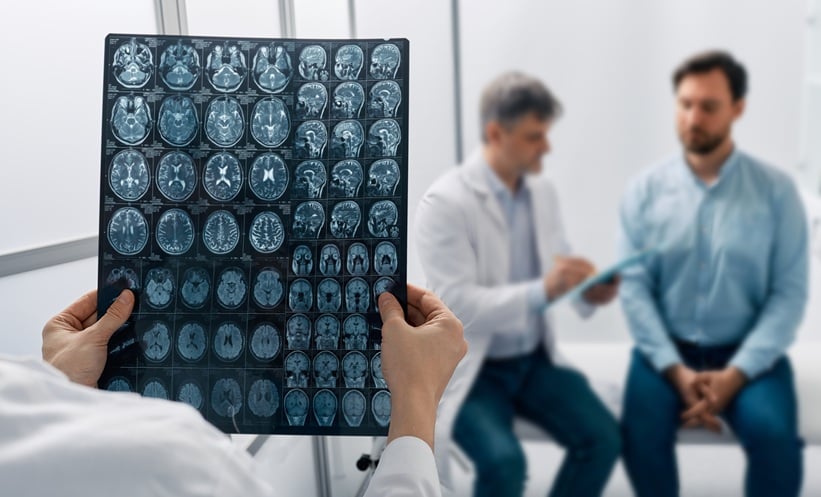
Featured image: Peakstock on Adobe Stock.
- Author: