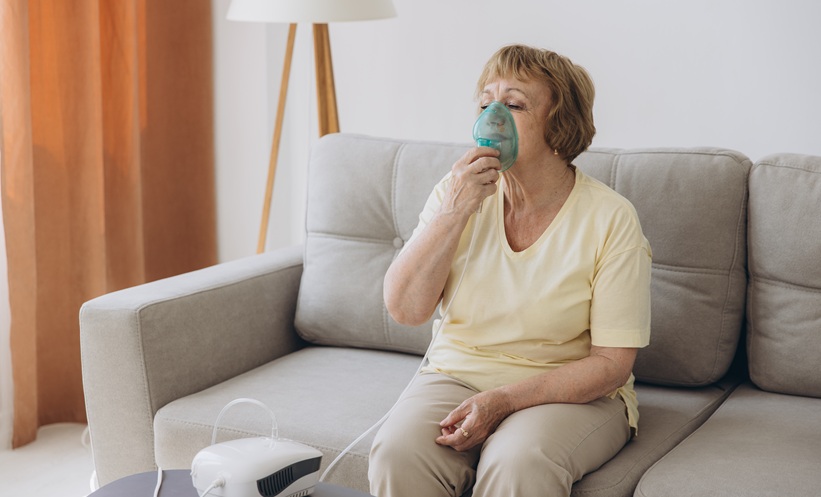
NEBULISER therapy is most commonly used in patients with more severe COPD, particularly those with frequent exacerbations, higher symptom burden, and reduced lung function, according to new long-term cohort data.
COPD is a progressive lung disease characterised by persistent airflow limitation, breathlessness, and recurrent flare-ups that often require escalating treatment.
Measuring Nebuliser Use in COPD
The study followed nearly 3,000 participants over several years, including individuals with COPD as well as tobacco-exposed participants with preserved lung function. Researchers assessed patterns of nebuliser use at baseline and during follow-up to understand which patients are most likely to rely on this form of inhaled therapy in routine care.
Greater Use in Advanced Disease and Exacerbations
At baseline, nebuliser use was highest among patients with advanced COPD, with nearly half of those in the most severe disease category reporting use. Treatment was primarily limited to short-acting bronchodilators delivered on an as-needed basis.
Nebuliser use was strongly associated with markers of disease severity. Patients with recent exacerbations, lower forced expiratory volume in one second (FEV1), higher symptom scores, reduced exercise capacity, and a history of asthma were significantly more likely to use nebulisers. These same factors also predicted future uptake over time.
This consistency suggests that nebuliser use is closely linked to clinical deterioration and symptom burden rather than milder disease states.
Limited Use of Long-Acting Nebulised Therapy
Despite frequent use in severe disease, long-acting nebulised medications were rarely used. This indicates that nebuliser therapy is largely being used for symptom relief rather than as part of maintenance treatment strategies in COPD.
For respiratory clinicians, this may highlight a potential gap in optimising inhaled therapy, particularly for patients who struggle with handheld inhaler techniques or have more advanced disease.
Implications for Clinical Practice
The findings suggest that nebuliser use in COPD is primarily reactive, concentrated in patients with more severe symptoms and frequent exacerbations. This raises questions about whether treatment strategies could be better aligned with disease severity and patient needs.
Researchers note that randomised controlled trials are needed to compare nebulisers with handheld inhaler devices, particularly in patients with advanced COPD, to clarify their role in long-term management.
Featured image: anatoliycherkas on Adobe Stock
Reference
Fazio JC et al; SPIROMICS investigators. Exacerbations and decreased lung function predict nebulizer use and uptake in COPD and tobacco exposed persons with preserved spirometry. Chronic Obstr Pulm Dis. 2026;13(2):111-24.
- Author: