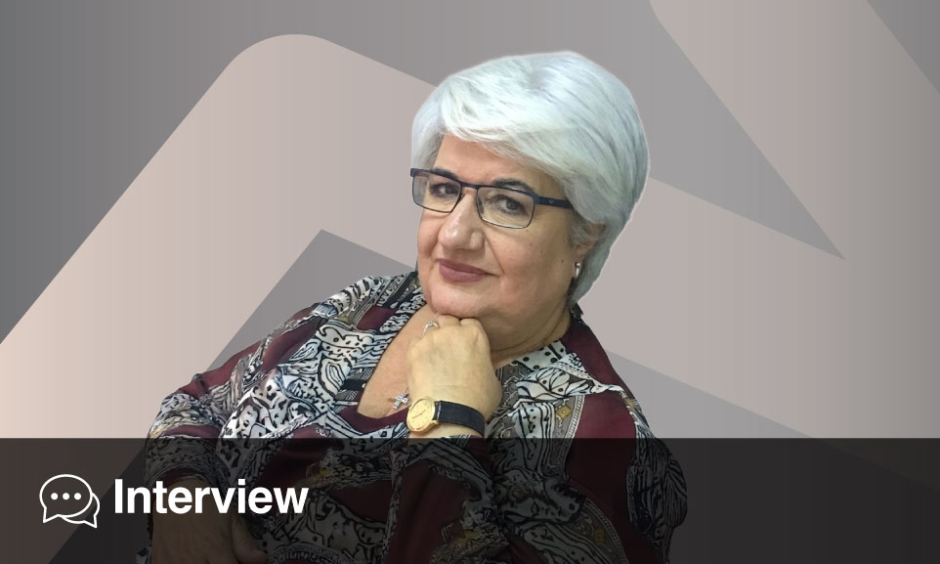
Katy Antonopoulou | President, Sjögren Europe
Citation: EMJ Rheumatol. 13[1]:63-65. 2026; https://doi.org/10.33590/emjrheumatol/2MPOXL80

What inspired you to take on the role of president of Sjögren Europe, and what keeps you engaged in this work?
My journey in patient advocacy is both personal and long-standing. I live with osteoarthritis myself, and for more than 45 years, I have also been a caregiver to my mother, who lives with rheumatoid arthritis. Growing up in a family affected by a chronic rheumatic disease gave me an early understanding of how deeply these conditions affect everyday life for patients and their families.
Alongside my role as President of Sjögren Europe, I also serve as President of the Hellenic League Against Rheumatism (ELEANA) and as a member of the European Alliance of Associations for Rheumatology (EULAR) PARE Committee and the EULAR Advocacy Committee. Through these roles, I work to strengthen the voice of people living with rheumatic diseases in research, healthcare policy, and clinical discussions across Europe.
Sjögren disease, historically referred to as Sjögren’s syndrome, is a systemic autoimmune condition that remains under-recognised and often underestimated across healthcare systems. What motivates me most is helping ensure that the experiences and needs of people living with the disease are recognised when decisions about care and research are made.
Although you don’t live with Sjögren disease yourself, how have patients’ stories shaped your approach to leadership and advocacy?
Listening to patients has always been central to my work and leadership. Through the member organisations of Sjögren Europe, we hear many stories about delayed diagnosis, complex symptoms, and the everyday challenges of living with a disease that is still not widely recognised.
Advocacy must always start from lived experience. These experiences shape our priorities and guide our actions, ensuring that what we do reflects real needs.
How has Sjögren Europe evolved since its founding in 2019, and what are the organisation’s biggest accomplishments so far?
Since 2019, Sjögren Europe has grown into a strong network of national patient organisations working together across the continent. One of our most important achievements has been building a European platform where organisations can collaborate, share knowledge, and advocate collectively.
This has helped bring greater visibility to Sjögren disease and ensured that the patient voice is increasingly recognised in European discussions on research priorities and healthcare policy.
What are the main unmet needs of people living with Sjögren disease across Europe today, and how is Sjögren Europe addressing them?
One of the most pressing challenges is delayed diagnosis. Many people living with Sjögren disease spend years searching for answers before receiving the correct diagnosis, often seeing multiple specialists along the way. No patient should have to wait years to understand what is happening to their health.
These delays often lead to fragmented care and missed opportunities for early intervention, significantly affecting both quality of life and disease management. Improving awareness among healthcare professionals and strengthening referral pathways are, therefore, essential.
Sjögren Europe works to address these gaps by promoting awareness, supporting patient education, and collaborating with clinicians, researchers, and European stakeholders to encourage earlier recognition and more coordinated care.
What concrete policy changes would you most like to see European healthcare systems adopt to improve diagnosis and care pathways for patients with Sjögren’s disease?
Improving awareness of Sjögren disease among healthcare professionals is a crucial first step, so that patients can be referred earlier to appropriate specialists. Earlier recognition can significantly improve the patient journey and help prevent years of uncertainty.
Stronger multidisciplinary care models are also essential, as Sjögren disease is a systemic condition that can affect multiple organs and requires coordinated management across specialties. It is important that this complexity is recognised within national healthcare planning.
At the same time, greater investment in research and clinical trials is needed. We still require a deeper understanding of the disease and the development of more effective treatments.
Patients must be research partners, not only participants in studies. Including patient organisations in research design and policy discussions helps ensure that scientific progress truly reflects real-world needs.
What’s one misconception about living with Sjögren disease that you wish more people understood?
Many people still believe that Sjögren’s disease only causes dry eyes and dry mouth. In reality, it is a complex systemic autoimmune disease that can affect multiple organs and significantly impact quality of life. Recognising this broader impact is essential if we want to improve diagnosis, care, and research.
How does Sjögren Europe ensure that diverse patient voices from different countries are heard and valued in its decision-making?
Sjögren Europe is a federation of national patient organisations, each representing the experiences and priorities of patients in their own country.
Through collaboration and shared governance, these perspectives shape our strategic direction, ensuring that the diversity of patient experiences across Europe is meaningfully reflected in our work.
Lastly, if you could share one message with every clinician in Europe about Sjögren disease, what would it be?
My message would be simple: listen carefully to your patients and consider Sjögren disease when symptoms suggest it, even if the clinical picture is not immediately clear. Listening is often the first step towards an earlier diagnosis.
Greater awareness and stronger collaboration between clinicians and patients can make a real difference in improving outcomes and quality of life.
Looking ahead, there is growing momentum in research across Europe, with increasing interest in understanding disease mechanisms and developing new therapeutic approaches. Strengthening collaboration between researchers, clinicians, and patient organisations will be essential to accelerate progress.