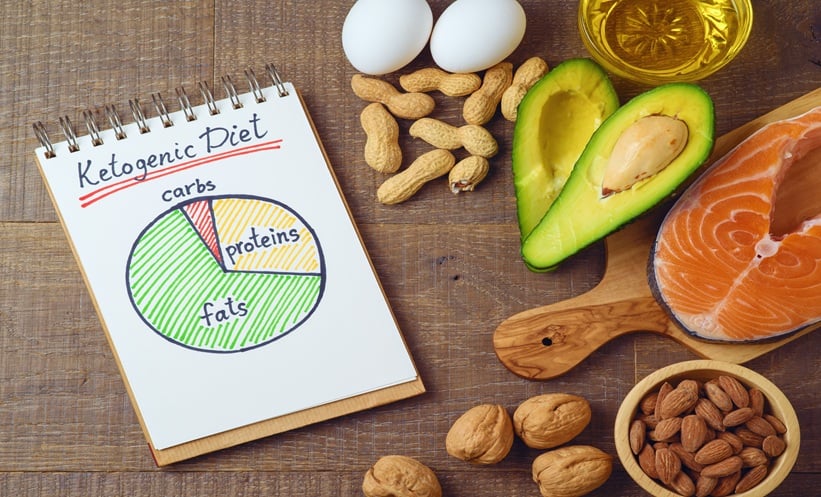
A NEW preclinical study has found that a ketogenic diet may worsen colitis severity by triggering a gut microbe–immune pathway, raising concerns about its use in inflammatory bowel disease (IBD).
Ketogenic Diet and Colitis: Emerging Concerns
The ketogenic diet, widely used for metabolic health and neurological conditions, has also been explored for its immunomodulatory effects. However, its impact on IBD, including ulcerative colitis (UC), has remained unclear.
In this latest study, researchers showed that while the ketogenic diet maintained intestinal balance under normal conditions, it significantly exacerbated colitis when the gut lining was damaged. These findings highlight a potential risk for patients with underlying intestinal inflammation.
Microbiome-Driven Immune Activation
Using a dextran sulfate sodium (DSS)-induced colitis mouse model, the researchers identified a mechanistic pathway linking diet, microbiota, and immune response. The ketogenic diet increased levels of β-hydroxybutyrate (β-HB), a key ketone body, within the gut.
This metabolic shift promoted the expansion of Thomasclavelia spiroformis, a gut bacterium that subsequently activated colonic γδ17 T cells. These immune cells drove inflammation through the production of IL-17A, a cytokine known to play a role in autoimmune and inflammatory conditions.
Further experiments confirmed this pathway. Blocking ketone production or IL-17A signalling prevented the worsening of colitis, while supplementation with β-HB reproduced disease severity. Adoptive transfer studies also demonstrated the direct pathogenic role of γδ17 T cells.
Clinical Relevance in Ulcerative Colitis
Importantly, the study extended its findings to human data. In patients with UC, the abundance of T. spiroformis correlated with faecal β-HB levels and circulating IL-17A. This association was not observed in Crohn’s disease, suggesting a disease-specific mechanism.
These results point to a distinct ketogenic diet–driven immunometabolic axis in UC, linking dietary ketone production to microbial shifts and immune activation.
Implications for Dietary Guidance and Treatment
While the findings are based on animal models, they raise important considerations for clinical practice. The ketogenic diet may not be universally beneficial and could exacerbate inflammation in susceptible individuals, particularly those with UC.
The authors noted that targeting ketone metabolism or IL-17A signalling could represent potential therapeutic strategies.
Overall, the study provides new insight into how diet can influence gut inflammation through complex interactions between metabolism, microbiota, and the immune system.
Reference
Liu Y et al. Ketogenic diet exacerbates DSS-induced colitis through a β-hydroxybutyrate-Thomasclavelia spiroformis-γδ17 T cell axis in mice. Nat Commun. 2026;DOI:10.1038/s41467-026-72044-0.
Featured image: maglara on Adobe Stock
- Author: