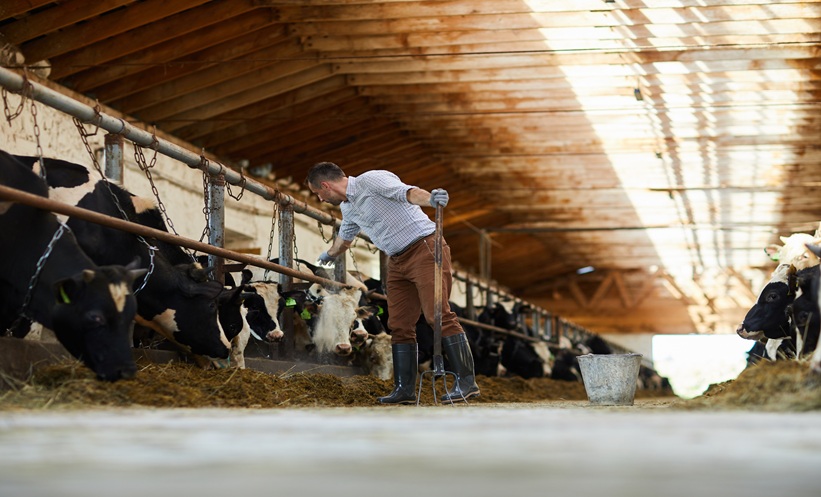
H5N1 influenza surveillance on California dairy farms found airborne virus, wastewater contamination, and subclinical infections in cows.
H5N1 Influenza Detected Beyond Milk Exposure
H5N1 influenza surveillance across 14 affected California dairy farms has identified several possible routes of viral transmission beyond direct contact with unpasteurized milk, including air, farm wastewater, and infections in cows without clear clinical signs.
High viral loads in milk from infected cows have made contaminated milk a leading concern for cow to cow and cow to human transmission. However, the new sampling data suggest that the transmission picture on dairy farms may be broader and more complex. Infectious H5N1 virus was detected in air samples from milking parlors, where cows and workers have close contact with unpasteurized milk and where milking procedures may generate virus containing particles.
Viral RNA was also identified in the exhaled breath of cows, supporting the possibility that respiratory emissions may contribute to environmental contamination or transmission risk. Although the study does not establish the relative contribution of each route, the findings indicate that airborne exposure cannot be excluded in affected dairy settings.
Wastewater May Add Environmental Risk
Farm wastewater also emerged as a potential source of H5N1 influenza exposure. The study detected infectious virus in wastewater streams, which may include discarded milk from sick cows, water used to flush milk lines, and reclaimed farm water held in lagoons or used elsewhere on farm premises.
This has important implications for infection control because reclaimed wastewater may be used for irrigation or flushing housing pens. These processes could increase environmental contamination and potentially generate virus laden aerosols. Wastewater lagoons may also attract birds and other animals, creating additional opportunities for exposure beyond the milking parlor.
Sequence analysis of infectious virus from air and wastewater samples on one farm identified viral variants relevant to potential human susceptibility, underscoring the need for continued genomic surveillance in agricultural environments.
Subclinical Infection Complicates Dairy Surveillance
Milk sampling from individual mammary quarters revealed a high prevalence of H5N1 positive cows without consistent clinical signs. Some infected cows did not show mastitis, and H5N1 specific antibodies were detected in milk from animals that had not displayed clinical illness during an outbreak on one farm.
The distribution of infected quarters varied by animal and remained consistent over time, a pattern that was not fully consistent with shared milking equipment as the sole transmission route. Together, the data suggest that subclinical infection may help sustain H5N1 influenza circulation within dairy herds and complicate detection based on visible illness alone.
For clinicians and public health professionals, the findings reinforce the importance of occupational risk awareness, environmental monitoring, and broader surveillance strategies when assessing H5N1 influenza risks linked to dairy farms.
Reference
Campbell AJ et al. Surveillance on California dairy farms reveals multiple possible sources of H5N1 influenza virus transmission. PLOS Biology. 2026;24(5):e3003761.
Featured Image: pressmaster on Adobe Stock.
- Author: