Author: Aleksandra Zurowska, EMJ, London, UK
Citation: EMJ Rheumatol. 2026;13[Suppl 1]:21-25. https://doi.org/10.33590/emjrheumatol/771475DS

AT THE European Society for Clinical and Economic Aspects of Osteoporosis, Osteoarthritis and Musculoskeletal Diseases (ESCEO) symposium on glucagon-like peptide-1 (GLP-1) receptor agonists and musculoskeletal health, the speakers explored the rapidly evolving evidence surrounding the effects of GLP-1 receptor agonists on bone, joints, and muscle. Originally developed for the treatment of Type 2 diabetes, these therapies are now widely used in obesity management, raising important questions about their broader impact on musculoskeletal health.
EXPANDING BEYOND METABOLIC DISEASE
Opening the session, Gülistan Bahat, Istanbul University, Capa, Türkiye, gave a short introduction on how GLP-1 receptor agonists have moved beyond diabetes care into wider metabolic medicine, driven largely by their profound and sustained effects on weight loss. However, Bahat noted that rapid weight reduction may also lead to loss of bone mineral density (BMD) and skeletal muscle mass, particularly in older adults living with frailty and multimorbidity.
Bahat also emphasised that GLP-1 receptor agonists may exert direct biological effects on musculoskeletal tissues independent of weight loss. GLP-1 receptors are expressed in osteoblasts, osteoclasts, myocytes, chondrocytes, synovium, and components of the immune system, with experimental data suggesting anti-inflammatory, anti-apoptotic, and tissue-modulating effects.
Bahat explained that this creates a complex and potentially conflicting picture. While significant weight loss may negatively affect bone and muscle, direct GLP-1 signalling could simultaneously support bone remodelling, muscle quality, and joint health. As a result, understanding the overall musculoskeletal impact of these therapies has become an increasingly important research priority.
BONE HEALTH: PROTECTIVE OR PROBLEMATIC?
Discussing skeletal outcomes, Nicholas Harvey, University of Southampton, UK, examined the intricate relationship between obesity, diabetes, weight loss, and fracture risk.
Harvey explained that obesity has traditionally been viewed as protective against fractures due to increased BMD. However, large meta-analyses suggest the relationship is more complicated, particularly at higher levels of obesity, where hip fracture risk may actually increase after adjusting for BMD.
Diabetes further complicates the issue. Harvey mentioned evidence showing that Type 2 diabetes is associated with an approximately 30–40% increased fracture risk, while Type 1 diabetes confers an even greater risk independent of BMD and inflammatory markers.1,2
Against this background, the impact of pharmacologically induced weight loss on bone becomes highly relevant. Animal studies presented during the symposium suggested potentially encouraging effects. In ovariectomised rat and mouse models mimicking postmenopausal bone loss, GLP-1 receptor agonists such as liraglutide and exenatide appeared to partially preserve bone structure and trabecular architecture.3,4
Human evidence, however, remains inconclusive. Harvey noted that most pivotal GLP-1 trials were designed primarily around weight loss and cardiovascular outcomes rather than musculoskeletal endpoints, leaving significant gaps in long-term fracture data.5
Some smaller human studies suggested that GLP-1 receptor agonists may help preserve bone mineral content during weight loss, whereas others demonstrated reductions in hip and lumbar spine BMD, particularly in patients not undertaking exercise interventions. Importantly, combination approaches involving exercise alongside pharmacological treatment appeared to mitigate some skeletal losses.6
Harvey stressed that resistance exercise may prove critical in preserving musculoskeletal health during weight reduction, particularly in older adults at risk of osteoporosis and sarcopenia.
OSTEOARTHRITIS AND THE METABOLIC JOINT
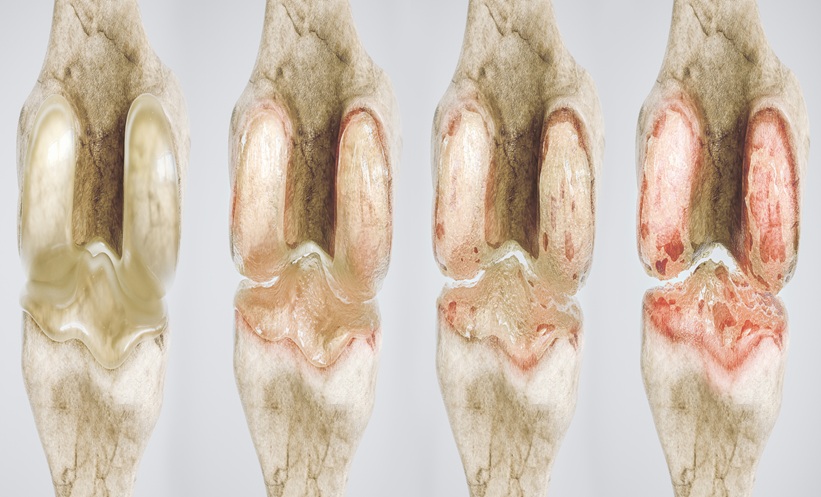
Turning to joint health, Ali Mobasheri, University of Oulu, Finland, argued that osteoarthritis should increasingly be recognised as a metabolically driven disease rather than simply a consequence of ageing and mechanical wear.
Mobasheri described how obesity contributes to osteoarthritis through both “mechanoflammation,” caused by increased mechanical loading, and “metaflammation,” a chronic low-grade inflammatory state driven by adipose tissue and metabolic dysfunction.
These inflammatory processes activate synovial cells, promote cartilage degradation, and alter the joint microenvironment. Emerging evidence also suggests that adipocytes and inflammatory mediators within subchondral bone may contribute to osteoarthritis progression.
Importantly, Mobasheri emphasised growing evidence that GLP-1 receptor agonists may exert anti-inflammatory effects beyond simple weight reduction. He referenced ongoing work investigating intra-articular liraglutide injections for osteoarthritis treatment, reflecting increasing interest in tissue-specific applications of
these therapies.
A major focus of the presentation was the STEP 9 trial, published in 2024, which demonstrated clinically meaningful reductions in pain and improvements in physical function among patients with obesity-related osteoarthritis treated with semaglutide over 68 weeks. Reduced reliance on analgesics and opioids was also observed during the study period.7
Mobasheri further emphasised that obesity itself is highly heterogeneous and cannot be fully characterised using BMI alone. Different metabolic phenotypes may influence both osteoarthritis progression and treatment response, reinforcing the need for more personalised therapeutic strategies.
He predicted that obesity-associated osteoarthritis could become one of the first osteoarthritis phenotypes to receive targeted approval for GLP-1-based therapies.
MUSCLE HEALTH AND THE SARCOPENIA DEBATE
The symposium concluded with a discussion on muscle health from Gustavo Duque, McGill University, Montreal, Canada, who addressed growing concerns surrounding reports of lean mass loss during GLP-1 therapy.
Duque presented preclinical data from animal models showing largely beneficial muscular effects. GLP-1 receptor agonists appeared to reduce muscle atrophy, preserve strength, enhance exercise endurance, reduce inflammation, and improve vascularisation.8
However, translating these findings into humans remains challenging. Duque cautioned that many clinical studies rely on dual-energy X-ray absorptiometry, which measures ‘lean mass’ rather than true muscle tissue specifically. Since lean mass includes multiple non-fat tissues, observed reductions may not accurately reflect clinically meaningful muscle loss.
Crucially, available evidence suggests that reductions in lean mass do not necessarily translate into impaired muscle function. Several short-term studies demonstrated preservation of grip strength and physical performance despite measurable lean mass loss.9
Duque argued that many patients actually become more mobile and physically active following weight reduction, potentially improving overall muscle function despite changes in body composition.
Nevertheless, he raised concerns regarding weight regain following treatment discontinuation. Emerging evidence suggests that regained weight may disproportionately accumulate as fat, including intramuscular fat infiltration, which could negatively affect long-term muscle quality and metabolic health.
Throughout the presentation, Duque repeatedly stressed that GLP-1 receptor agonists should not be viewed as standalone interventions. Exercise, particularly resistance training, remains essential to preserve both muscle and bone health during treatment.
A RAPIDLY EVOLVING FIELD
Across all presentations, speakers agreed that the musculoskeletal effects of GLP-1 receptor agonists are considerably more complex than initially assumed. While concerns surrounding bone loss and lean mass reduction remain valid, emerging evidence also points towards potentially beneficial anti-inflammatory and tissue-modulating effects.
As the clinical use of GLP-1 receptor agonists continues to expand, future studies will be essential to determine how these therapies can be safely integrated into long-term musculoskeletal care, particularly for ageing populations living with obesity, osteoarthritis, osteoporosis, and sarcopenia.