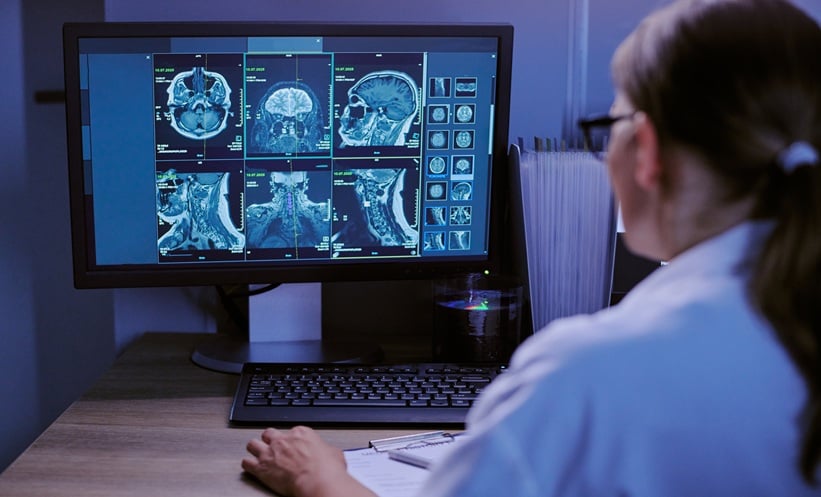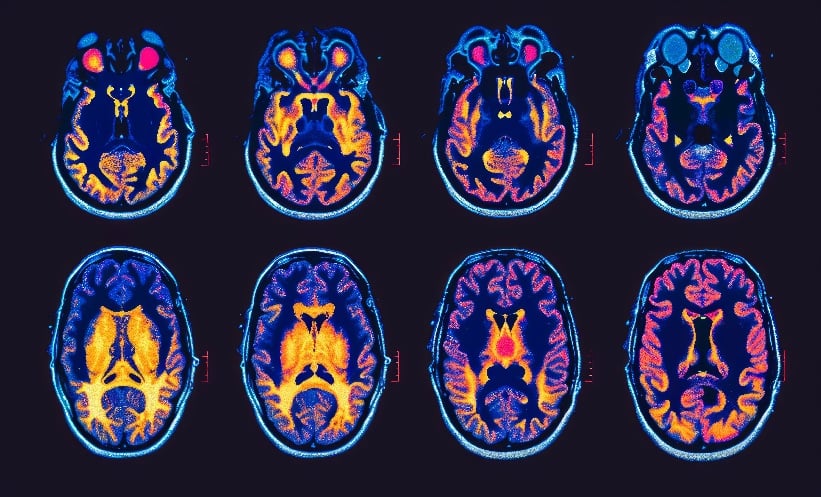
NEW research suggests that structural brain imaging could help identify which patients with treatment-resistant depression are most likely to benefit from ketamine, potentially reducing the reliance on trial-and-error treatment approaches.
The Need for Personalised Treatment
Treatment-resistant depression affects a substantial proportion of patients with major depressive disorder, leaving many individuals with persistent symptoms despite multiple antidepressant therapies.
While ketamine has emerged as a rapidly acting treatment option, not all patients respond, creating an urgent need for tools that can guide treatment selection and improve outcomes.
Machine Learning Identifies Brain-Based Predictors of Ketamine Response
Researchers developed a machine-learning model using pre-treatment structural MRI scans from 99 adults with treatment-resistant depression who received a single intravenous ketamine infusion at a dose of 0.5 mg/kg. Treatment response was defined as at least a 50% reduction in Montgomery–Åsberg Depression Rating Scale scores 24 hours after treatment.
Among participants who received ketamine, 52.5% responded to therapy. The machine-learning model successfully distinguished responders from non-responders with a balanced accuracy of 72.2%, achieving a sensitivity of 72.3%, specificity of 73.1%, and an area under the curve of 0.72.
Importantly, the model was tested in two independent external cohorts comprising 51 ketamine-treated participants, where it maintained predictive performance with a balanced accuracy of 60.0% (p=0.01; AUC=0.65).
Distinct Brain Regions Linked to Treatment Outcomes
Analysis of the imaging data revealed clear neuroanatomical differences between patients who responded to ketamine and those who did not.
Greater grey matter volume within frontal brain regions was associated with a positive antidepressant response, while larger cerebellar volumes were linked to non-response.
These findings align with existing evidence implicating frontal brain networks in mood regulation and cognitive control.
Evidence Supports Ketamine-Specific Effects
To determine whether the model was identifying general predictors of symptom improvement rather than ketamine-specific effects, the investigators tested it in a separate saline-treated control cohort of 49 participants.
In this group, predictive performance fell to chance levels, with a balanced accuracy of 41.1% and an AUC of 0.45. This finding suggests that the identified brain imaging markers were specifically associated with ketamine response rather than broader placebo-related improvement.
Toward Personalised Depression Treatment
The authors described their work as the first machine-learning model to predict ketamine response in treatment-resistant depression using structural neuroimaging alone.
Although further validation in larger and more diverse populations will be needed before clinical implementation, the findings highlight the potential for MRI-based biomarkers to support more personalised treatment decisions.
If confirmed, such approaches could help clinicians identify suitable candidates for ketamine therapy earlier, minimise exposure to ineffective treatments, and advance precision psychiatry for patients with treatment-resistant depression.
Reference
Bryant L et al. Structural imaging predictors of ketamine response in treatment-resistant depression: a machine learning approach. Transl Psychiatry. 2026;DOI: 10.1038/s41398-026-04085-4.
Featured image: nopommajun on Adobe Stock
- Author: