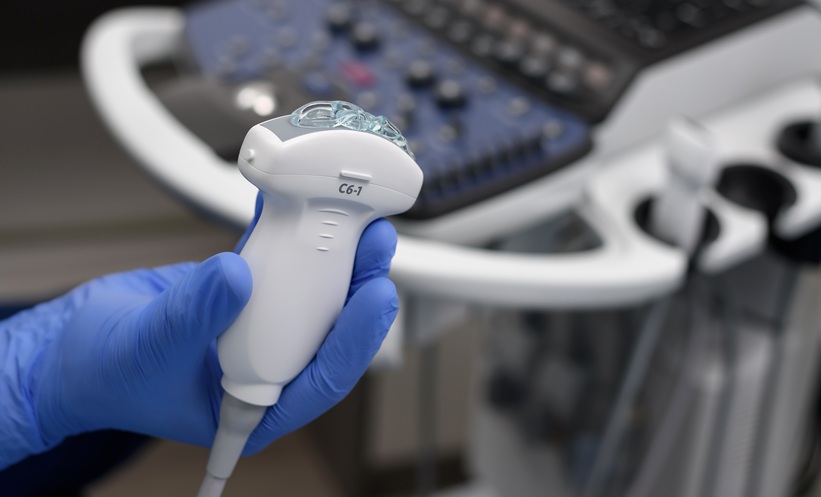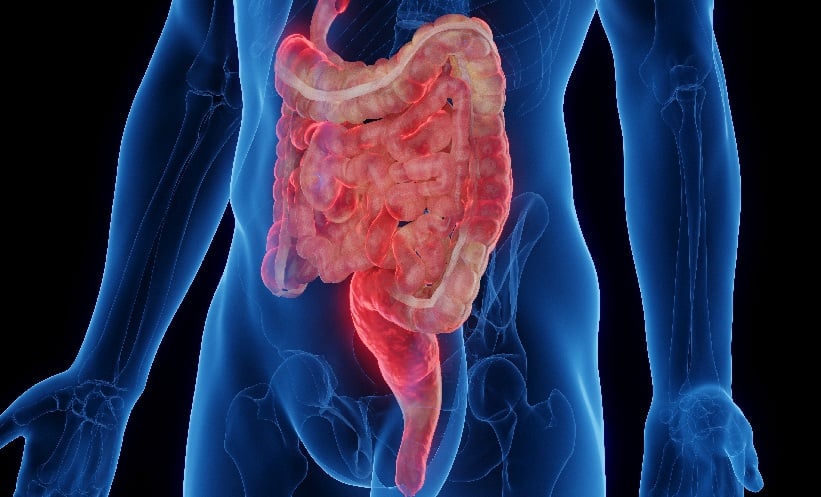
INTESTINAL ultrasound in Crohn’s disease is demonstrating strong agreement with MRI for assessing disease activity. This comes from a study of 504 paired imaging assessments using small intestinal contrast ultrasonography (SICUS).
Crohn’s disease is a chronic inflammatory disorder of the gastrointestinal tract characterised by relapsing inflammation that may affect any segment of the bowel, often requiring repeated imaging to support clinical decisions and monitor progression.
The results suggest that ultrasound-based scoring systems may offer a reliable and less resource-intensive alternative for evaluating inflammatory burden in routine clinical practice.
Intestinal Ultrasound in Chron’s Disease and MRI Correlation Findings
The study assessed the relationship between SICUS-derived scores and the simplified magnetic resonance index of activity (sMaRIA), alongside the Crohn’s disease activity index and inflammatory biomarkers. All SICUS scores showed significant positive correlations with sMaRIA, with the international bowel ultrasound segmental activity score (IBUS-SAS) demonstrating the strongest relationship (r=0.824, p<0.001).
Both SICUS and MRI-based measures also correlated significantly with CDAI and biomarker levels, indicating alignment across imaging findings, clinical disease activity, and inflammatory markers.
Intestinal Ultrasound in Crohn’s Disease Scoring Performance of IBUS-SAS
Receiver operating characteristic analysis showed strong diagnostic performance for SICUS scores in identifying MRI-defined severe disease activity. IBUS-SAS achieved the highest area under the curve at 0.95 (95% confidence interval 0.93–0.97), with 90.3% sensitivity and 89.3% specificity.
While overall performance was broadly similar across SICUS scoring systems, IBUS-SAS demonstrated a modest, non-significant advantage in discriminating severe inflammatory activity compared with other evaluated indices.
Implications for the Monitoring of Crohn’s Disease
These findings indicate that SICUS-derived scoring systems may deliver diagnostic performance comparable to MRI for assessing Crohn’s disease activity and severity. The results support the potential role of intestinal ultrasound, particularly IBUS-SAS, as a practical option for long-term disease monitoring. This approach may help reduce reliance on more resource-intensive imaging modalities while still providing a robust assessment of inflammatory burden in patients requiring ongoing evaluation.
Reference
Su J, Liu X-X. Correlation between small intestinal contrast ultrasonography and magnetic resonance imaging scoring systems in Crohn’s disease. Eur Radiol. 2026;DOI:10.1007/s00330-026-12679-1.
Featured image: [ ] on Adobe Stock
- Author: