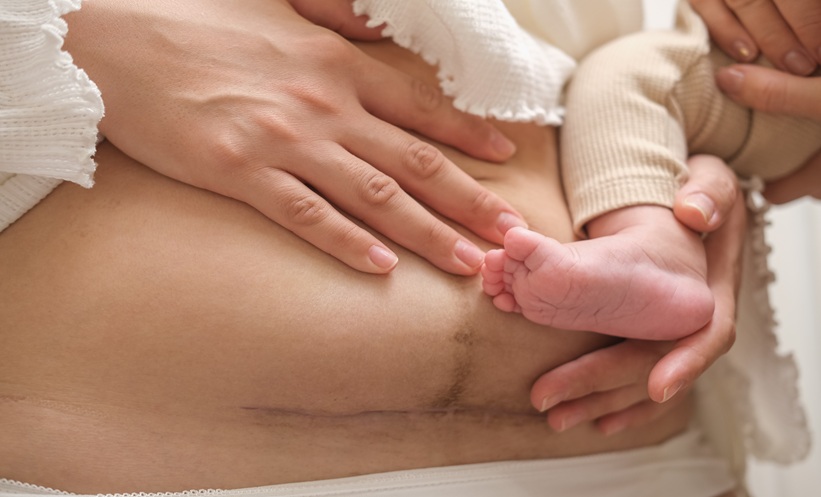
Women who undergo a caesarean section at full cervical dilatation may face a substantially increased risk of preterm birth and second-trimester pregnancy loss in future pregnancies, according to a new population-based cohort study.
Researchers investigated whether the timing and circumstances of a woman’s first term caesarean delivery influenced outcomes in subsequent pregnancies. The study analysed data from 984 women who underwent their first term caesarean section in 2017 and followed their later pregnancies through to 2024.
Increased Risk Following Full-Dilation Caesarean
Participants were grouped according to the timing of their caesarean delivery: elective caesarean section, caesarean during latent labour, caesarean during active labour, and caesarean section at full cervical dilatation (CSFD).
The highest rates of adverse outcomes were observed among women who underwent CSFD. Nearly 18% experienced spontaneous preterm birth before 37 weeks in a subsequent pregnancy, compared with just 3–6% in the other groups.
After adjustment for potential confounders, women with a history of CSFD were found to have a 6.5-fold higher risk of spontaneous preterm birth compared with those who had an elective caesarean section.
Uterine Extensions Further Increased Risk
The risk was even greater among women who experienced uterine extensions during the procedure. Those with extensions measuring 3–5 cm had an 8.2-fold increased risk of spontaneous preterm birth before 37 weeks.
Second-trimester pregnancy loss was also more common in this group. More than 10% of women with significant uterine extensions experienced a second-trimester miscarriage, compared with less than 1% in most other groups.
Cervical Dilatation Matters
Researchers identified a clear relationship between cervical dilatation at the time of caesarean delivery and future pregnancy outcomes. For every additional centimetre of cervical dilatation during the index caesarean, the risk of spontaneous preterm birth increased by 27%.
Women who underwent caesarean delivery following failed instrumental delivery or arrest of fetal head descent faced particularly high risks, with rates of subsequent preterm birth markedly higher than those seen after elective procedures.
Implications for Future Care
The authors suggest that detailed caesarean delivery history should be incorporated into future preterm birth risk assessments. They propose that women with a history of CSFD, particularly those with uterine extensions, may benefit from referral to dedicated preterm birth prevention clinics.
Potential interventions could include serial cervical length monitoring, vaginal progesterone therapy, and cervical cerclage where appropriate.
The findings add to growing evidence that intrapartum caesarean delivery, especially at full dilatation, may have important implications for subsequent reproductive outcomes and should be considered when planning care in future pregnancies.
Reference
Minisha F et al. Risk of preterm birth and second-trimester loss following intrapartum cesarean sections and uterine extensions: a population-based cohort study. Reprod Health. 2026;DOI: 10.1186/s12978-026-02387-w
Featured Image: leroy on Adobe Stock.
- Author: