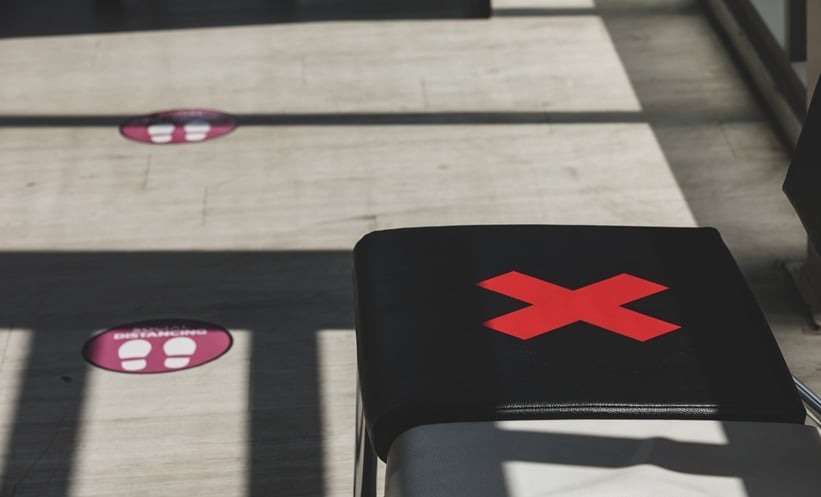
PHYSICAL distancing was tied to poorer quality of life in immunocompromised adults years after COVID-19 emerged.
Physical Distancing and Quality of Life
Immunocompromised adults continued to report substantial physical distancing more than 3 years after the emergence of COVID-19, with higher distancing intensity associated with greater impairment across several health-related quality of life measures.
The cross-sectional, observational EAGLE study evaluated 2,320 immunocompromised adults in the U.S. and UK who fully completed an online survey between December 2022 and June 2023. The study was designed to quantify ongoing physical distancing behaviors used to avoid COVID-19 and assess how these behaviors aligned with quality of life, loneliness, anxiety, depression, activity impairment, and work productivity.
Although COVID-19 vaccine uptake has changed the clinical landscape, immunocompromised individuals may have suboptimal vaccine responses and may continue to avoid exposure. In this cohort, 68% of adults reported moderate to high physical distancing in the previous 4 weeks, highlighting an ongoing behavioral burden well beyond the acute pandemic period.
EAGLE Study Shows Ongoing Daily Impact
Physical distancing showed low correlations with domains of the 12-item Short Form Health Survey version 2, with absolute correlation values ranging from 0.18 to 0.39. Stronger associations were seen for disease impact and functional disruption, including the Quality of Life Disease Impact Scale 7 item score, activity impairment, and presenteeism.
In preliminary structural equation modeling, direct relationships with physical distancing explained much of the association with daily function. Reported standardized estimates were 0.46 for QDIS, 0.40 for activity impairment, and 0.29 for presenteeism. Confounder-adjusted linear regression coefficients were similar to those observed in the structural equation models, supporting the consistency of the findings.
Clinical Relevance for Immunocompromised Adults
The findings do not establish causation, but they show that physical distancing and poorer health-related quality of life continue to coexist for many immunocompromised adults. For clinicians, the results point to a need for ongoing conversations about COVID-19 avoidance, mental well-being, work participation, and daily function in this population.
The study also reinforces that infection prevention for immunocompromised adults may carry personal and functional costs. Individualized counseling should acknowledge both the medical rationale for continued caution and the broader quality of life burden that may accompany sustained physical distancing.
Reference
Williams P et al. Assessing the association of physical distancing to avoid COVID-19 with health-related quality of life in immunocompromised adults: results from the cross-sectional observational EAGLE study. BMJ Public Health. 2026;4(2).
Featured Image: Bangkok Click Studio on Adobe Stock.
- Author: