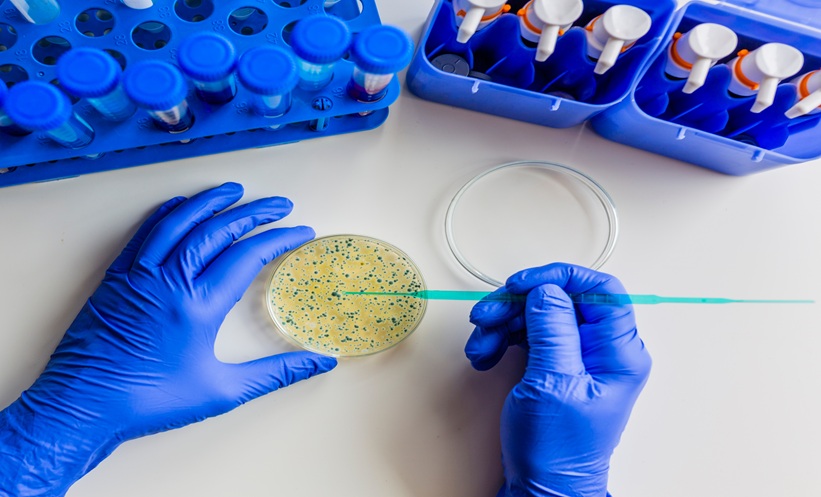
An eco-friendly disinfectant based on ozone nanowater (ONW) has demonstrated potent activity against multidrug-resistant (MDR) Escherichia coli, according to new research. The study found that ONW rapidly killed antibiotic-resistant bacteria, disrupted biofilm formation, and did not appear to promote antimicrobial resistance after repeated exposure.
The findings suggest that ozone nanowater could offer a sustainable alternative to conventional disinfectants for use in healthcare, agriculture, and food production, where antimicrobial resistance remains a growing global concern.
Searching for Alternatives to Conventional Disinfectants
The widespread use of antibiotics and disinfectants in livestock production has contributed to the emergence of resistant bacterial strains, increasing the need for new approaches that effectively eliminate pathogens without encouraging further resistance.
Researchers evaluated the antimicrobial activity of ozone nanowater against four E. coli strains, including three multidrug-resistant clinical isolates. They also investigated whether repeated exposure to ONW altered bacterial susceptibility to antibiotics over multiple generations.
The physicochemical properties of the disinfectant, including nanobubble size, stability, and surface charge, were characterised before laboratory testing.
Rapid Killing of Drug-Resistant Bacteria
ONW demonstrated rapid bactericidal activity against all four E. coli strains tested, including those with multidrug-resistant phenotypes.
In addition to killing planktonic bacteria, the disinfectant markedly reduced biofilm formation. Biofilms allow bacteria to attach to surfaces and protect themselves from antimicrobial agents, making infections and environmental contamination more difficult to eradicate.
The authors note that disrupting biofilm formation could enhance infection control and improve sanitation across a range of clinical and agricultural settings.
Multiple Mechanisms of Action
Using flow cytometry alongside scanning and transmission electron microscopy, researchers observed extensive bacterial cell membrane damage following ONW treatment.
Further analysis using confocal Raman microspectroscopy demonstrated reductions in molecular signatures associated with bacterial membranes, cell walls, nucleic acids, and ATP, indicating that ozone nanowater damages multiple essential cellular structures simultaneously rather than targeting a single bacterial pathway.
This broad oxidative mechanism may make it more difficult for bacteria to develop resistance.
No Evidence of Resistance Development
Importantly, repeated exposure to ozone nanowater across three consecutive bacterial generations did not significantly alter antimicrobial susceptibility in the E. coli strains.
The researchers suggest this finding indicates that ONW may provide effective disinfection without exerting the selective pressure often associated with conventional antimicrobial agents.
Potential Applications in Healthcare and Food Safety
The authors conclude that ozone nanowater represents a promising sustainable disinfectant capable of controlling multidrug-resistant E. coli while minimizing concerns about resistance selection.
Although additional studies will be needed to validate its effectiveness in real-world settings, the findings support further investigation of ONW as an environmentally friendly disinfection strategy for healthcare environments, food processing, and agricultural production.
Reference
Wang W et al. A new and eco-friendly disinfectant for antimicrobial-resistant bacteria: ozone nano water. BMC Microbiol. 2026;DOI: 10.1186/s12866-026-05120-6
- Author: