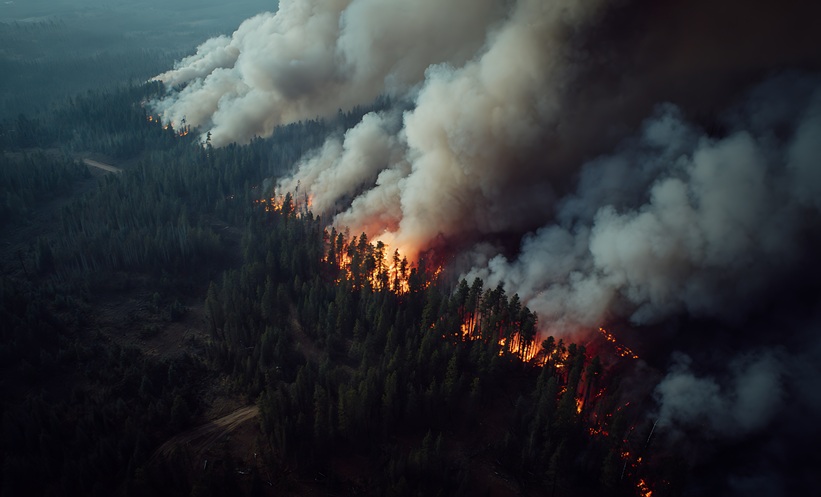
MIGRAINE symptoms are associated with particle PM2.5, a component of wildfire smoke, according to new research from across a large cohort study in Canada. The results showed an increase in ED visits, with the effects being stronger in poorer communities.
Wildfire Smoke Worse Than Regular Air Pollution
Wildfire smoke contains fine and toxic compounds that may trigger oxidative stress and inflammation in blood vessels. This can activate the nerve pathways which lead to severe migraines requiring emergency care.
Due to earlier research on this link being inconsistent and limited by smaller sample sizes, this large-scale Canadian study investigated nearly 1 million ER visits and found a clear and statistically significant association.
Case Crossover Study in Canada
Researchers conducted a study in Alberta and Ontario, Canada, between 2010-2023 during their wildfire season, using the case crossover style.
Participants were examined on the day they visited the ED versus similar days they did not visit. This study took into account nearly 1 million ED visits, primarily for migraines and headaches.
Wildfire smoke levels were measured using the Canadian Optimized Statistical Smoke Exposure Model (CANossem) which combines satellite smoke and weather conditions to isolate the wildfire specific pollution (PM2.5).
The effect of socio-economic status was also examined in the social deprivation index and basing this on census data of income, education, and employment.
A Clear and Growing Risk of PM2.5
Across the 997,701 ED visits (622,753 patients, mean age of 24.6 years) for migraine and other primary headache syndromes identified during the study period, 86.2% of the visits were for migraine, and 13.8% were for other primary headache syndromes.
The PM2.5 produced by wildfire was associated with a 6.07% increase in ED visits. The data showed that effect was roughly 3 times higher for individuals in more disadvantaged communities, suggesting a higher vulnerability to the wildfire smoke effects in these populations.
In contrast, the total PM2.5 concentration on non-wildfire days was not significantly associated with ED visits.
Further Implications for the PM2.5 Pollution Caused by Wildfires
This large-scale study has provided evidence that short-term exposure to wildfire smoke (PM2.5) can trigger severe migraines, enough to require emergency care which is a risk likely to grow as wildfires become more frequent and intense.
The findings highlight the necessity for future research into improvement strategies for air filtration and smoke avoidance to help protect vulnerable populations during wildfires.
Reference
Dales R et al. Wildfire-sourced PM2.5 and emergency department visits for migraine and other primary headache. JAMA Netw Open. 2026;9(7):e2625015.
Featured Image: Rehan on Adobe Stock