Meeting Summary
Chronic inflammatory demyelinating polyradiculoneuropathy (CIDP) is a rare, severe, progressive, immune-mediated disease characterised by progressive or relapsing muscle weakness and sensory disturbance, which can lead to irreversible disability. The neonatal Fc receptor (FcRn) blocker efgartigimod is approved for the treatment of CIDP based on the pivotal ADHERE trial, in which it reduced relapse risk, improved disability scores, and was well tolerated in patients with CIDP. This article summarises data from several post-hoc analyses of the ADHERE trial presented as posters at leading neurology congresses in 2026.
In the cohort of patients from the ADHERE trial who were treatment naïve and recently diagnosed with CIDP, efgartigimod showed evidence of clinical improvement (ECI) across multiple functional domains. Efgartigimod also demonstrated long-term improvements in grip strength and improved the key measure of arm and leg disability in patients with CIDP across the wider ADHERE population. Findings from molecular analysis showed a reduction in IgG autoantibody signatures in efgartigimod-treated patients in ADHERE, consistent with its mechanism of action, and identified neurofilament light (NfL) as a potentially useful biomarker for axonal damage in CIDP.
Collectively, these analyses reflect the continued evolution of CIDP research, linking clinical outcomes with emerging biological insights to expand understanding of treatment response, disease activity, and patient heterogeneity.
Background
CIDP is a chronic, progressive, immune-mediated polyradiculoneuropathy characterised by demyelination, resulting in proximal and distal weakness and sensory disturbance.1,2 Axonal damage can develop over time, leading to irreversible disability in some patients.2-4 As the CIDP field continues to evolve, there is growing interest in integrating clinical outcomes with emerging insights into disease biology to better understand treatment response, disease biology, and patient heterogeneity.
Efgartigimod is a human IgG1 antibody Fc fragment that has been engineered for increased affinity to FcRn compared with endogenous IgG and is uniquely composed of the only part of the IgG antibody that normally binds FcRn.5,6
The pivotal ADHERE study (NCT04281472) and its open-label extension ADHERE+ (NCT04280718) assessed the efficacy and safety of efgartigimod in CIDP (Figure 1).7-10 In this randomised, double-blinded, placebo-controlled trial, efgartigimod reduced relapse risk; led to clinically meaningful improvements in functional ability, daily activity, and grip strength versus placebo; and was well tolerated in participants with CIDP.7

Figure 1: ADHERE and ADHERE+ study design.7-10
CIDP: chronic inflammatory demyelinating polyneuropathy; PH20: recombinant human hyaluronidase; SC: subcutaneous.
Patients Who Are Treatment Naïve in ADHERE
Patients who are treatment naïve are an underrepresented population in CIDP clinical trials, with limited evidence regarding early disease trajectories and first-line treatment response. Jeffrey Allen from University of Minnesota in the USA presented results at the American Academy of Neurology (AAN) 2026 Annual Meeting from a post-hoc analysis of the open-label Stage A of the ADHERE trial in patients with a CIDP diagnosis <1 year who had never received prior CIDP treatment. This marks the first report from a large exploratory data set of efgartigimod in a patient population with CIDP who are treatment naïve.11
In total, 24 of the 322 patients in the ADHERE trial were treatment naïve. Mean age was 59.5 years, 66.7% were male, and the mean time since CIDP diagnosis was 2.4 months. All patients had unstable active disease at baseline, defined as abnormal examination with progressive or relapsing course.11
During Stage A of the ADHERE trial, 87.5% (n=21/24) of patients who were treatment naïve demonstrated confirmed ECI after ≤12 weeks treatment with open-label efgartigimod. The time to initial confirmed ECI was 39.5 days.11
Improvements meeting or exceeding the minimal clinically important difference (MCID) were reported with efgartigimod from Stage A baseline to Stage A last assessment across a range of efficacy measures. Patients who were treatment naïve who received efgartigimod showed a mean (standard error) reduction of 1.0 (0.2) in Inflammatory Neuropathy Cause and Treatment (INCAT) score and a 10.7 (2.6) improvement in Inflammatory Rasch-Built Overall Disability Scale (I-RODS) centile metric score. Hand grip strength scores also improved by 15.3 (3.9) and 14.8 (3.4) kPa in the dominant and non-dominant hand, respectively.11
Key Takeaways
In this post-hoc analysis of the ADHERE trial, treatment with efgartigimod resulted in clinical improvements in patients who were treatment-naïve and recently diagnosed with CIDP, with nearly nine in 10 achieving confirmed ECI and a median time to response of ~40 days. Clinically meaningful improvements were observed across multiple functional domains, including disability, daily activities, and grip strength, with changes meeting or exceeding MCID thresholds. These findings add to the limited evidence base in treatment-naïve CIDP and provide insight into treatment response early in the disease course. Efgartigimod is approved in the USA irrespective of prior treatment status, whereas in Europe it is not currently indicated as a first-line treatment option.12
Impact of Efgartigimod Treatment on Grip Strength
Hans Katzberg from Ottawa Hospital Research Institute in Canada, presented results from a post-hoc analysis of the ADHERE/ADHERE+ study at the Canadian Neurological Sciences Federation (CNSF) 2026 Annual Congress, which evaluated the effect of efgartigimod treatment on grip strength.10 Reduced grip strength in CIDP impacts daily tasks such as holding objects, steering, and writing, thereby compromising patients’ quality of life and independence.1 Grip strength is also an objective, well-established, and convenient measure of muscle impairment.13 Reference values for grip strength (both hands) in healthy adults vary by age and sex; however, an increase of ≥8 kPa is considered an MCID.14-16
This post-hoc analysis assessed grip strength in Stage A responders from ADHERE run-in baseline through to Week 36 of the ADHERE+ open-label extension study, with a data cutoff of 16th February 2024. In total, 322 patients entered ADHERE Stage A, 221 were randomised and treated in ADHERE Stage B, and 228 rolled over and were treated in ADHERE+. The mean age of these 228 rolled-over patients was 53.2 years, 62.3% were male, and grip strength in the dominant hand at ADHERE Stage A baseline was 39.0 kPa.10
Results showed an early clinical improvement in grip strength in patients treated with efgartigimod. Among those who received efgartigimod in ADHERE Stage A, the median time to first improvement was fastest for grip strength as compared to other clinical measures. Improvement in grip strength by ≥8 kPa occurred at 4.1 weeks, compared with 8.3 weeks for adjusted INCAT ≥1-point improvement and 6.4 weeks for I-RODS centile metric score ≥4-point improvement.10
During ADHERE Stage A, 66.5% (n=214/322) of patients reported ECI, defined as a ≥8 kPa improvement in either hand for mean grip strength, a ≥1-point improvement for adjusted INCAT, or a ≥4-point improvement for I-RODS centile metric score.15,16 Overall, 80.4% (n=172/214) of efgartigimod responders achieved a ≥8 kPa improvement in either hand for mean grip strength. In Stage B, treatment with efgartigimod reduced the relative risk of grip strength deterioration by 71.5% compared with placebo, based on a 16 kPa relapse threshold from Stage B baseline in either hand (hazard ratio: 0.2850; 95% CI: 0.1517–0.5352; p<0.001).10
Notably, improvements in dominant hand grip strength with efgartigimod were sustained from ADHERE Stage A baseline to Week 36 of ADHERE+ and these improvements corresponded with time on treatment. A similar trend was noted for non-dominant grip strength scores (Figure 2).10
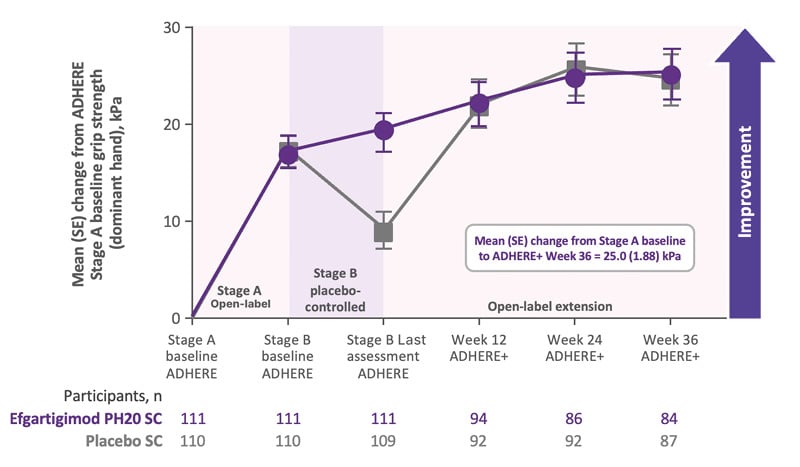
Figure 2: Dominant hand grip strength across ADHERE–ADHERE+ study in Stage A responders.10
An increase of ≥8 kPa in grip strength is considered a minimal clinically important difference.14,15 In ADHERE, participants receiving CIDP treatment entered a ≤12-week run-in during which CIDP treatments were withdrawn to identify participants with active disease. Mean (SE) dominant hand grip strength score at run-in baseline: 46.6 kPa (1.75; n=191/221; Stage B efgartigimod group: 44.4 kPa [2.39], n=97; Stage B placebo group: 48.9 kPa [2.57], n=94). Mean change in dominant hand grip strength from run-in baseline to Stage A baseline: –8.2 kPa (0.71; n=191/221; Stage B efgartigimod group: –8.1 kPa [0.99], n=97; Stage B placebo group: –8.2 kPa [1.02], n=94).
CIDP: chronic inflammatory demyelinating polyneuropathy; PH20: recombinant human hyaluronidase; SC: subcutaneous; SE: standard error.
Looking at the cumulative magnitude of grip strength response, 69.8%, 50.3%, 38.9%, and 24.8% of patients achieved ≥8, ≥16, ≥24, and ≥32 kPa improvement, respectively, in grip strength in any hand compared with ADHERE run-in baseline by Week 36 of ADHERE+.10
Key Takeaways
Grip strength is an objective and patient-relevant measure of functional ability in CIDP, reflecting aspects of daily activity that are directly meaningful to patients. In this post-hoc analysis of ADHERE/ADHERE+, improvements in grip strength were observed early and were sustained with continued efgartigimod treatment, with approximately 40–50% of patients achieving two-to-three times the MCID over extended follow-up. Together with the reduction in relapse risk observed in ADHERE, these findings support grip strength as a useful functional outcome for characterising treatment response in CIDP.1
INCAT Score Improvements with Efgartigimod
The INCAT score is the standard measure of arm and leg disability in CIDP.15,17 The overall disability score is derived from the sum of the individual arm and leg disability scores. Scores range from 0=no disability to 10=maximum disability, with a decrease of ≥1 point considered to be an MCID.15,17 At the Peripheral Nerve Society (PNS) Annual Meeting 2026, Christian Eggers from Kepler University Hospital, Linz, Austria, presented a post-hoc analysis of patients who reported an improvement in their INCAT scores to normal or near-normal functional ability (i.e., INCAT score of 0 or 1) in the ADHERE/ADHERE+ trial. Data cutoff for this interim analysis was 19th December 2025.18
At ADHERE Stage A baseline, the mean (SD) INCAT score in efgartigimod responders was 4.6 (1.7) and no patient had an INCAT score less than 2. Post-hoc analysis showed an increase in the proportion of responders attaining an INCAT score of 0 or 1 over the course of the ADHERE/ADHERE+ study (Figure 3).18 Overall, 39.3% (n=77/196) of Stage A responders reached an INCAT score ≤1 at any point during ADHERE+.18 Of these, an INCAT score of 0 or 1 was maintained at two or more consecutive visits in 80.5% (n=62/77), equivalent to a period of 12 weeks; and maintained for ≥3 consecutive visits (24 weeks) in 70.1% (n=54/77).18 Of note, efgartigimod-treated patients who reached an INCAT score of 0 or 1 also reported a higher mean improvement across all efficacy outcomes, including adjusted INCAT, I-RODS centile metric, and grip strength scores, compared with those who did not attain an INCAT score ≤1.18
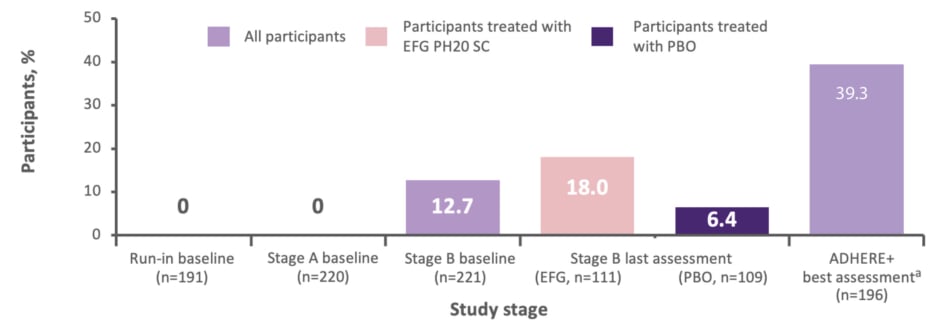
Figure 3: Stage A responders with INCAT score of 0 or 1 in ADHERE/ADHERE+.18
aBest assessment corresponds to the lowest measurement of INCAT score during ADHERE+, compared with that recorded at run-in or Stage A baseline.
EFG: efgartigimod; INCAT: Inflammatory Neuropathy Cause and Treatment; PBO: placebo.
Key Takeaways
This post-hoc analysis showed that nearly 40% of ADHERE Stage A responders treated with efgartigimod attained an INCAT score of 0 or 1 at any time during ADHERE+. Of these patients, 80.5% sustained an INCAT score of 0 or 1 for ≥3 months and 70.1% maintained it for ≥6 months. Patients who achieved an INCAT score of 0 or 1 on efgartigimod showed greater improvement across all efficacy measures from Stage A baseline, with improvements remaining clinically meaningful regardless of threshold attainment. These findings suggest that normal to near-normal functional ability may be an achievable outcome for a subset of patients with CIDP and support consideration of low disability as a meaningful treatment goal in CIDP.18
IgG Autoantibody Signatures in the ADHERE Trial
Evidence suggests an involvement of IgG responses in CIDP, yet pathogenic autoantibodies have not been consistently identified across the broader patient population.7,19-22 Autoantibodies to myelin-associated components, which may include glycolipids such as galactocerebroside and sulfatide, have been reported in ~40% patients with CIDP, indicating an incomplete understanding of antibody-mediated mechanisms in CIDP.23-25 While the significance of anti-glycolipid antibodies in CIDP remains unclear, similar antibodies have been implicated in other immune-mediated neuropathies, including Guillain-Barré syndrome.23,26
At the PNS 2026 Annual Meeting, Daniëlle Krijgsman, from University Medical Center Utrecht in the Netherlands, presented a study of IgG autoantibody signatures from the ADHERE trial that aimed to improve understanding of disease-associated antibody profiles in CIDP.27 This study assessed the presence of IgG autoantibodies against glycolipids, including gangliosides, in patients with CIDP at baseline and the end of Stage A of ADHERE, using a glycoarray multiplex assay to assess glycolipid reactivity. This glycoarray included 16 single glycolipid/phospholipid targets and 120 heteromeric complexes printed in duplicate. Fluorescently labelled anti-human IgG antibodies were used to quantify binding, which was measured in fluorescence intensity units.27
Although natural anti-glycolipid antibodies may contribute to pathogen defence and immune homeostasis, altered anti-glycolipid IgG reactivity was observed in CIDP. A numerically larger percentage of Stage A CIDP baseline samples (62%) from ADHERE showed at least one raised IgG-positive signal against any antigen as compared to healthy controls (55%). Distinct IgG anti-glycolipid profiles were seen across CIDP subtypes, with asymmetric and atypical CIDP showing a different profile compared to typical CIDP.27
Analysis of IgG anti-glycolipid antibody count at baseline by prior CIDP treatment revealed that patients who had received treatment with Igs prior to entering ADHERE Stage A had the largest IgG antibody repertoire of the groups investigated. This suggests that prior treatment is a factor to consider in future anti-glycolipid IgG analyses in patients with CIDP.27
N-acetylgalactosamine-GD1a IgG seropositivity was found more frequently in Stage A responders than non-responders (33.5% versus 23.5%), whereas no predominant IgG specificity towards a single glycolipid was observed among efgartigimod non-responders.27
Overall, 19 of the 20 anti-glycolipid IgGs detected in ≥30% of patients with CIDP at baseline showed a significant reduction in mean levels at the end of ADHERE Stage A, regardless of treatment response.27
Key Takeaways
This exploratory analysis identified a broad range of anti-glycolipid IgG reactivities in a large CIDP cohort from ADHERE, using an experimental glycoarray approach. Most anti-glycolipid IgG signals decreased by the end of Stage A, consistent with the IgG-lowering mechanism of efgartigimod. In addition, N-acetylgalactosamine-GD1a IgG seropositivity was more common among Stage A responders, suggesting that specific IgG signatures may warrant further investigation as markers of biological heterogeneity or treatment response in CIDP.27
NfL as a Potential Biomarker in CIDP
Roger Collet-Vidiella from Hospital de la Santa Creu I Sant Pau in Barcelona, Spain, presented an analysis of the ADHERE trial at the European Academy of Neurology (EAN) 2026 Congress, which looked at NfL levels as a biomarker in CIDP.28
The role of NfL in CIDP is not fully established and prior studies have been constrained by small sample sizes, heterogeneous patient populations, and limited longitudinal data.29-32 NfL itself is a structural protein indicative of ongoing axonal damage, but is not disease specific and varies naturally with age.29,30,33-35 In healthy individuals, mean serum NfL levels independent of age were reported to be <13–20 pg/mL, corresponding to NfL z-scores of ≤1.56.33,34
The ADHERE trial represents the largest and most comprehensive dataset to evaluate NfL in patients with CIDP to date.28 Serum NfL was measured at Stage A baseline in 214 patients and samples were collected throughout the study. The baseline demographic and patient characteristics of this biomarker set reflected that of the overall ADHERE population.28
At Stage A baseline, the mean (SD) serum NfL level was 18.9 (22.6) pg/mL, corresponding to a mean NfL z-score of 0.64 (1.6). Serum NfL levels >20 pg/mL, corresponding to a z-score of ≥1.5, were reported in 24.3% of patients. Notably, NfL z-scores at Stage A baseline were significantly higher in patients with unstable active disease (CIDP Disease Activity Status [CDAS] 5) than in those with stable active disease (CDAS 2–4; p=0.03). Baseline NfL z-scores were similar across CIDP disease types, with no significant difference noted between typical and atypical CIDP (p=0.51).28
Serum NfL levels remained stable during ADHERE Stage A in responders treated with efgartigimod. In those with baseline levels within the healthy reference range (≤20 pg/mL), levels were stable during Stage A, while in those with elevated baseline levels (>20 pg/mL), NfL levels decreased by 18%. Baseline serum NfL z-scores did not differ between efgartigimod responder and non-responder groups.28
In patients with elevated baseline NfL who responded to efgartigimod in ADHERE Stage A, serum NfL levels declined during Stage A and further decreased during Stage B. This change was seen irrespective of subsequent treatment strategy in Stage B, i.e., occurred regardless of whether efgartigimod was continued or withdrawn. However, the interpretation of these findings is limited by the small sample sizes beyond Week 12.28
Key Takeaways
Approximately one-quarter of patients in the ADHERE trial had serum NfL levels above the healthy reference range at Stage A baseline, consistent with prior studies and potentially indicating ongoing axonal damage. Among efgartigimod responders with elevated baseline NfL, serum NfL levels declined during ADHERE Stage A and Stage B. Conversely, NfL levels remained stable with efgartigimod treatment among patients with baseline serum NfL within the healthy reference range. Overall, this study suggests that NfL levels may serve as a contextual biomarker when interpreted alongside clinical assessment in patients with CIDP. Further analyses are needed to determine whether NfL can inform prognosis or disease monitoring, particularly in cases with elevated baseline levels or dynamic changes over time.28
Conclusion
Collectively, these recent ADHERE analyses reflect the continued evolution of CIDP research, linking clinical outcomes with emerging biological insights to expand understanding of treatment response, disease activity, and patient heterogeneity. Across analyses, efgartigimod was associated with early and sustained improvements in grip strength, supported attainment and maintenance of normal to near-normal functional ability in a subset of patients, and showed clinical improvement in treatment-naïve patients recently diagnosed with CIDP.
In parallel, translational findings from ADHERE provide further support for a role of IgG-mediated immune activity in CIDP and highlight the potential value of contextual biomarkers such as anti-glycolipid IgG signatures and NfL in characterising disease biology and disease activity. While these biomarker findings remain exploratory and require further validation, they contribute to an evolving view of CIDP management in which clinical outcomes, patient-relevant function, and biological context are considered together to support more individualised approaches to care.
| Adverse events should be reported. Reporting forms and information can be found at: www.mhra.gov.uk/yellowcard or search for MHRA Yellow Card in the Google Play or Apple App Store.
Adverse events should also be reported to argenx on [email protected] or by using the local medical information telephone number. You will find these in the package leaflet of the SmPC. Adverse event reporting details can also be found here. |