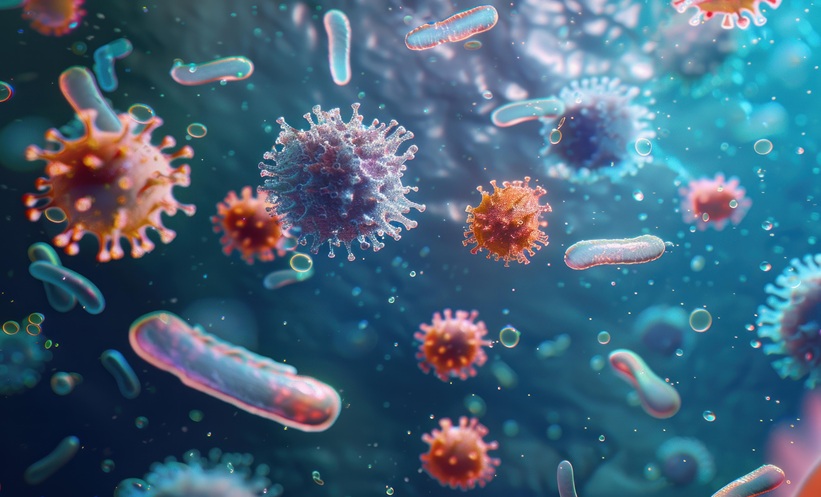
VIRUSES that can kill specific kinds of bacteria have been generated by artificial intelligence (AI) for the first time.
Researchers leveraged genome AI language models to generate hundreds of viruses designed to target the E Coli bacteria, known as bacteriophages. Sixteen of these were successful at killing the bacteria.
The study marks the first time that whole genomes have been successfully designed by AI.
Creating New Viruses
Until now, AI-assisted biological design has focused mostly on individual genes or proteins. Designing entire genomes has remained a significant challenge due to the complexity of DNA, where even a single mutation can render an organism non-viable.
The team at Stanford University overcame this challenge by using two genome language models, Evo 1 and Evo 2, which they trained using millions of naturally occurring DNA sequences.
Similar to large language models such as Chat GPT, which are trained on text, these AI systems learn the evolutionary patterns of natural organisms and the constraints that govern genomic sequences. This enables them to generate entirely new DNA with specific biological characteristics.
Researchers focused on creating bacteriophages, a type of virus that infects and kills bacteria, due to their relatively small genome and growing potential in the treatment of disease.
Using the well-studied bacteriophage ΦX174 as a template, the AI models generated thousands of novel phage genomes designed to infect the E. coli organism.
Nearly 300 of these AI-generated genomes were able to be chemically synthesised and then tested in the laboratory. Sixteen proved to be fully viable, successfully infecting bacterial cells and destroying them, despite being genetically distinct from naturally occurring phages.
Wider Applications
The functional viruses displayed a wide range of characteristics, including different genome lengths, altered genes, and regulatory elements, as well as varying levels of infectivity.
One AI-designed phage even utilised a DNA packaging protein from an evolutionary distantly related virus, highlighting the models’ ability to design viruses that combine genetic features not seen in the natural phages used as a template.
The researchers also explored whether the AI-designed viruses could help address bacterial resistance, one of the biggest challenges facing phage-based antimicrobial therapies.
E Coli bacteria strains resistant to the natural phage (ΦX174) were rapidly overcome by a mixture of AI designed phages. By comparison, a similar mixture of naturally occurring ΦX174-like phages failed to destroy the bacteria.
Beyond antimicrobial therapies, the researchers also argue their work represents a milestone for synthetic genomics.
The ability to generate complete genomes with predefined characteristics could help progress existing techniques such as genome editing, rational engineering, and directed evolution, accelerating the development of engineered biological systems for medicine, agriculture, and industrial biotechnology.
As genome language models continue to improve, AI could become an important tool for creating new biological systems with applications that extend far beyond infectious disease.
Reference
King S et al. Generative design of bacteriophages with genome language models., Science. 2026
Featured Image: juliars on AdobeStock