Interview Summary
Intermittent catheterisation (IC) is practised by patients with a variety of conditions that can affect bladder function, including spinal cord injury (SCI) and multiple sclerosis (MS). EMJ interviewed a multidisciplinary panel of HCPs involved in the care of patients using IC, including functional urologists, SCI experts, and continence nurses, to discuss benefits and limitations of polyvinylpyrrolidone (PVP) catheter coatings, which are widely used to reduce friction during catheterisation. Interviewees highlighted the value of hydrophilicity as an important catheter property conferred by PVP coatings, but also acknowledged concerns about adhesion of catheter coatings to the urethral mucosa, resulting in damage to the urothelium and deposition of PVP residues. The panel also discussed evolving catheter technology and alternative approaches to conferring hydrophilic surface properties without requiring application of coating material.
Expert perspectives, based on extensive collective clinical experience combined with evaluation of scientific evidence from preclinical studies investigating the performance of PVP catheter coatings in vitro and ex vivo, were offered by Michael Kennelly, Atrium Health Wake Forest School of Medicine, Charlotte, North Carolina, USA; Xavier Gamé, Toulouse University Hospital, France; Stefania Musco, Careggi University Hospital, Florence, Italy; Todd Linsenmeyer, Kessler Institute for Rehabilitation, West Orange, New Jersey, USA; Andrei Krassioukov, University of British Columbia, Vancouver, Canada; Angie Rantell, King’s College Hospital NHS Foundation Trust and Brunel University, London, UK; Diane Newman, University of Pennsylvania, Philadelphia, USA; Piet Eelen, National Multiple Sclerosis Center Melsbroek, Steenokkerzeel, Belgium; and Ased Ali, Mid Yorkshire Teaching NHS Trust, Yorkshire and Convatec Ltd., Flintshire, Wales, UK.
EVOLUTION AND CURRENT ROLE OF HYDROPHILIC CATHETERS IN IC
The experts interviewed for this article manage patients with bladder emptying dysfunction of various aetiologies, including neurogenic lower urinary tract dysfunction resulting from SCI or MS, obstruction of the bladder outlet, or idiopathic voiding dysfunction. Bladder management is a prominent aspect of care for many patients with such conditions; Krassioukov estimated that as many as 60% of patient interactions in his SCI rehabilitation clinics involve discussions about managing bladder issues. IC is an important tool to enable patients to manage their urinary function independently. Catheterisation is performed multiple times daily; patients’ experience of IC therefore has a considerable impact on their daily lives, and so ease, comfort, and safety are paramount.
Interviewees outlined developments in improving catheter technology over time, with some describing the addition of a hydrophilic coating of PVP to improve lubricity as “a revolution.” First-generation plastic catheters are lubricated by applying gel, which can be messy and may not provide uniform lubrication of the whole catheter surface. Catheters with hydrophilic coatings become lubricious when wet and are often supplied ‘ready-to-use’ in wetting solution. Meta-analyses of multiple studies have shown that, compared with uncoated catheters, hydrophilic-coated catheters are associated with reduced rates of urethral microtrauma, urethral stricture, and urinary tract infections (UTI).1-4 PVP-coated catheters have been the mainstay of intermittent catheter technology since they were introduced in the 1980s, and their hydrophilic properties bring clear benefits over uncoated catheters. However, Kennelly commented, “coating composition and integrity meaningfully influence catheter performance and patient experience” and matter more than many HCPs realise.
PVP polymer coatings are widely used across medical devices to reduce friction during insertion and navigation. In other device settings, including vascular and endourological procedures, coating damage, shedding, or delamination of PVP-coated guidewires, stents, and catheters has been recognised as a potential problem, particularly when devices are exposed to mechanical stress.5-7 Although the clinical context differs from IC, these examples illustrate that coating integrity is a relevant design and safety consideration for medical devices. Ali highlighted that IC differs from many procedural uses because exposure is repeated several times daily over many years. This makes the durability and behaviour of the hydrophilic surface during catheter insertion, dwell time, and withdrawal clinically relevant, even when PVP exposure associated with each individual catheterisation appears minor.
LIMITATIONS OFPVP‑BASED HYDROPHILICCATHETER COATINGS
Impact on Patients’ Experience of IC
Although hydrophilic-coated catheters have improved the overall catheterisation experience for many patients, some patients report ‘stickiness’ of PVP-coated catheters leading to difficulty or discomfort on removal of the catheter after voiding.8 In a prospective randomised study comparing patient-reported performance of different PVP-coated catheters, Fader et al.8 demonstrated that sticking on withdrawal occurs with hydrophilic-coated catheters and varies by product, although the long-term clinical implications were not established in that study. A separate study found urethral epithelial cells on the surface of the catheters following removal with all brands tested,9 including those with lower rates of patient-reported ‘stickiness’,8 consistent with microtrauma to the urothelium.
Patient-reported outcome measures evaluating catheter performance have traditionally focused on ease of insertion,10,11 Ali pointed out, whereas the randomised study by Fader et al.8 used a bespoke questionnaire with several items relating to removal of catheters. The withdrawal phase may be particularly relevant when evaluating PVP-coated catheters, which need to be wetted before use to ‘activate’ the hydrophilic coating. During catheterisation, however, the hydrated PVP coating may lose surface water. As hydration decreases over time, some PVP-coated surfaces can become more adhesive, which, Ali explained, makes decreasing lubricity particularly relevant during catheter removal. Rantell confirmed that patients describe pulling or tugging to remove catheters, and this sometimes causes pain and/or bleeding. Musco added that patients sometimes feel a burning sensation after removing their catheter, while Newman recounted patients reporting a sensation “like pins and needles” or that it “feels like I am tearing something” when withdrawing their catheter.
This adhesive quality of PVP begins to develop in as little as 2 minutes with some catheters, according to data from multiple in vitro studies.12-15 Catheterisation can take considerably longer than this for many patients who use IC, particularly those with impaired hand function/dexterity, for example due to high cervical spine injury or disability progression in MS. It typically takes about 6–8 minutes to drain urine from the bladder via the catheter (voiding time) and Linsenmeyer indicated that the overall process of catheterisation (insertion, voiding, and removal) can, for some patients, take as long as 15–20 minutes from removing the catheter from the moistened environment of its packaging, creating considerable opportunity for PVP coatings to dehydrate and become sticky. Case reports have described instances in which patients with prolonged dwell times (taking up to 10 minutes to empty an overdistended bladder) required undue force to remove their catheter, resulting in urethral trauma and bleeding,16 and an association between the length of time patients took to catheterise and self-reported ‘sticking’ on removal has been reported.8
Patients using IC for different reasons have varying degrees of sensation, ranging from hyperalgesia, for example in some patients with MS, to total loss of sensation in SCI patients with complete spinal cord lesions. Patients’ experience in terms of discomfort during or after catheterisation therefore varies considerably. However, the clinical impact of catheter adhesion may extend beyond discomfort. Krassioukov pointed out that pulling the catheter out can be challenging for individuals with SCI whose grip is affected, if it sticks rather than sliding out easily. Furthermore, urethral trauma, even if not painful, is a risk factor for UTI.17
Risk of UTI is a concern for all patients using IC, regardless of catheter type. UTI risk is multifactorial17 and, as such, it can be difficult to pinpoint causes in individual cases, but urethral trauma is a recognised risk factor.17 Some studies suggest a trend for reduced incidence of UTIs in patients using hydrophilic PVP-coated catheters compared with uncoated catheters,2-4 but urethral trauma and associated UTI risk remain a problem. Krassioukov added that repeated urethral trauma can also lead to urethral stricture due to scar tissue formation.18 Linsenmeyer described how difficult or painful catheterisation can exacerbate risk of autonomic dysreflexia, a phenomenon that can affect people with cervical and high thoracic SCI whereby blood pressure rises uncontrollably when the bladder is distended.19
PVP-coated catheters have provided clear benefits over uncoated catheters, particularly in terms of reduced friction on insertion, and Rantell and Eelen noted that some people practise IC using PVP-coated catheters for many years without encountering problems. However, some IC users report issues including sticking, discomfort, pain, and bleeding, which often appear to be associated with catheter removal. Discomfort and difficulty with removal can affect patients’ overall opinion and acceptance of their catheter.8
Biological Implications of PVPResidue Deposition
Adhesion of PVP to the urothelium, as well as causing urethral trauma and associated consequences (e.g., pain, bleeding, UTI risk) as discussed above, can also lead to detachment of PVP from the catheter surface (delamination), leaving PVP residues inside the urethra. It is difficult to quantify residual PVP in vivo, but given that IC is performed multiple times per day and the urethra is not ‘flushed out’ by unassisted urination between catheterisations, there is potential for considerable accumulation of PVP residues during long-term IC. The experts interviewed for this article agreed that, while the presence and persistence of PVP residues in clinical practice have not been fully characterised, the potential biological effects of repeated exposure warrant consideration.
Several interviewees raised concerns about possible effects of PVP exposure on sperm motility. In reproductive medicine, PVP is used to immobilise spermatozoa for intracytoplasmic sperm injection (ICSI). Prolonged exposure to PVP is known to affect sperm viability and morphology and increase DNA fragmentation,20,21 and it is therefore recommended that PVP concentration and exposure time are minimised as far as possible during ICSI.21 Most men with SCI wishing to conceive with their partners require assisted reproductive technologies such as ICSI, due to effects of SCI on erectile and ejaculatory function and sperm viability.22 For men practising IC using PVP-coated catheters, there is therefore a plausible mechanism for additional, uncontrolled exposure of sperm to residual PVP within the urethra, although the clinical significance of this exposure has not yet been established.
Given the known risks, the impact on sperm of exposure to PVP from catheter coatings has been studied in preclinical models (Table 1).12-15,23-26 An in vitro study in which porcine spermatozoa were subjected to 15 minutes of exposure to PVP (incubated in solutions prepared using PVP extracted from commercially-available catheters and diluted to concentrations consistent with predicted PVP accumulation following regular IC for 1 day or 1 week) found morphological abnormalities and reduced sperm motility.24 In another set of tests, porcine urethral segments were catheterised with PVP-coated catheters for 2 minutes, followed by simulated ejaculation whereby porcine semen was passed through the same urethra segments. Even when sperm passed straight through the urethra, motility was reduced; this appeared to be due to immobilisation of sperm within fragments of catheter coating debris that were expelled along with the ‘ejaculate’.23 Interaction of sperm with PVP during more prolonged exposure was associated with morphological changes including irregularities in spermatozoa tails, consistent with reduced propulsive efficiency and, thus, reduced motility.24 Newman noted the need for further clinical research to determine whether similar effects occur in vivo and, if so, what implications this has for reproductive health of people using IC.
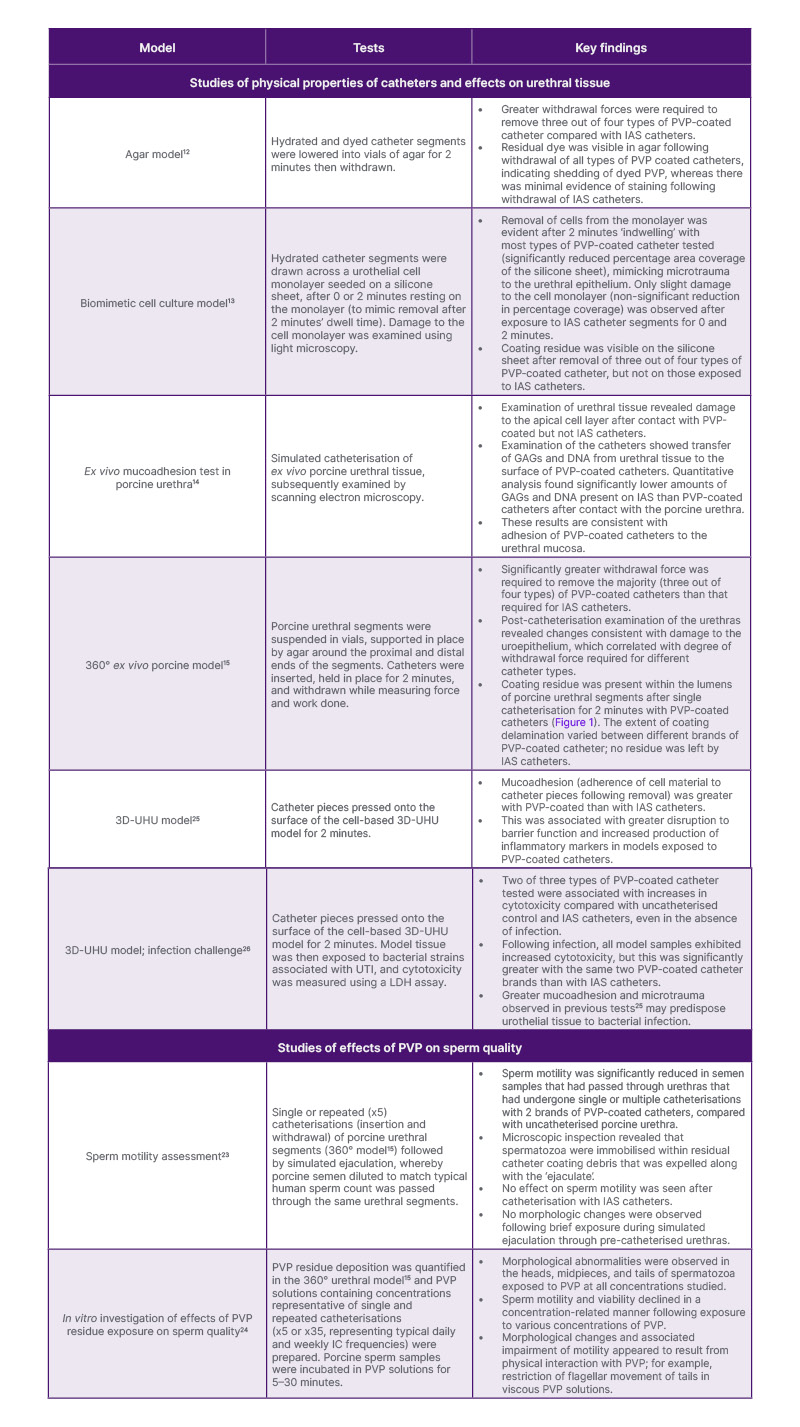
Table 1: Overview of evidence from in vitro and ex vivo models used to assess properties of different types of hydrophilic catheter.12-15,23-26
GAG: glycosaminoglycan; IAS: integrated amphiphilic surfactant; IC: intermittent catheterisation; LDH: lactose dehydrogenase; PVP: polyvinylpyrrolidone; UHU: urine-tolerant human urothelial; UTI: urinary tract infection.
Musco highlighted another possible risk in the potential for foreign bodies such as PVP fragments to induce an inflammatory response. Inflammatory responses have been observed in the cardiovascular setting following hydrophilic polymer embolism27 and in a human cell-based in vitro urethral model.25,26
INNOVATIONS IN HYDROPHILIC SURFACE DESIGN
Most hydrophilic catheters comprise a plastic tube with PVP bonded to the external surface. However, as several experts pointed out, PVP-coated catheters are not a single entity. There is some variation in the properties and performance of different products within the PVP-coated catheter class. Following the initial evidence-based approval of proprietary PVP-coating technology, Kennelly explained, many manufacturers have developed generic alternatives that may use different PVP formulations, for example, polymers with different molecular weights, or different bonding techniques, but do not require separate testing and approval. There is a paucity of evidence around how different manufacturing processes affect performance of the coating, for example, how quickly different catheters ‘dry out’ and become sticky, or whether some have a greater propensity for delamination than others. However, preclinical studies have shown some variation in properties and performance among commercially available hydrophilic catheters under simulated use conditions,12-15 and rates of patient-reported sticking on removal vary between brands.8
Evolving materials science has led to the exploration of alternatives to PVP coating, including an innovative approach of integrating an amphiphilic surfactant material into the catheter tube instead of applying a coating to achieve a lubricious surface. A catheter with intrinsic hydrophilic properties eliminates the need to apply a hydrophilic coating, and can thus confer the benefits of hydrophilicity without exposing patients to potential risks such as coating delamination and adhesion to the urethral epithelium.28 Integrated amphiphilic surfactant (IAS) technology uses polymers with both hydrophilic and hydrophobic regions (amphiphilic molecules). When water is applied to the catheter, the hydrophobic ‘tails’ are repelled towards the interior of the tubing material and polymers become oriented such that the hydrophilic ‘heads’ create a uniform hydrophilic surface.28 Temporary hydrogen bonds between the hydrophilic surface and water molecules do not alter surface chemistry,12 so IAS catheters do not develop adhesive properties as hydration levels drop.
Several experts described the evolution of catheter technology, progressing from uncoated catheters that required application of gel to lubricate them, to hydrophilic-coated catheters, which significantly improved ease of insertion by reducing friction when well hydrated, but do have some drawbacks relating to PVP coating material (as discussed above), to the recent innovation of IAS, conferring intrinsic hydrophilic properties. Kennelly emphasised the importance of scientific evidence to drive new innovation, pointing to a comprehensive battery of preclinical research that has been conducted to support the development of IAS catheters, as outlined in the next section and in Table 1.12-15,23-26
PRECLINICAL EVALUATIONOF HYDROPHILICCATHETER TECHNOLOGIES
Tests performed in vitro demonstrated that the coefficient of friction for IAS catheters is similar to that for multiple brands of PVP-coated catheters, and significantly lower than that of uncoated catheters, confirming that IAS technology provides comparable lubricity to the current gold standard in hydrophilic catheters.13 Further testing in more physiologically-relevant models has revealed differences in various aspects of catheter performance including adhesion, urothelial damage, and deposition of PVP residues. The range of preclinical models used to provide a comprehensive assessment of the different types of hydrophilic catheters is shown in Table 1,12-15,23-26 along with key findings from studies using each model.
Ali highlighted that studies using multiple different models consistently demonstrated evidence of mucoadhesion, microtrauma, and delamination with PVP-coated catheters, providing confidence that these findings are not an artefact of a particular model. Importantly, a human cell-based urothelial model (3-dimensional urine-tolerant human urothelial [3D-UHU] model),29 designed to provide a physiologically-relevant model to bridge the gap between animal studies (in porcine tissue) and clinical investigation, yielded results that were consistent with those obtained using porcine ex vivo models.
Preclinical models were sensitive to variation in performance between different brands of PVP-coated catheter, and revealed clear differences between IAS and most PVP-coated catheters. Krassioukov and Ali both noted that all these studies used a conservative simulated indwelling time of 2 minutes, and signs of mucoadhesion and microtrauma were detected within that timeframe with the majority of PVP-coated catheters tested. There was no evidence of mucoadhesion with IAS catheters in a 2-minute timeframe in any of the preclinical models.
The experts interviewed for this article highlighted several aspects of the preclinical evidence summarised in Table 112-15,23-26 that stood out to them.
Linsenmeyer commented on an ex vivo study that demonstrated transfer of glycosaminoglycans, which are present in the protective mucosal lining of the urethra and bladder, to catheter surfaces14 suggested ‘scraping’ that could leave sub-mucosal urothelial layers exposed and susceptible to infection. Kennelly noted that electron microscopy provided further evidence of damage to the apical cell layer after contact with PVP-coated catheters, in the same study,14 and Rantell concurred that the damage to urethral tissue following exposure to PVP-coated catheters, clearly visible on scanning electron microscopy, was particularly striking. Ali added that tests in a 360° porcine urethral model revealed visible residue left behind inside the urethral lumen after removal of PVP-coated catheters (Figure 1).15 Kennelly additionally highlighted studies in the 3D-UHU model that showed inflammatory responses and immunogenicity in models subject to damage from PVP-coated catheter samples.25,26 Musco pointed to the difference in cytotoxicity induced by pathogens associated with UTI in 3D-UHU model samples exposed to PVP-coated versus IAS catheters.26 Together, these findings support a biologically plausible hypothesis that PVP-coated catheters can cause damage that increases risk of UTI, to a greater extent than IAS catheters, although all interviewees noted that UTI risk associated with different catheter types has not been compared in clinical studies. Musco acknowledged the challenges of investigating UTIs as an outcome in clinical trials, particularly in a patient population with frequent comorbidities, as UTI risk is multifactorial and it is difficult to determine the impact of a single potential contributory factor or variable such as catheter type.
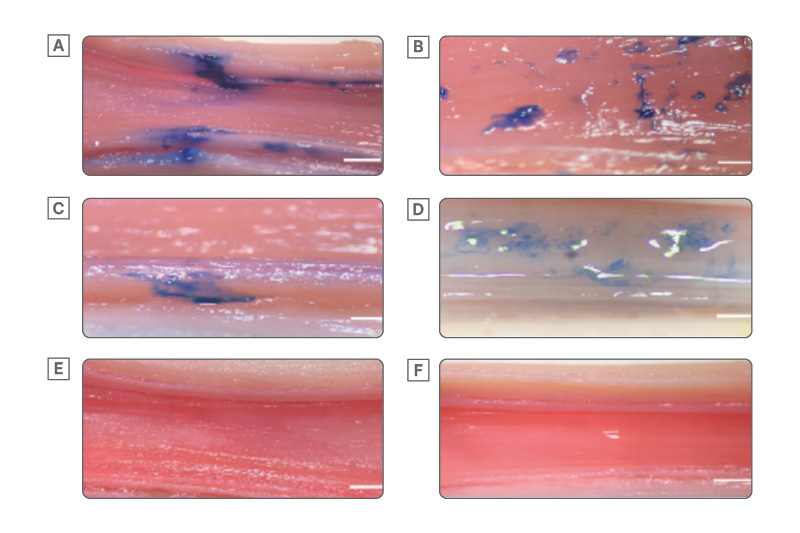
Figure 1: Deposition of PVP coating residues in the urethral lumen in a porcine ex vivo model.15
Dyed catheter tubes from different brands of PVP-coated catheter (A–D), IAS catheter (E), or no catheter (control, F) were inserted into porcine urethral segments, left for 2 minutes to mimic short-term indwelling, then removed. Urethral segments were cut open and the internal surface examined using light microscopy. Scale bars are 1 mm.
Adapted from Burns et al.15
IAS: integrated amphiphilic surfactant; PVP: polyvinylpyrrolidone.
Krassioukov and others commented on the studies showing impacts of PVP residues on sperm. This is particularly relevant to patients using IC to manage voiding dysfunction resulting from SCI. SCI disproportionately affects men in their peak reproductive years (for example, Krassioukov’s patients include military veterans with SCI) and causes fertility issues due to effects on erectile and ejaculatory function and sperm quality.22 Further negative effects on sperm viability are therefore particularly undesirable for this group of IC users, who already face significantly impacted reproductive health. One study evaluating sperm motility compared effects of PVP-coated catheters versus IAS catheters in a porcine urethral model and found that, while significant impairment to motility was seen in sperm samples that had passed through urethra segments following insertion of PVP-coated catheters, exposure to IAS catheters did not lead to any reduction in sperm motility compared with control (uncatheterised urethra segments).23
Newman noted that preclinical findings raise important questions regarding the biological interactions between coating materials and urethral tissues, and emphasised the need to establish the clinical significance of such observations in patients performinglong-term IC.
EARLY CLINICAL EXPERIENCE WITH IAS CATHETERS
The in vitro and ex vivo evidence outlined above provides a clear scientific basis to hypothesise that IAS catheters should perform differently to PVP-coated catheters. How this translates in the clinical realm has not been formally investigated in controlled studies to date. Ali outlined challenges of assessing urethral trauma in patients, explaining that it is not possible to obtain samples for microscopic inspection of urothelial damage or PVP residue deposition. However, Kennelly observed that “initial patient feedback in clinical practice aligns with expectations derived from preclinical findings, though systematic clinical evaluation remains necessary.” He recounted feedback from patients in his clinic who have used IAS catheters and reported very good comfort levels, with easy insertion and removal, while stickiness has not been reported. Linsenmeyer also observed that patients in his clinic had reported a positive experience of using IAS catheters, saying the catheters “slid in [and out] easily.”
CONSIDERATIONS FOR SELECTING HYDROPHILIC CATHETERS IN PRACTICE
When considering benefits of PVP-coated versus uncoated catheters, Ali commented that the focus has always been on insertion, acknowledging that “we’d almost accepted that some discomfort when [the catheter is] removed is largely inevitable.” However, he expressed hope that IAS catheters could do for withdrawal what introduction of PVP-coated catheters did for insertion, in terms of improving the patient experience. Linsenmeyer concurred that patients and HCPs often perceive that a certain amount of discomfort is to be expected, and simply accept it, while Gamé observed that patients don’t tend to spontaneously complain about discomfort, but often acknowledge difficulties when questioned. Greater awareness of differing properties of different types of hydrophilic catheter, and potential problems associated with hydrophilic coatings, may encourage HCPs to proactively seek to identify problems and possible causes of those problems, armed with the ability to offer potential solutions.
Kennelly highlighted clinical priorities of IC, including “minimising irritation, trauma, and infection risk while optimising patient comfort and adherence.” Linsenmeyer outlined how negative experiences of IC can lead to aversion to self-catheterisation and ultimately lead to discontinuation, explaining that if patients find inserting or withdrawing the catheter uncomfortable or painful, they’re inclined to catheterise less frequently, leading to bladder overfilling and distension, causing the sphincter to contract, which in turn makes catheterisation more difficult and uncomfortable when the patient can no longer put it off, creating a vicious cycle. Patients who discontinue IC require indwelling catheters, which are associated with more long-term complications than IC. Linsenmeyer emphasised the importance of removing barriers to successful IC, and highlighted teaching correct technique to patients initiating IC as an important factor, as well as improving catheter performance to minimise discomfort and difficulty.
Even when successful, IC can still create considerable burden in patients’ daily lives, especially for those with impaired hand function for whom catheterisation can be a time-consuming process. Krassioukov described some patients spending up to 4–5 hours a day in the bathroom, if they perform IC five or six times per day taking 30–40 minutes each time to complete the process (including preparation, wetting the catheter or applying lubricant, insertion, voiding, and removal). This underscores the importance of optimising ease of use at every stage, including easy-to-open packaging and convenient pre-hydrated catheters, as well as ease of insertion and withdrawal.
Many different attributes determine what catheter is the best choice for an individual patient. Rantell and Eelen outlined characteristics including size/length of the catheter; how easy it is to grip; whether it’s pre-hydrated or needs to be wetted or lubricant gel applied; whether a urine collection bag is attached; and packaging, which needs to be compact and discreet, so patients feel comfortable carrying catheters with them to catheterise while they’re out of the home, as well as easy to open. All these factors, Rantell explained, contribute to patients’ overall perception of a product. Eelen emphasised that being able to choose a catheter type that suits them is an important aspect of patients’ acceptance of IC. Gamé noted the need to consider catheter choice from the point-of-view of both usability and risk of complications.
On initial selection of a catheter, hydrophilic coating may be considered simply in terms of coated or uncoated, with PVP-coated catheters being the default choice for most patients and choice of specific brand influenced largely by other product characteristics. However, coating properties or the nature of the hydrophilic surface may become a more important consideration for patients who experience problems with their catheter. For example, if a patient presents with pain, bleeding, or recurrent UTIs, Rantell suggested that the possibility that PVP coating could be contributing to those problems should be considered when troubleshooting such problems, especially in light of the preclinical evidence that provides a potential explanation.12-15,26 Indeed, Kennelly stated, “emerging preclinical evidence indicates that coating properties can affect urothelial interaction and catheter behaviour.” The quality and properties of PVP coating varies, as discussed above. Ali further pointed out that “not all hydrophilic technologies are equivalent.” As well as variation between different PVP-coated catheter brands, IAS catheters, where available, now provide an alternative catheter type. Gamé and Linsenmeyer both confirmed that when they see patients who are experiencing problems with IC using PVP-coated catheters in their practices, they switch them to IAS catheters.
While plausible concerns about PVP coating material have been raised, these should not be a cause for alarm among patients with a history of long-term IC using PVP-coated catheters, Ali reassured. Indeed, as Rantell and Eelen noted, some patients have been using PVP-coated catheters for many years without encountering problems. However, since problems do persist for some patients, and given the growing evidence suggesting that PVP coating can contribute to those problems, availability of alternative options could be beneficial. Experience to-date in patients who have tried IAS catheters supports this.
The experts interviewed for this article advocated consideration of the nature of the hydrophilic surface as a catheter characteristic that might influence new patients’ choice of catheter from initiation of IC, particularly in certain patient populations. Gamé identified men of reproductive age with fertility problems resulting from SCI as a group for whom PVP-free catheters would be a rational choice from the outset of IC. Newman noted that patients who require extended catheterisation time, for example because of impaired dexterity or limited hand function, may experience challenges associated with reduced surface hydration during catheterisation. She suggested that catheter technologies designed to provide intrinsic hydrophilicity may offer potential advantages for these individuals, although comparative clinical evidence remains limited.
Several interviewees emphasised the value of awareness of scientific data demonstrating the effects of PVP on urethral tissue, to enable HCPs to counsel their patients to make informed decisions on choice of catheter, with a clear, evidence-based rationale for their recommendations. Gamé recognised a need for education among urology specialists, while Newman and Rantell emphasised the need for clear information to be accessible to nurses. Specialist nurses are usually patients’ primary point of contact and have a crucial role in teaching self-catheterisation techniques, advising patients on catheter selection, and troubleshooting catheter-related problems.
KEY TAKEAWAYS ANDCLINICAL IMPLICATIONS
Hydrophilic-coated catheters represented a major advance in IC, reducing friction during insertion and improving the catheterisation experience compared with uncoated catheters that require external lubrication.1-3 The expert discussion did not challenge the value of hydrophilicity as a catheter property. Rather, it highlighted a more specific and increasingly relevant question: whether all hydrophilic catheter surfaces have equivalent properties and comparable performance throughout the full catheterisation episode, including removal after a period of urethral dwell time.
The evidence reviewed in this article suggests that PVP-coated catheters may, in some circumstances, develop adhesive surface properties during use. This is consistent with patient reports of sticking, pulling, discomfort, pain, or bleeding on withdrawal, and is supported by a range of preclinical models showing increased withdrawal force, mucoadhesion, urothelial disruption, and coating residue deposition with several PVP-coated catheters. Importantly, these findings have been observed across different experimental systems, including physical testing, ex vivo porcine urethral tissue, and human urothelial cell-based models. Ali commented that the consistency of the mechanistic evidence means these findings should not be dismissed as merely speculative.
The clinical significance of PVP-associated mucoadhesion and residue is likely to vary between patients. Many people use PVP-coated catheters successfully for years without significant problems, and catheter-related symptoms or complications are rarely attributable to a single factor. UTI, pain, bleeding, urethral trauma, adherence to IC, and long-term urethral complications are all multifactorial and influenced by anatomy, sensation, dexterity, technique, catheterisation frequency, dwell time, comorbidities, and previous urethral injury. However, for patients who report sticking, difficult withdrawal, discomfort, bleeding, or recurrent UTI when using PVP-coated catheters, those who require prolonged catheterisation time, or those with concerns relating to fertility, the nature of the hydrophilic surface may be clinically relevant and should be considered during catheter troubleshooting and selection.
A key message from the interviewees was therefore not that patients should revert to uncoated catheters to avoid PVP exposure, nor that PVP-coated catheters are unsuitable for all patients. The points raised do, however, highlight the importance of recognising potential limitations of PVP coatings, and support a view that differences in surface properties of different types of hydrophilic catheter are clinically relevant. Surface design, coating integrity, withdrawal comfort, residue formation, and patient-specific needs may all influence catheter performance. Non-coated intrinsic hydrophilic technologies, such as IAS catheters, offer a plausible route to preserving the benefits of hydrophilicity while avoiding some coating-related limitations.
Further clinical evaluation will be important, but early clinical experience supports a substantial body of preclinical evidence indicating that IAS catheters do not develop adhesive surface properties, so carry lower risk of urethral microtrauma than some types of PVP-coated catheters, and that IAS catheters do not leave residual material in the urethra. Together, these observations suggest a need for greater awareness of catheter surface behaviour when counselling patients and individualising catheter choice.