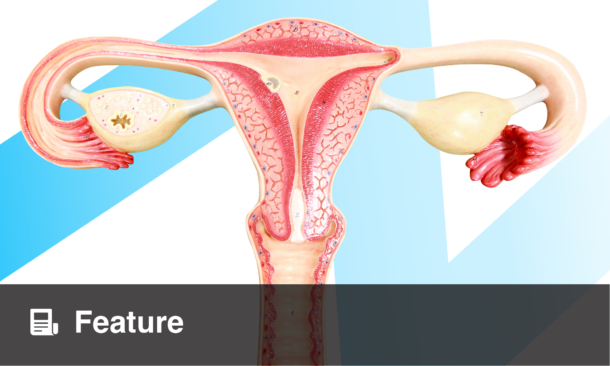
INTRAUTERINE growth hormone did not significantly improve endometrial thickness in patients with thin endometrium undergoing assisted reproduction, according to a randomised controlled trial.
Although researchers observed a numerical increase in biochemical pregnancy rates among patients receiving growth hormone, this difference was not statistically significant and did not translate into a significant improvement in clinical pregnancy rates.
Investigating Treatment for Thin Endometrium
Thin endometrium can present a significant challenge during assisted reproduction, as adequate endometrial development is important for successful embryo implantation.
Growth hormone has been proposed as a potential treatment to improve endometrial receptivity. However, evidence supporting its effectiveness remains limited, particularly regarding its impact on pregnancy outcomes.
Researchers therefore conducted an exploratory, double-blind, placebo-controlled randomised trial to investigate whether intrauterine growth hormone could improve endometrial thickness and reproductive outcomes.
Participants were randomly assigned to receive either six international units of growth hormone or placebo.
The primary outcome was final endometrial thickness. Secondary outcomes included biochemical pregnancy, clinical pregnancy, early miscarriage, and treatment response.
A total of 52 patients were included in the per-protocol analysis, which served as the primary analysis for the exploratory trial.
No Significant Improvement in Endometrial Thickness
The researchers found no statistically significant difference in final endometrial thickness between patients receiving growth hormone and those receiving placebo.
Treatment response rates were also comparable between groups, as was the intensity of additional therapy required.
These findings suggest that intrauterine growth hormone did not provide a measurable advantage in improving endometrial thickness within the study population.
The results are particularly relevant given the increasing interest in additional treatments intended to improve reproductive outcomes among patients who experience difficulties with endometrial development.
Pregnancy Findings Remain Exploratory
A numerical difference in biochemical pregnancy rates was observed between treatment groups.
Biochemical pregnancy occurred in 47.6% of patients receiving growth hormone compared with 23.8% receiving placebo.
However, this difference did not reach statistical significance, and the trial was not adequately powered to determine whether growth hormone improves pregnancy rates.
Importantly, the numerical increase in biochemical pregnancies did not translate into a statistically significant improvement in clinical pregnancy rates.
No ectopic pregnancies were reported.
The researchers emphasised that all pregnancy-related findings should be considered exploratory and hypothesis-generating rather than evidence of an established treatment benefit.
Larger Trials Needed Before Clinical Adoption
The findings indicate that intrauterine growth hormone did not produce a statistically or clinically meaningful improvement in endometrial thickness.
Nevertheless, the observed numerical difference in biochemical pregnancy rates means that a potential biological effect cannot be completely excluded.
Larger randomised controlled trials would be needed to investigate whether growth hormone influences implantation, clinical pregnancy, and live birth outcomes.
Given the small sample size and exploratory nature of the study, the findings do not currently establish a benefit from routinely adding intrauterine growth hormone to treatment for thin endometrium.
Reference
Ghasemi H, Zamani et al. A randomized controlled trial of intrauterine growth hormone for thin endometrium. Sci Rep. 2026 Jul 15. doi: 10.1038/s41598-026-62005-4. Epub ahead of print. PMID: 42457811.
Featured image: Maryna on AdobeStock