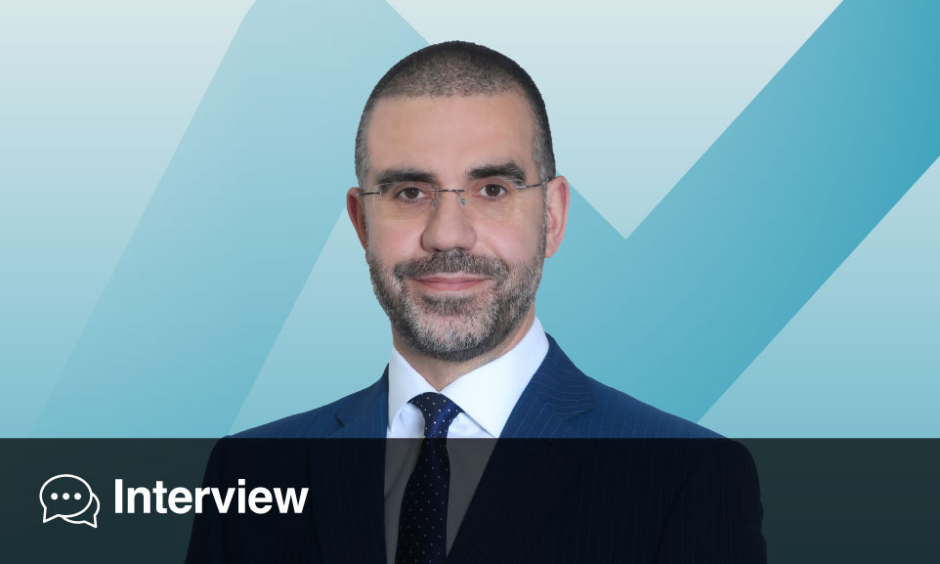
Petros Kotsidis | Chief Digital and Information Officer, King Faisal Specialist Hospital and Research Centre, Riyadh, Saudi Arabia
Citation: EMJ Innov. 2026; https://doi.org/10.33590/emjinnov/E6T6K1EY

King Faisal Specialist Hospital and Research Centre (KFSH), Riyadh, Saudi Arabia, is both a specialist hospital and a research centre. How do you create a feedback loop in which difficult clinical cases generate research questions, research generates new possibilities, and those discoveries can ultimately return to patient care?
The loop only works if the connections are structural as well as cultural. Goodwill between clinicians, researchers, technologists, and informaticians is necessary, but it does not survive a busy week.
The first connection is the difficult case. Multidisciplinary meetings are where clinical uncertainty is most explicit, and that uncertainty is the raw material for research questions. What is usually missing is a route: a defined, low friction way for a question raised in a meeting to reach someone whose job is to pursue it.
The second is the data layer. If clinical care, biobanking, genomics, and the research record sit in separate systems with separate consent structures, the loop is broken before it starts. Genomics is where this becomes concrete. We performed more than 7,000 whole genome sequencing tests in 2023, with a diagnostic yield above 50% in rare genetic disorders. That yield is high partly because of the population we serve, and it means the genomic service is not a research adjunct but fundamentally a clinical service. It is answering questions that came out of clinics and returning answers to them.
The third is producing the answer locally. We have treated more than 200 patients with CAR-T cell therapy since 2020 using product manufactured elsewhere. More recently, we treated our first patient with cells manufactured in our own facility within an early phase trial in treatment resistant acute lymphoblastic leukaemia. So far, this is one patient treated within a research trial, not a service we can offer routinely. However, it matters enormously for the feedback loop we are describing: once cells are manufactured in our own facility rather than by an outside company, each future case no longer has to wait on an external supplier. Research findings can turn into treated patients, and lessons learned from treatment can return to research more quickly and more often.
The last connection is the most neglected: routinely feeding clinical outcomes back to research teams so that discovery is corrected by practice and not only the other way round.
When a clinical team is attempting something genuinely novel, how does the role of the hospital’s digital, operational, and technology infrastructure change? What has to happen behind the scenes to make a clinical breakthrough possible?
The relationship inverts. In routine operations, digital and technical services are infrastructure: judged on availability and largely invisible. In general terms, if you don’t hear about it, all is well. In a genuinely novel procedure, they become part of the clinical team, sitting in the planning meetings and the rehearsals rather than receiving a request after the fact.
The clearest illustration is the world’s first fully robotic heart transplant, performed here in September 2024 on a 16-year-old with end-stage heart failure. The procedure took 2.5 hours. What is less often reported is that the team rehearsed it virtually seven consecutive times over the 3 days beforehand. Building an environment in which a surgical team can perform an operation seven times before performing it once is not a clinical task. It is an infrastructure task, and it has to exist before anyone thinks to ask for it.
The demands change in kind. Imaging moves from diagnosis to planning (segmentation, reconstruction, and patient-specific modelling of the anatomy the team will encounter). Systems designed to record what happened must be adapted to capture what is actually happening in enough structure to support a prospective registry from the first case. This capability cannot be assembled retrospectively out of case notes. Connectivity and latency become clinical parameters. Integration between platforms never designed to speak to each other must be built and validated in advance rather than improvised. In this setting, connectivity, latency, and system reliability become clinical considerations rather than purely technical ones.
The practical test is simple. Were the technical and operational teams in the room when the procedure was designed, or were they told about it? This is the difference between a programme and a single case.
A pioneering procedure can attract enormous attention, but the real challenge is often what happens afterwards. How do you take something that has been achieved by a small group of highly specialised experts and turn it into a repeatable, reliable model of care?
This is the harder problem, and it determines whether a first has any value beyond the announcement.
Our transplant programme is the fairest test, because it long predates the robotic work. It began in 1981 and has performed approximately 9,000 transplants since, including 1,109 in 2025. The world’s first fully robotic heart transplant and the world’s first fully robotic living donor liver transplant matter to us because they sit on top of that volume. What gives a clinical first lasting value is the depth of experience and infrastructure that allows it to become repeatable and scalable across disciplines.
The transition is from a person to a process. In the first cases, the knowledge lives within a small number of people. Making it repeatable means extracting it, turning it into a written protocol, a checklist, a set of defined patient selection criteria, and an explicit account of what was difficult and why. Much of that extraction is a business analysis problem before it is a clinical one. If early cases were not captured in a structured, comparable way, then there would be nothing we could use to standardise from.
Scientific publication is part of the standardisation and scalability mechanism rather than a reward at the end of a world-first. Our robotic living donor liver transplant work went into peer-reviewed journals rather than staying in a press release, and it is those papers that allow another unit to attempt the same thing without repeating our learning curve. Scaling internally is one thing, but we want the knowledge and our successes to transcend regional and national boundaries, benefitting patients globally.
Why was radiology an important starting point for KFSH’s applied AI strategy, and what has the experience of implementing AI in radiology taught you about introducing technology into clinical workflows?
Radiology was a deliberate choice rather than an obvious one. The data is already digital and standardised, the volumes are high enough to detect a signal quickly, the output is a discrete and reviewable artefact, and the specialty has a long-standing quantitative culture that is comfortable being measured. Our radiologists told us to make their lives easier. The example I keep citing is this one, from a few years ago: “Can you remove normal X-rays from my workload?”
We established our Centre for Healthcare Intelligence in 2019 and began there. It later transformed into the AI Innovation Hub, which now supports around 20 applications across imaging, patient flow, resource planning, and patient experience, but radiology is where we learned our trade.
The model is the smallest part of the problem. The difficult work is everything around it: the data, governance, where the output appears, who sees it first, what happens when the algorithm and the reporting radiologist disagree, and how a case is escalated. The earliest and most reliable value was not in diagnosis but in triage, making sure the study most likely to matter is read soonest.
Three lessons have been carried across to everything since. Accountability for the report must remain unambiguously with the radiologist. Performance must be monitored continuously after deployment, because both the population and the imaging protocols drift. Finally, the clinical specialty team has to be part of designing the workflow, not presented with it.
One thing worth noting is that accountability is evolving. We are moving towards shared accountability with AI vendors. The ‘human in the loop’ paradigm is safe, but we have observed accountability being passed from the vendor to the doctor, and from the doctor to the patient, which we want to avoid. Sharing accountability between vendors and clinicians focuses everyone’s mind on a sustainable paradigm. Radiology gave us a template. Just as importantly, it gave us clinicians who could credibly tell colleagues in other specialties that implementing the right AI solution was worth doing.
How do you determine whether an innovation has improved clinical care, and what should a clinician notice has changed as a result?
The most important discipline is deciding what would count as improvement before deployment, not after. Outcomes are our expectations measured in numbers, not an afterthought.
Before introducing a new tool or technology, we agree on four things: what result we expect, which patients or department it is meant to affect, what we will compare its performance against, and exactly how we will judge whether it succeeded. This is the same standard of evidence we would expect from a clinical trial: the prediction and measurement method are fixed before the tool is introduced, not chosen afterwards based on whichever number happened to improve.
Outcomes are ordered by what matters. Patient safety is first, and we ask: has anything become less safe, including in ways we did not anticipate? Then we look at the clinical outcome or quality of the decision. After that comes time-to-decision and access, because in a tertiary referral setting, delay is itself a clinical harm. Finally, we consider clinician experience, because this determines whether a change survives. Financial return matters too, but as a happy accident rather than a substitute for the others.
I would warn against adoption metrics. Usage tells you a tool is being opened, but it does not tell you whether it brings value, changes a decision, or benefits a patient. Much of what circulates in this field is also a percentage with no denominator, baseline period, or definition of what was measured. If an improvement cannot be stated in a form a clinician could challenge, it is not yet evidence. What we demand as patients, we have to deliver as professionals.
A clinician should notice very little, and that is the point. What should be noticeable is a set of absences: not having to ask for a result because it has already arrived; not entering the same information twice; not spending part of a ward round establishing which bed a patient is in, or why a discharge has stalled; and not discovering at the point of decision that the imaging is available but the report is not. If the clinician, or the patient, has to ask, we are not doing our ‘digital’ job.
Technology should reduce the work surrounding a clinical decision, clarify the options, and support recommendations, while leaving the decision with the clinician.
It should also change who a clinician is able to see. In 2025 we delivered 367,862 virtual consultations, an increase of just over 25% on the previous year, while our round-the-clock emergency virtual clinic saw more than 23,500 patients in its first year. This is not an efficiency statistic. It is the difference between reviewing a patient and that patient travelling several hundred kilometres to be reviewed.
Beyond that, there need to be three shifts: information should be assembled rather than retrieved; the organisation should anticipate rather than react; and it should learn from its own data rather than repeating failures nobody was watching.
A healthcare organisation is smart if it can reliably and consistently get the right information and the right person to the right patient at the right time. Everything else is instrumentation.
KFSH operates at a very high level of specialist and tertiary care, but are there principles from your approach to innovation that you think could be applied by almost any hospital or clinical team?
Almost nothing in our approach depends on being a specialist centre. The resources may differ, but the discipline does not.
We always start at the data layer, particularly where the data is already digital, categorised, classified, and trusted. Every hospital has one or two such domains, and the effort saved is effort available for the change itself. That is why we began with radiology rather than something more visible.
We insist on a clinical owner. Not a sponsor, not a steering group, but a named clinician whose working life is affected by whether this succeeds, one who has sufficient skin in the game and will become the champion pushing us to deliver better, faster, and more valuable outcomes.
We write down what success looks like, in advance, in a sentence a clinician would recognise. If that sentence cannot be written, the project is not ready, and our business analysts go back to the drawing board.
We are explicit about what we build or buy and honest about what we can sustain. Building creates a maintenance obligation lasting as long as the system does, so there should be a clear strategic or clinical reason to build rather than buy. Generally, if it exists and we can afford it, we will buy it. If not, we will train or make it.
We create a single, predictable way for proposals and business cases to enter the organisation and publish the criteria. The volume of pitches, particularly from external vendors, is overwhelming. Our innovation challenge exists as much to protect clinical teams from that volume as to make sure that when clinical teams do find something of interest, published criteria include a fair hearing without necessarily needing to know somebody.
We assess innovation against a real clinical need, its fit within existing workflows, and the value it delivers. Our innovation challenge offers a proof of value rather than a proof of concept, testing promising solutions under realistic clinical conditions before wider implementation.
We also try to eliminate continuation bias. The ability to discontinue something that is not working no matter how early or late in the process, without treating it as a failure of the people involved, is the single most transferable capability of all. Doing a small number of things well beats doing many things poorly, at any scale.
What do you think the hospital of the future needs to be capable of that most hospitals today simply cannot do?
I see three capabilities. The first is to know one’s own state continuously and act on it. Most hospitals understand their capacity, risk, and demand retrospectively. Scenario planning and forecasting deterioration in a patient, as well as demand across a whole system, and intervening before either becomes an emergency, is a step change rather than an incremental evolution.
The second is to learn continuously from its own data. Hospitals generate an enormous amount of information about what works and what doesn’t. Almost none of it is converted into changed practice within the institution that produced it in a reasonable timeframe. A hospital that can detect a pattern in its own outcomes, test it, and adopt it in real time will be doing something structurally differentfrom one that waits for external evidence to land and react.
The third is to stop treating its walls as the boundary of care. A great deal of what happens in a hospital bed does not require a hospital bed. Continuous monitoring, diagnostics, and increasingly complex treatment can be delivered closer to the patient, and specialist expertise can be distributed rather than concentrated. This matters greatly when the alternative is that the patient travels, particularly in a tertiary care setting, where the patient is likely to not have any other options.
I would also like to add two conditions to complement the capabilities above. The first is data and AI governance, an area in which KFSH leads the way. The hospital of the future must be trusted with data and autonomous tools. That trust is earned through transparency and knowledge building rather than performance alone. The second is structural freedom, which reflects our institutional structure but has wider relevance. Our transition to an independent not-for-profit foundation at the end of 2021 has given the organisation greater structural flexibility to evaluate and make decisions, making changing direction when necessary an unencumbered activity.